
Ships, Scale, and Passenger Count
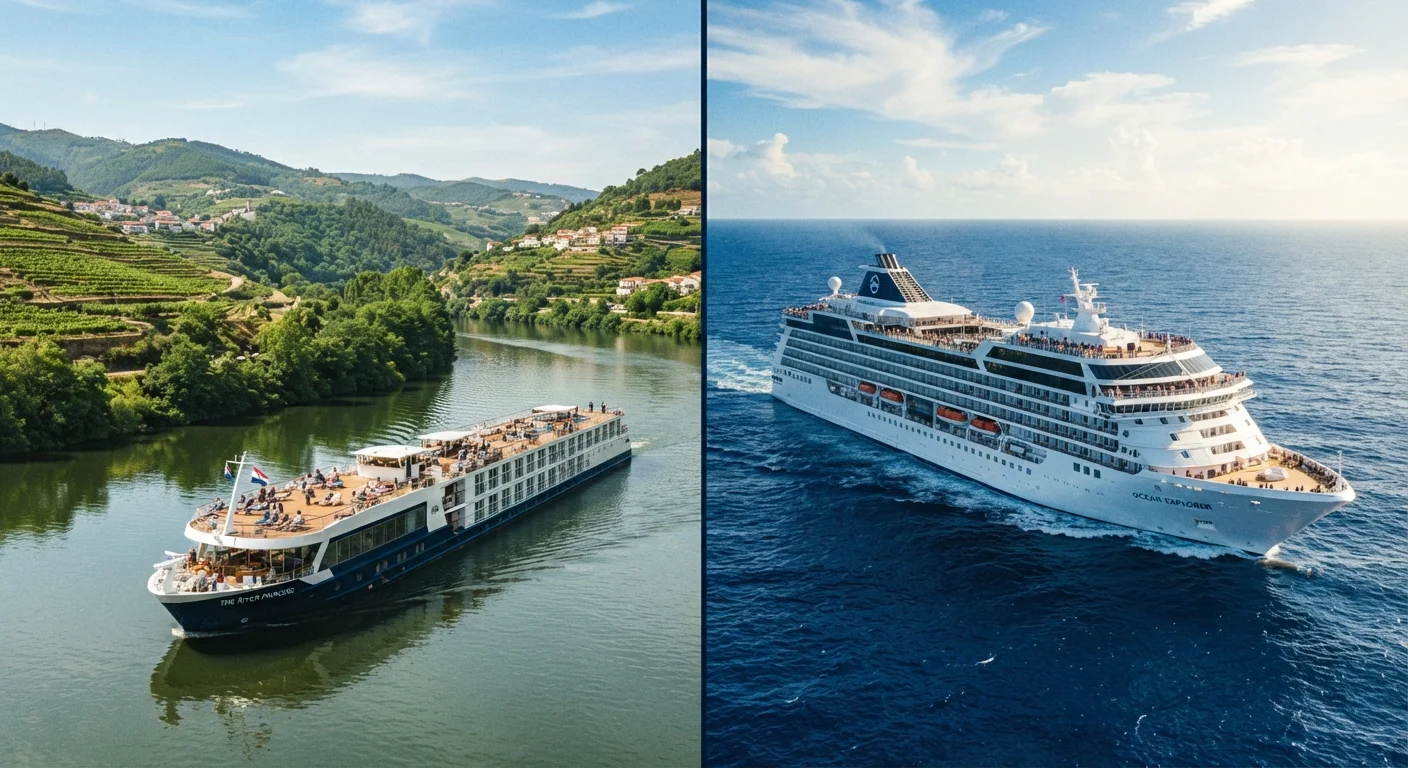
The most immediate difference between river and ocean cruising is sheer size. River cruise ships - sometimes called longships - are engineered to navigate inland waterways, which means they're constrained by river width, lock dimensions, and bridge clearances. Most carry between 100 and 200 passengers, with crew counts to match. The result is an experience that feels closer to a boutique hotel than a floating resort.
Ocean cruise ships operate on an entirely different scale. Mainstream vessels carry anywhere from 2,000 to over 5,000 passengers, with megaships pushing beyond that. They're equipped with multiple restaurants, performance theaters, pools, casinos, and specialty activity areas - because on a seven-day ocean voyage, the ship itself is a destination. For travelers weighing which format suits their group, our guide on cruising with different age groups examines how ship type and itinerary align with varied traveler needs.
| Criterion | River Cruise | Ocean Cruise |
|---|---|---|
| Ship capacity | 100-200 passengers | 2,000-5,000+ passengers |
| Port access | Docks in town center | Pier, port complex, or tender |
| Onboard amenities | Minimal - lounge, dining room | Extensive - pools, shows, restaurants |
| Motion sickness risk | Very low - calm inland waters | Variable - open-sea swells possible |
| Geographic range | Single river corridor | Multi-country or cross-ocean |
| Inclusions in base fare | Often includes excursions, meals | Varies widely by line and tier |
| Itinerary structure | Linear, point-to-point | Loop or one-way ocean route |
Port Access and How You Spend Your Time Ashore
On a river cruise, the port experience is one of the format's defining advantages. Ships dock directly in - or immediately adjacent to - the towns they visit. Passengers walk off the gangway into Regensburg, Bruges, or Lyon without shuttle buses, tender boats, or long pier transfers. Time ashore is maximized, and spontaneous independent exploration is genuinely practical.
Ocean cruises present more variable port access. Some stops involve docking at a proper cruise pier within reasonable distance of town. Others require tendering - taking a small boat from ship to shore - which adds time and weather dependency. Large port facilities like those in Nassau or Cozumel are designed for cruise volume, which means some destinations can feel overwhelmed during peak arrival days. Understanding exactly what each port stop involves is essential before booking; our breakdown on reading a cruise itinerary explains how to decode port schedules, tender stops, and time-in-port details that most travelers overlook.
Shore excursion strategy also differs. On river cruises, guided cultural tours are often included or deeply integrated. On ocean ships, excursions are typically optional and priced separately. For either format, knowing when to book through the ship versus exploring independently matters. Our guide on shore excursion planning covers the logistics and risk considerations at port.
~100-200
Typical river cruise passenger capacity
River ships are physically constrained by waterway dimensions, keeping passenger counts far below ocean standards.
5,000+
Passengers on largest ocean vessels
The largest ocean cruise ships currently in service carry more passengers than many small towns have residents.
Dock-in
River cruise port access model
Unlike ocean ships that often use remote port facilities, river vessels typically tie up directly in or adjacent to city centers.
Destinations, Routes, and Geographic Range
River cruises are geographically specific by nature. The Danube, Rhine, Douro, Seine, Mekong, Nile, and Amazon each offer a distinct cultural corridor. Itineraries are linear - you travel from one end of a route to the other - rather than looping back to a home port. This suits travelers focused on a single region and willing to go deep rather than broad.
Ocean cruises cover radically more ground. A single voyage might touch ports in five countries, or circumnavigate a sea entirely. The Mediterranean vs. Caribbean cruise comparison illustrates just how different two major ocean regions can feel in terms of culture, pace, and port character. For travelers interested in unusually long-range ocean itineraries, repositioning cruises represent an underexplored category that crosses oceans rather than loops familiar routes.
Scenic cruising - where the journey itself is the attraction - works differently in each format. On rivers, the landscape scrolls past the ship continuously: vineyards, castles, medieval villages. On ocean itineraries, scenic highlights tend to be concentrated: glaciers on the Alaska Inside Passage, dramatic cliffs along Norway's fjords, or the engineering spectacle of a Panama Canal transit.
Pricing, Inclusions, and What to Expect
River cruise pricing typically includes more within the base fare: guided shore excursions, most meals, and sometimes even beverages. The all-in structure reflects the smaller, more curated passenger experience. That said, per-person rates tend to be higher at the outset compared with entry-level ocean cabin pricing.
Ocean cruising has a broader pricing spectrum. Entry-level inside cabins on mainstream lines can be priced accessibly, but excursions, specialty dining, gratuities, and beverage packages are commonly additional costs that accumulate. Premium and luxury ocean lines narrow this gap with more inclusive fares, but they also raise the baseline cost. Neither format is inherently more expensive - the total depends heavily on itinerary length, cabin category, and how much you spend onboard and ashore.
This article is for general informational purposes only. Prices, availability, itineraries, and port access conditions vary by operator and season. Always verify current details directly with cruise providers and consult official government travel resources for entry requirements before booking.
Expedition Cruising: A Third Category
Neither pure river nor traditional ocean, expedition cruises use smaller, ice-strengthened or shallow-draft vessels to access remote wilderness areas - polar regions, the Amazon basin, or remote island chains. They share some characteristics with river cruising (small passenger counts, destination-first focus) but operate in open or coastal waters. If your interest leans toward natural history or remote access, expedition cruising may be worth exploring separately.