

Why the Norwegian Fjords Draw Cruise Travelers
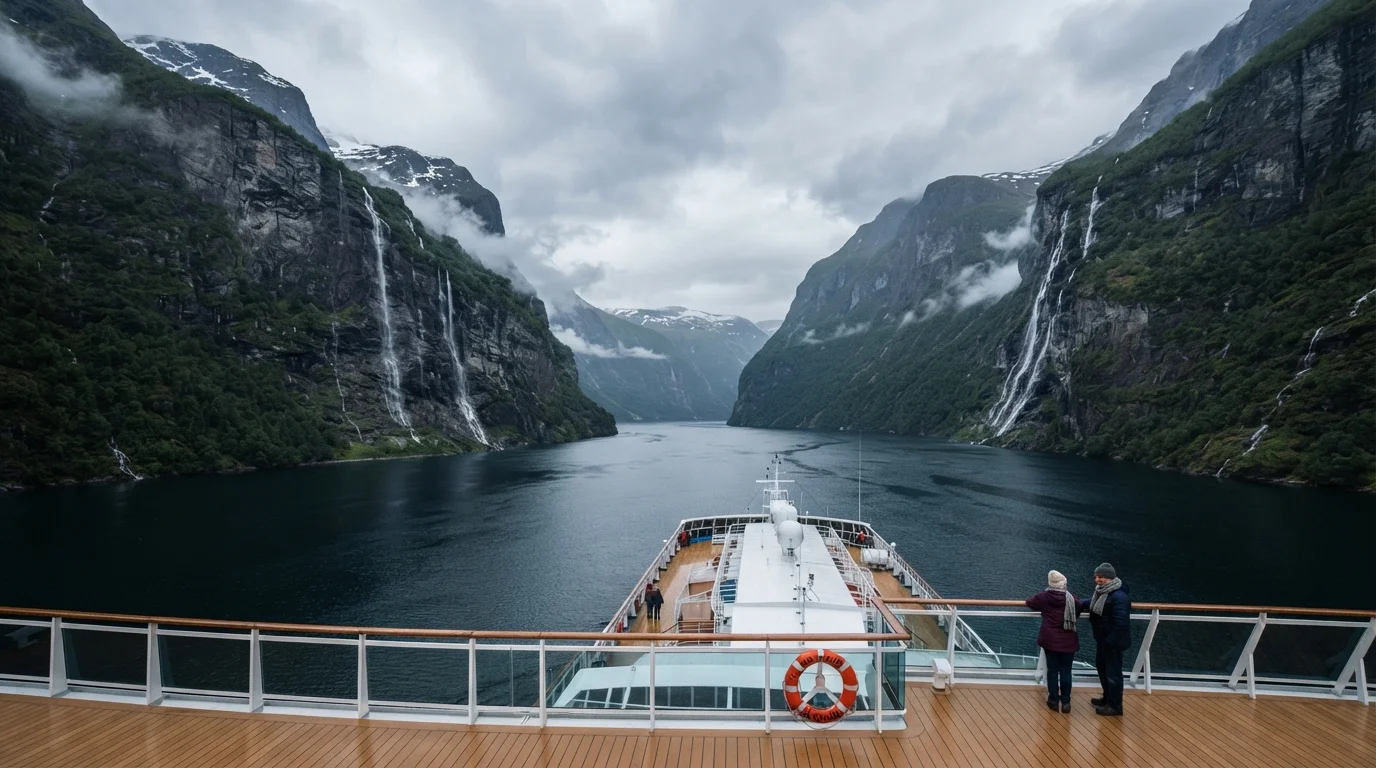
Few cruise regions match the visual intensity of Norway's western fjords. Sheer rock walls rise hundreds of meters from sea level, glacial rivers feed cascading waterfalls, and small villages cling to ledges that seem barely wide enough to hold them. For US travelers, a fjords cruise typically begins with a transatlantic segment or a flight into Bergen or Oslo, connecting to itineraries that range from a week-long circuit to ambitious 14-day sailings that push toward the North Cape.
What separates a fjords cruise from other European itineraries is the scenery itself: the route is the destination. Unlike a Mediterranean circuit where the draw is a succession of historic cities, here the hours spent at sea-or more precisely, threading through narrow inlets-are the core experience. Understanding that distinction shapes every planning decision, from cabin selection to shore excursion priorities.
For travelers comparing dramatic coastal scenery, the Norwegian fjords are often stacked against the Alaska Inside Passage - a similarly remote, scenery-first route with its own distinct character.
| Longest fjord in Norway | Sognefjord - approximately 205 km (127 miles) (Norwegian Mapping Authority) |
| UNESCO World Heritage fjords | Nærøyfjord and Geirangerfjord (listed 2005) (UNESCO World Heritage List) |
| Primary cruise season | May through September |
| Main embarkation cities | Bergen and Oslo (with connections to fjord ports) |
| Typical port day duration | 4-8 hours depending on itinerary and port |
| Currency | Norwegian Krone (NOK); cards widely accepted |
Key Ports of Call and What They Offer
Bergen is the most common embarkation point and Norway's gateway to the fjords. The UNESCO-listed Bryggen wharf, a row of historic Hanseatic wooden buildings, is walkable from most cruise berths. Bergen is also the western terminus of the Flåm Railway, one of the world's steepest standard-gauge lines.
Flåm sits at the inner end of Aurlandsfjord, a branch of the Sognefjord - the longest fjord in Norway at roughly 205 kilometers. The village is small, but its position makes it a launch point for kayaking, the mountain railway, and the scenic Nærøyfjord, which is a UNESCO World Heritage Site. Ships calling at Flåm often spend four to six hours docked, which is adequate for the railway round-trip. See our guide to making the most of a port day for strategies to prioritize your time ashore.
Geiranger anchors the Geirangerfjord, another UNESCO-listed branch fjord known for the Seven Sisters and Suitor waterfalls. The village itself is tiny, but tender operations run smoothly during peak season. The fjord's narrow entry means larger ships must navigate carefully, and some vessels above a certain passenger threshold face entry restrictions - a detail worth confirming before booking.
Ålesund offers an Art Nouveau townscape rebuilt after a 1904 fire and serves as a base for trips to the Geiranger region by road. Stavanger, in the south, is the departure point for the hike to Preikestolen (Pulpit Rock) - a popular but physically demanding excursion.
Fjord
A long, narrow inlet of the sea bordered by steep cliffs or slopes, formed by glacial erosion. Norwegian fjords are among the deepest in the world, with some exceeding 1,300 meters.
Tender operation
When a ship is too large to dock at a port pier, smaller boats (tenders) ferry passengers ashore. Geiranger frequently operates this way during peak season.
Hurtigruten
A Norwegian coastal route and the shipping company historically operating it, connecting dozens of ports from Bergen to Kirkenes year-round. Not a conventional cruise product, but a practical transport and sightseeing option.
Midnight Sun
A natural phenomenon in which the sun remains visible above the horizon at midnight, occurring in Norway above the Arctic Circle during summer months. Relevant to northern fjord itineraries.
Seasonal Realities: When to Go and What to Expect
Norwegian fjord cruises operate primarily from May through September, with the shoulder months of May and September offering thinner crowds and lower ambient light that suits photographers. Peak season runs June through August, when daylight can extend past 11 p.m. in northern Norway - a genuinely unusual experience for American travelers accustomed to standard summer days.
1,190+
Named fjords in Norway
Norway's coastline, when including all inlets and fjords, is among the most irregular in the world, according to the Norwegian Coastal Administration.
20+ hours
Daylight in Tromsø at summer solstice
Locations above the Arctic Circle experience the midnight sun phenomenon; Bergen in the south receives approximately 18-19 hours of daylight in late June.
Summer (June-August): Warmest temperatures, typically 15-22°C (59-72°F) at sea level in western fjords. Waterfalls run at full volume from snowmelt. Shore excursions are fully operational, but Flåm and Geiranger can feel crowded when multiple ships arrive simultaneously. Check itineraries carefully - decoding port schedules and time-in-port details helps identify days when anchorages will be congested.
May and September: Waterfall volume may be lower in September. Mountain passes and some hiking trails may not yet be clear in early May. Passenger volumes are noticeably lower, and smaller ships can sometimes negotiate rates or itineraries that differ from high-season norms.
Winter cruises: A small number of expedition and coastal ferry services (notably the Hurtigruten coastal route) operate year-round, offering the possibility of northern lights viewing. These sailings are not traditional cruise itineraries and involve very different ship sizes, onboard experiences, and expectations about weather and daylight. Temperatures can drop well below freezing, and some fjord-side roads and attractions are closed.
Travel conditions, entry requirements, and port access can change. Always verify current information with your cruise line and official Norwegian tourism or government sources before finalizing plans.