
Why Most Travelers Misread Cruise Itineraries
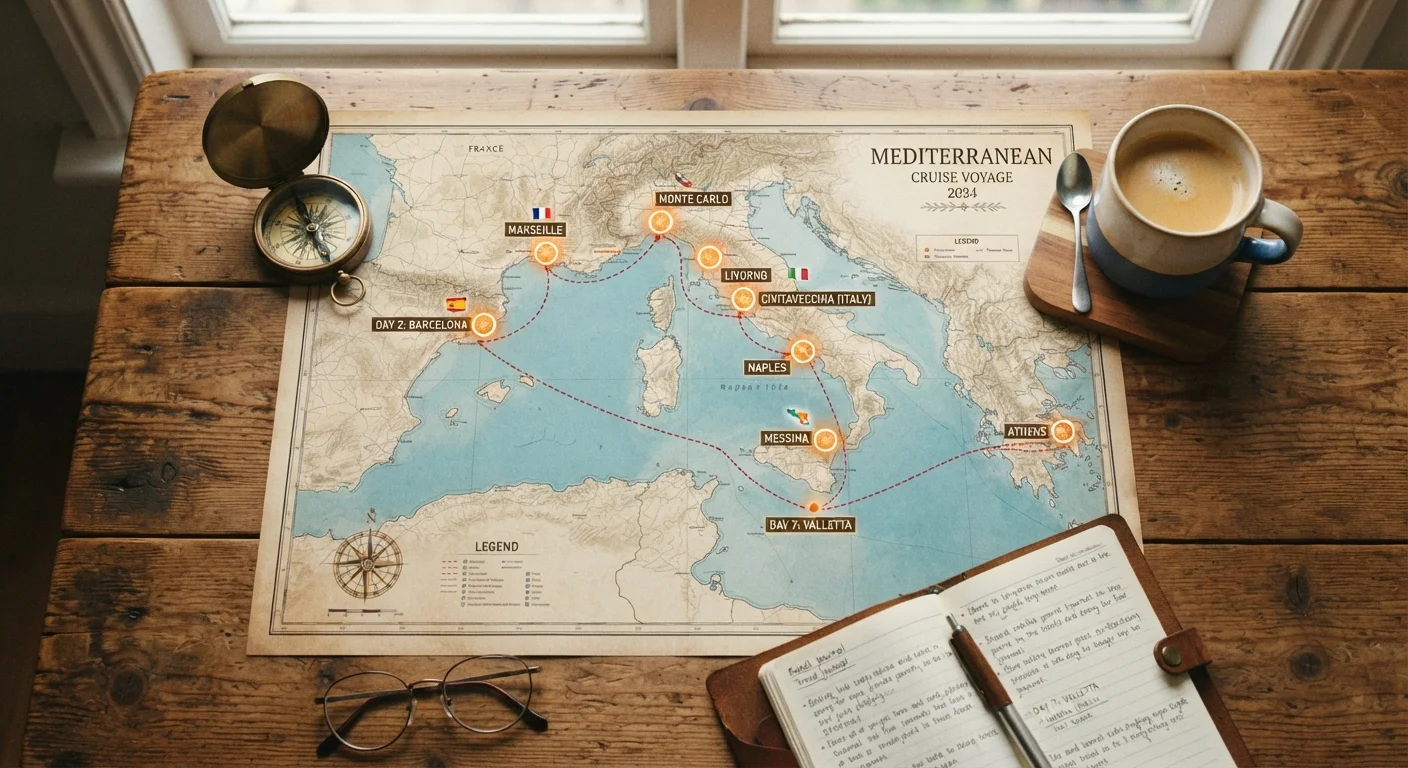
A cruise itinerary looks straightforward at first glance: a column of dates, port names, and times. But those columns contain compressed operational details that, misread, can lead to missed excursions, rushed mornings, or genuine disappointment ashore. The gap between what an itinerary lists and what a port day actually delivers is where most planning errors happen.
Understanding how to read an itinerary critically - not just casually - is one of the highest-value skills for any cruise traveler. This guide covers the structural details that matter most, from how arrival and departure windows work to what tender ports really mean for your schedule. For a broader pre-departure perspective, the trip planning hub covers the full scope of organizing travel before you sail.
Arrival and Departure Windows: The Numbers That Drive Your Day
Itineraries list port times in two key fields: arrival (or in) and departure (or out). The window between them is the total time the ship is at that destination - not the time you personally have ashore. Subtract roughly 30-45 minutes from each end for gangway management, security procedures, and the practical need to be back onboard before the ship's all-aboard call, which is typically 30 minutes before departure.
A port showing 8:00 AM arrival / 5:00 PM departure gives you approximately seven usable hours ashore - manageable for most half-day excursions. But a port listed as 1:00 PM / 6:00 PM leaves very little time, especially if that port requires significant travel from the pier to central attractions.
Also note whether times are listed in local time or ship time. Some cruise lines maintain ship time (which may differ from local time) throughout the voyage. Confirm which convention your line uses before building your day's plans.
Tender Ports: What the Small Symbol Actually Means
Many itineraries mark certain stops with a small anchor icon or the word tender. This means the ship will anchor offshore rather than dock at a pier, and passengers must ride small tender boats (often the ship's own lifeboats) to reach the port. This detail changes the logistics of your entire port day.
Tendering and Accessibility Considerations
Tender boats involve boarding a small vessel from the ship's lower deck, often on steps or with a short step-over. Passengers with mobility limitations, wheelchair users, or those traveling with young children in strollers should check with their cruise line in advance about tender accessibility policies. Some lines give priority boarding to certain groups; others may restrict tender access in specific sea conditions. Never assume tender access is guaranteed on the day.
Tender operations are weather-dependent. In rough swells, tender service can be suspended or delayed, which may significantly shorten your time ashore - or eliminate it entirely. This is not uncommon in exposed anchorages. Destinations like Skagway, Alaska, and many smaller Caribbean stops are historically tender ports, meaning conditions on the day matter. The Alaska Inside Passage guide covers specific port realities for that region.
Sea Days: Pacing, Not Filler
Sea days - days at sea with no port stop - are often misread as scheduling gaps or wasted time. In practice, the ratio of sea days to port days shapes the entire character of a voyage. Itineraries heavy on port days tend to feel fast-paced and logistically demanding. Those with deliberate sea days allow for recovery, onboard programming, and the distinct experience of being at sea.
For longer routes - particularly repositioning cruises that cross open ocean - sea days are the dominant experience, not the exception. Evaluating an itinerary means honestly asking whether the sea day distribution matches your travel style, not simply counting how many ports appear. For a fuller look at what sea days actually offer, see the companion piece on sea day myths.
Hidden Details That Change a Port Day
Beyond times and tender status, several itinerary details are rarely highlighted but consistently matter.
- Port congestion: Major cruise hubs like Nassau, Cozumel, and Dubrovnik regularly receive multiple ships on the same day. Higher ship volume means longer waits at attractions, crowded beaches, and higher demand for taxis and tours.
- Local public holidays: A port day that falls on a national holiday may mean shops, museums, and restaurants are closed or operating on reduced hours - information no itinerary will flag directly.
- Distance from pier to town: Some ports dock directly in a historic center; others require a shuttle, taxi, or significant walk. This distance affects how much of your port window is actually useful.
- Entry requirements per port: Even on a single cruise, different ports may have different entry rules for US passport holders. Always verify visa and entry requirements through official government sources - the US State Department's travel site and the destination country's embassy are the correct references.
For a systematic approach to pre-sailing verification across all these variables, the pre-sailing readiness checklist provides structured guidance. And once you've decoded the itinerary, don't overlook what to bring ashore - the cruise packing pitfalls guide addresses port-day essentials that travelers frequently forget.
2-4
Ships often docked simultaneously at major Caribbean ports
Popular cruise hubs like Nassau and Cozumel routinely host multiple large ships on the same day, significantly affecting crowd levels ashore.
30 min
Typical all-aboard buffer before ship departure
Most cruise lines require passengers to be back onboard at least 30 minutes before the listed departure time; some lines enforce stricter windows.
This article is for general informational purposes only. Entry requirements, port conditions, and operational schedules change frequently. Always verify current visa, health, and entry requirements with official government sources and your cruise line before traveling.