
How the Panama Canal Locks Actually Work
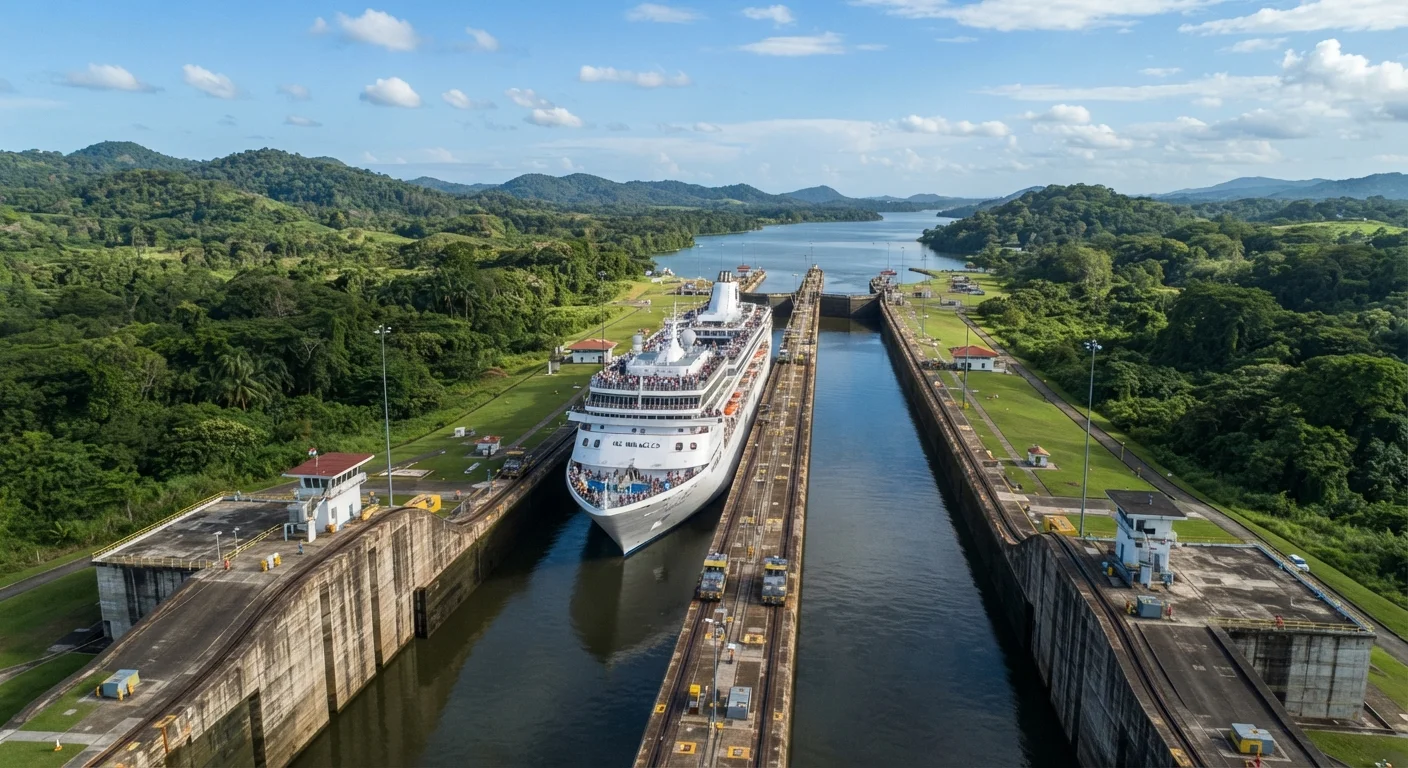
Understanding the locks is central to appreciating what makes a Panama Canal cruise unique. The canal does not rely on pumps - the locks operate entirely on gravity. When a ship enters a lock chamber, massive valves open to allow water from Gatun Lake to flow in, raising the vessel to the next level. A ship ascending toward the lake is lifted in stages; a ship descending toward either ocean is lowered the same way in reverse.
The original locks, built between 1904 and 1914, measure 1,000 feet long and 110 feet wide - a dimension known as "Panamax." Ships built to fit these dimensions became a standard class in maritime design. The 2016 expansion introduced a parallel set of wider, deeper chambers capable of handling vessels up to 1,200 feet long and 160 feet wide, classified as Neo-Panamax. This expansion significantly changed which cruise ships could transit, opening the route to many vessels that previously couldn't fit.
The full crossing takes approximately 8-10 hours, and transit is coordinated by Panama Canal Authority pilots who board each vessel and guide it through. Passengers are typically on deck for much of this time, watching the lock gates - some weighing over 700 tons - swing open and close.
What Are 'Line Handlers' on the Canal?
During lock transit, each ship is guided by small electric locomotives called 'mules' (officially known as electric towing locomotives) that run along tracks on the lock walls. These mules attach to the ship via cables and help center it precisely within the narrow chamber. It is the mules - not the ship's own engines - that control lateral positioning during the locking process. Passengers on the outer decks can often see the mule operators and cables at close range.
Full Transit vs. Partial Transit: What's the Difference?
When comparing Panama Canal cruise itineraries, the distinction between a full and partial transit is one of the most important details to understand before booking. Reading the itinerary carefully will tell you which type of transit your cruise includes.
Full transit means the ship crosses the entire canal from one ocean to the other - entering from the Caribbean, passing through all locks and Gatun Lake, and exiting into the Pacific (or vice versa). These itineraries are typically one-way voyages, often called repositioning cruises, connecting East Coast and West Coast embarkation ports. They run 14-16 days and include multiple port calls on both the Atlantic and Pacific sides.
Partial transit means the ship enters the canal - usually from the Caribbean - passes through one or more locks, and then returns the same way it came without completing the full crossing. Day visitors and many round-trip Caribbean-based itineraries use this format. Passengers still experience the locks and Gatun Lake but do not cross to the Pacific. Repositioning cruises are typically where full transits appear most often.
~50 miles
Total length of the Panama Canal waterway
The canal spans approximately 50 miles (80 km) across the Isthmus of Panama, connecting the Atlantic and Pacific Oceans.
85 feet
Maximum elevation ships reach above sea level
Ships are lifted up to 85 feet above sea level through the lock chambers, using gravity-fed freshwater from Gatun Lake.
8-10 hours
Average time to complete a full transit
A complete ocean-to-ocean passage through the canal, including lock operations and lake crossing, typically takes 8-10 hours.
Key Ports Along the Route
Panama Canal itineraries combine the canal passage itself with a broader Central American and sometimes South American port mix. The ports vary depending on whether the cruise is eastbound or westbound and whether it's a full or partial transit.
- Colón, Panama - The primary Atlantic-side port, often the point of entry for Caribbean-based cruises. It serves as a gateway for excursions to the canal's Gatun Locks and the surrounding rainforest.
- Panama City (Fuerte Amador) - On the Pacific side, the cruise terminal sits near the canal's Pacific entrance. The old colonial district of Casco Viejo is a UNESCO World Heritage Site accessible from here.
- Cartagena, Colombia - A frequent stop on eastbound transits, known for its well-preserved walled city and Caribbean coastal culture.
- Puerto Limón, Costa Rica - A Caribbean-side stop offering access to Tortuguero National Park and the rainforest interior.
- Puerto Quetzal, Guatemala - On the Pacific side, it serves as a gateway to Antigua and Mayan archaeological sites.
Many itineraries also include calls at ports in Mexico, Colombia, Ecuador, or even Chile and Peru on extended South America sailings. For comparison with more island-focused itineraries, see the Caribbean cruising regional breakdown.
Position Yourself Early for Lock Viewing
During a Panama Canal transit, forward-facing decks and upper observation areas fill quickly once the ship approaches the first set of locks. Many experienced canal cruisers recommend arriving on deck at least 30-45 minutes before the scheduled lock entry. The ship's captain or cruise director typically provides commentary during the passage, which can be heard from the public decks.
Planning Considerations for US Travelers
Most Panama Canal cruises marketed to US travelers depart from Fort Lauderdale or Miami on the Atlantic side, or from Los Angeles and San Diego on the Pacific side. The cruise length - typically two weeks or more - means this is a commitment that suits travelers with flexible schedules and an interest in a slow, port-rich pace rather than a short getaway.
Passport and entry requirements for Panama and other ports of call should be verified directly with official government sources before booking, as requirements can change. A valid US passport is standard; some additional ports may require visas depending on nationality and itinerary specifics.
Weather is a practical consideration. The Caribbean side of Panama has a wet season running roughly May through November, with peak rainfall mid-year. The Pacific side has a more pronounced dry season from December to April. Most major Panama Canal cruise seasons run during the drier months, but conditions vary by year. Travelers should confirm current advisories through the US Department of State and CDC travel health notices before departure.
If you're weighing a Panama Canal itinerary against a shorter, more beach-focused voyage, the Mediterranean vs. Caribbean comparison offers a useful framework for thinking through cruise style preferences.
This article is for general informational purposes only. Entry requirements, safety conditions, and travel advisories change frequently. Always verify visa, health, and safety information with official government sources and your travel provider before booking or departing.