

Why Triage Matters More Than a To-Do List
Most homeowners carry a mental list of things that need fixing. When money is tight, that list becomes a source of anxiety rather than a plan. The problem isn't the length of the list - it's the absence of a clear order of priority. Not every repair carries the same urgency, and treating them equally means the wrong things get done first.
A simple triage framework cuts through the noise: address safety hazards first, then anything causing active or accelerating damage, then efficiency losses, and finally cosmetic issues. This sequence protects your household and your investment without requiring you to fix everything at once.
As our guide on deferred maintenance costs explains, skipping small repairs rarely saves money - it typically multiplies future costs. The goal here is to help you identify which tasks belong at the top of your list and why.
Start With a Walk-Through, Not a Wish List
Before spending anything, do a slow, deliberate walk through your home looking specifically for signs of water, compromised safety equipment, and anything that has visibly worsened since your last look. Take notes and photos. A thirty-minute inspection often clarifies priorities more effectively than any list - and costs nothing.
The Maintenance Tasks Worth Prioritising First
Smoke and Carbon Monoxide Detectors
Working detectors are the single most cost-effective safety investment in any home. Test each unit monthly using the test button, replace batteries annually (or when the low-battery chirp begins), and replace the entire unit every 8-10 years - detector sensors degrade with age regardless of whether the test button still responds.
Carbon monoxide detectors are equally critical in homes with gas appliances, attached garages, or fuel-burning heating systems. If your detectors are missing or non-functional, this is the first item on your list - the cost is low and the stakes are high.
Detector sensors degrade with age - replace units every 8-10 years, not just the batteries.
Active Roof Leaks or Water Intrusion
Water is one of the most destructive forces a home faces. A slow drip from a failing roof penetration, a cracked flashing seal, or a damaged skylight can silently rot structural framing, feed mould growth, and compromise insulation - all before visible staining appears on a ceiling. By the time water damage is obvious, the repair bill is typically many times what early intervention would have cost.
Look for staining, soft spots, or bubbling paint on ceilings and upper walls. Check your attic after heavy rain if safely accessible. Address any identified source immediately, even if it means a temporary patch while you plan a more permanent fix. The guide to caring for your home's exterior covers how to inspect roofing and surrounding components systematically.
Water damage is rarely visible until it's already extensive - act on any suspected leak immediately.
HVAC Filter Replacement
A clogged air filter forces your heating and cooling system to work harder, increasing energy consumption, reducing its operational lifespan, and potentially causing component failures that are expensive to repair. Replacing a standard filter costs a few dollars and takes under five minutes. Most manufacturers recommend replacement every 1-3 months depending on filter type, household size, and whether pets are present.
This is the definition of a high-return, low-cost maintenance task. Neglecting it is one of the most common ways homeowners quietly accumulate avoidable costs. Check your filter now if you haven't done so recently.
A clogged filter quietly raises energy costs and accelerates HVAC wear - replacement costs almost nothing.
Plumbing Leaks and Slow Drains
A dripping faucet or a slow-draining sink can feel like minor nuisances, but both signal conditions worth addressing promptly. Persistent drips waste a meaningful amount of water over time and can accelerate corrosion around fixtures. Slow drains often indicate partial blockages that, if left unaddressed, can progress to full blockages or - in the case of drain line issues - more significant plumbing problems.
Check under sinks periodically for moisture, staining, or soft cabinet floors, all of which suggest active leaks. Many faucet and supply line repairs are within DIY reach; knowing how to shut off your home's water supply and isolate fixtures is foundational knowledge covered in our plumbing basics guide.
Moisture under a sink cabinet is often the first visible sign of a leak worth fixing immediately.
Bathroom Ventilation and Moisture Control
Bathrooms generate substantial moisture with every shower and bath. Without adequate ventilation, that moisture accumulates in grout, drywall, and structural cavities - creating conditions for mould growth, peeling paint, and long-term material decay. The fix is often straightforward: ensure your exhaust fan is working, run it during and for at least 15-20 minutes after bathing, and check that it actually vents to the exterior rather than into an attic space.
Inspecting and resealing grout and caulk around the tub and shower surround is a low-cost task that prevents water from migrating behind tiles and into the wall assembly. Our bathroom maintenance guide walks through these habits in detail.
Running an exhaust fan for 15-20 minutes after bathing meaningfully reduces moisture-driven damage risk.
Gutter Clearing and Downspout Drainage
Blocked gutters are a frequent contributor to foundation problems, fascia rot, and basement or crawlspace moisture - none of which are cheap to fix. Gutters are designed to move water away from your home's structure; when they're full of debris, they do the opposite. Twice-yearly clearing (after leaf fall in autumn and after spring pollination) is typically sufficient for most homes, though trees directly overhead may require more frequent attention.
While clearing gutters, check that downspouts are directing water at least a few feet away from the foundation. Extensions are inexpensive and widely available. For a thorough understanding of how gutter systems fail and what to watch for, see our guide to gutter maintenance.
Blocked gutters direct water toward your foundation - clearing them twice a year is one of the simplest protective habits.
When Professional Help Is the Right Call
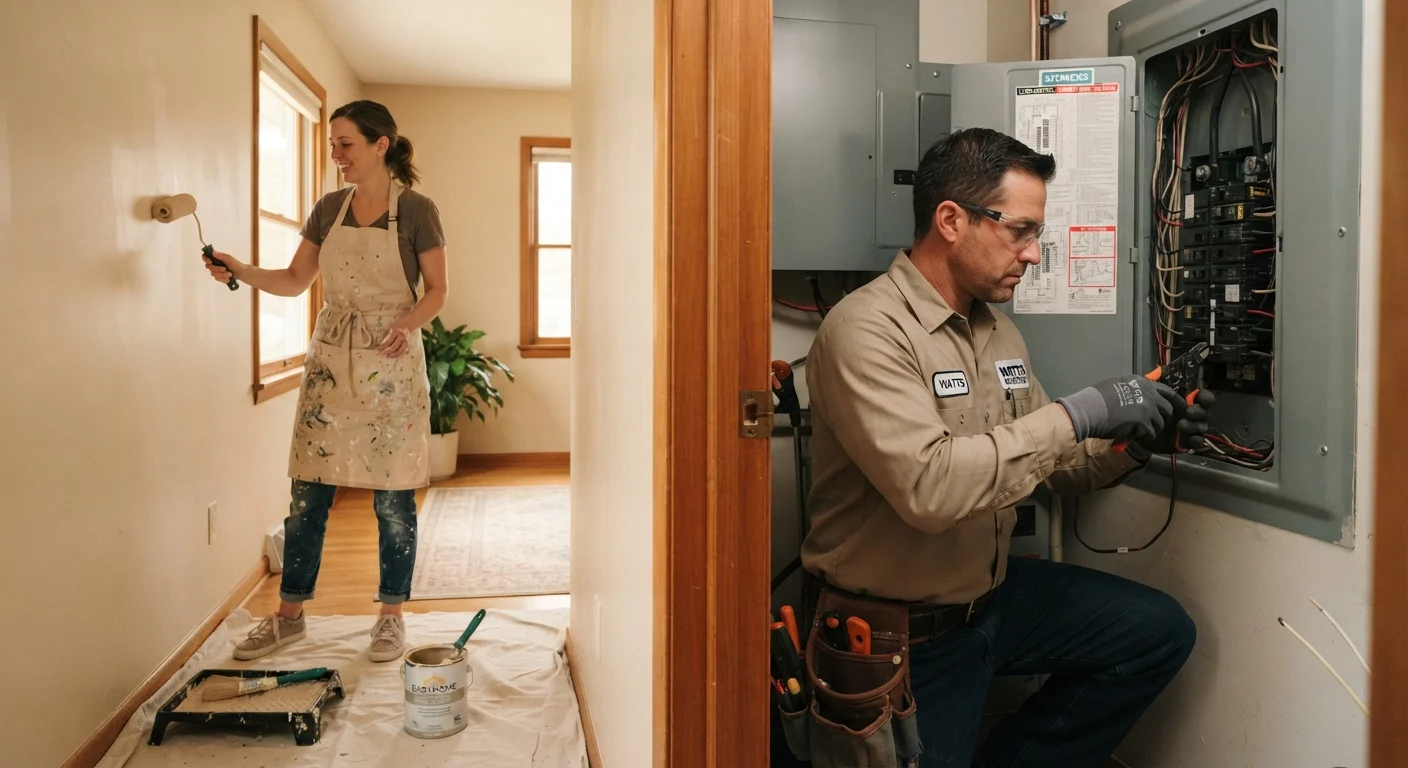
Some maintenance tasks - particularly those involving electrical panels, gas lines, structural concerns, or permitted work - should not be DIY projects regardless of budget pressure. Doing them incorrectly can create hazards that are far more costly than the original repair, both financially and in terms of safety. Many jurisdictions also require licensed contractors for specific work types. If you're uncertain whether a task falls into this category, consult a qualified professional before proceeding.
If you're newer to homeownership and unsure how to assess what you're looking at, our guide for first-time renovators offers grounded advice on reading your home's condition honestly. For a broader view of what routine upkeep looks like across the year, your home's annual maintenance calendar is a practical companion resource.
Keeping Costs Manageable Over Time
Tight budgets don't require you to do everything yourself - they require you to be strategic. Some tasks genuinely benefit from a professional, particularly anything involving electrical systems, gas lines, or structural concerns. Our DIY vs. licensed tradesperson guide outlines clearly where that line sits.
For the tasks you can handle, investing a few hours in learning the basics of your home's systems pays ongoing dividends. Understanding how to identify and respond to plumbing issues early, for example, can prevent water damage that runs into thousands of dollars. Similarly, keeping gutters clear and functional is one of the highest-return maintenance habits a homeowner can develop.
Building a modest home maintenance reserve - even a small monthly contribution - reduces the stress of unexpected repairs significantly. If that feels out of reach right now, strategies for saving when income is limited may help you find a starting point.