
How Heating Systems Degrade Over Time
Heating systems don't fail suddenly without warning - they age incrementally through several overlapping processes. Understanding these mechanisms helps homeowners recognize warning signs and appreciate why proactive servicing matters.
Corrosion and Scale Buildup
In hydronic (water-based) systems, oxygen introduced into the pipework reacts with metal surfaces, producing iron oxide - better known as sludge. This magnetite accumulates in radiators and the boiler's heat exchanger, reducing heat transfer efficiency and restricting water flow. Separately, calcium and magnesium minerals in hard water deposit as limescale on heat exchanger surfaces. Even a modest scale layer measurably reduces efficiency.
Combustion Component Wear
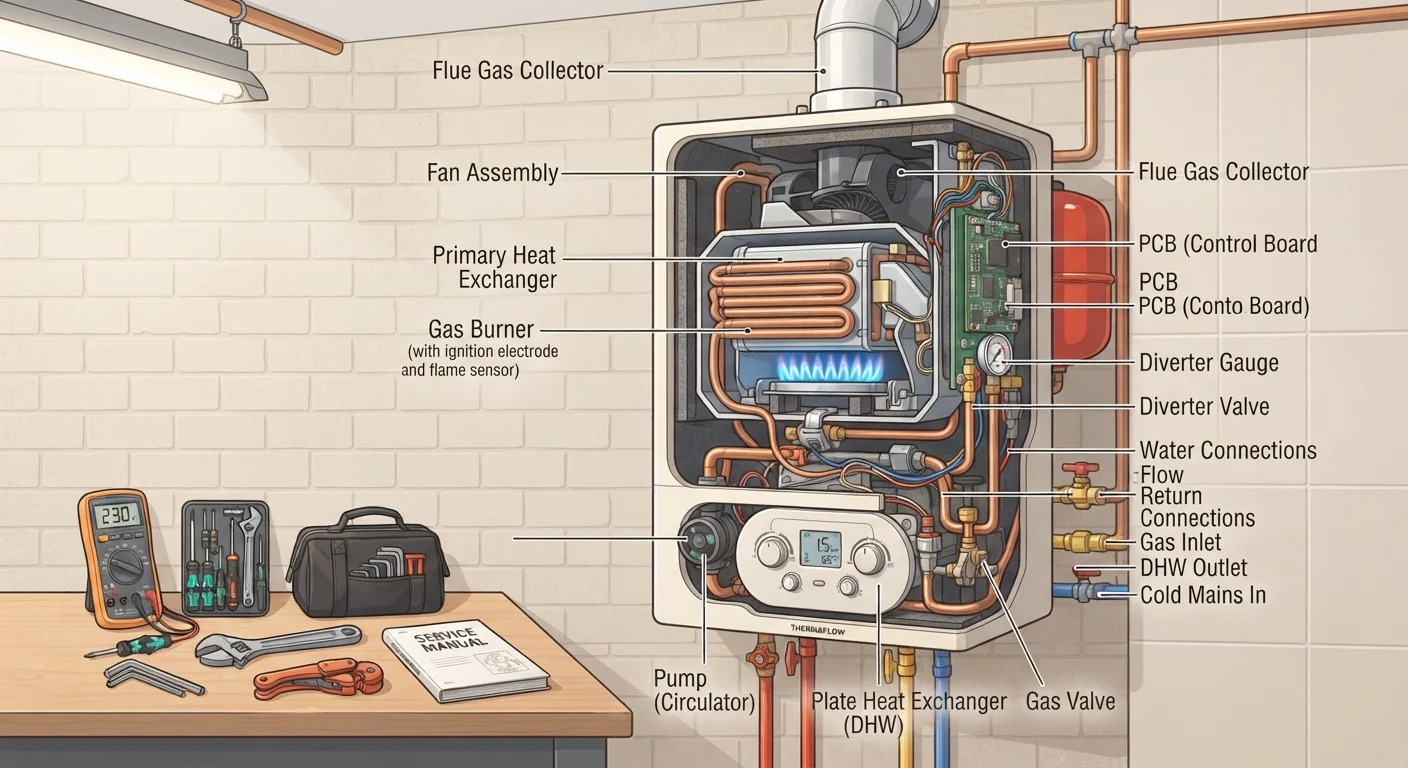
Gas burners accumulate carbon deposits over heating seasons. As the burner surface degrades, the fuel-air mixture becomes less precise, producing an inefficient or incomplete burn. The heat exchanger - the component that transfers combustion heat to your water - develops micro-cracks over years of thermal cycling. A cracked heat exchanger is a serious safety concern, as it can allow combustion gases to enter living spaces.
Electrical and Control Degradation
Thermostats drift in calibration, motorized valves seize from inactivity, and pump bearings wear with continuous use. These aren't dramatic failures - they're slow losses of precision that quietly increase your energy bills and reduce comfort before eventually causing a breakdown.
Heat Pumps Age Differently Than Gas Boilers
Heat pumps don't involve combustion, so they don't carry the same flue and heat exchanger risks as gas systems. However, they have their own age-related vulnerabilities: refrigerant charge naturally depletes over time, compressor efficiency declines, and outdoor coils accumulate debris that restricts airflow. Annual servicing by an HVAC technician with heat pump experience addresses these distinct failure modes.
What a Professional Service Actually Covers
A qualified technician's annual visit involves far more than a visual inspection. Here's what a thorough service on a gas boiler typically includes:
- Combustion analysis: A flue gas analyzer measures carbon monoxide, carbon dioxide, and oxygen levels in the exhaust. Results indicate whether the burner is operating at the correct fuel-air ratio and whether the heat exchanger is compromised.
- Heat exchanger inspection: The technician checks for cracks, corrosion, and deposits. This is the single most safety-critical check on any gas appliance.
- Flue and ventilation check: The entire exhaust path is inspected for blockages, corrosion, and correct sealing. A restricted or leaking flue is a carbon monoxide risk.
- Burner cleaning and inspection: Carbon deposits are removed and the burner's condition is assessed against manufacturer tolerances.
- Controls and safety devices testing: Pressure relief valves, high-limit switches, and thermostats are tested to confirm they operate correctly.
- Pump and valve operation: Circulation pumps are checked for noise and flow, and zone valves are verified to open and close fully.
- System pressure check: Operating pressure is verified and adjusted if needed.
Keep a Service Record for Your Heating System
Maintain a written log of every service visit, including the date, technician's name and license number, work performed, and any recommendations made. This record supports warranty claims, informs future technicians about system history, and provides documentation if you sell the property. Many manufacturers provide a logbook with the appliance - keep it with your home files.
For heat pump systems, servicing additionally involves checking refrigerant charge, inspecting coils for debris, verifying defrost cycle operation, and assessing compressor performance - work that requires specific HVAC certification.
Radiators and Distribution Systems: The Often-Overlooked Part
A boiler service doesn't automatically address the entire heating system. Radiators and pipework have their own maintenance needs that homeowners can partly manage themselves.
Radiator Bleeding
Air accumulates in radiator circuits over time, creating cold spots - typically at the top of the panel. Bleeding a radiator (releasing trapped air through the bleed valve) is a task most homeowners can perform safely with a radiator key. If radiators require frequent bleeding, it suggests air is entering the system, which warrants a technician's investigation.
Powerflush for Sludge Removal
When magnetite buildup is severe, a powerflush - a high-velocity water and chemical flush through the entire circuit - can restore flow and efficiency. This is a professional procedure requiring specialist equipment. Signs that a powerflush may be needed include radiators that are cold at the bottom but warm at the top, or a consistently noisy pump.
System Inhibitor Levels
Corrosion inhibitor is a chemical additive circulated through the heating system to slow oxidation. Technicians typically check inhibitor concentration during a service and top it up as needed. Homeowners should be aware this consumable exists and ask about it during any service visit.
15-20 years
Typical lifespan of a well-maintained gas boiler
Industry estimates consistently cite this range for boilers receiving annual professional servicing, with neglected systems often failing significantly earlier.
~10-15%
Efficiency loss from moderate limescale accumulation
The US Department of Energy has noted that even modest scale deposits on heat transfer surfaces measurably reduce system efficiency.
Annual
Recommended service frequency for gas heating appliances
Most US manufacturers and HVAC industry bodies recommend yearly professional servicing for gas boilers and furnaces to maintain safety and warranty compliance.
Why Skipping Service Has Real Consequences
Deferred maintenance on heating systems isn't simply a comfort issue - it carries safety, financial, and legal implications.
From a safety standpoint, an unserviced gas appliance can develop a cracked heat exchanger or blocked flue without visible symptoms. Carbon monoxide is odorless and colorless; a working CO detector and annual service are complementary - not interchangeable - protections.
Financially, efficiency losses from scale, dirty burners, and miscalibrated controls compound across heating seasons. A system operating at reduced efficiency costs more to run every month, not just when it breaks. Emergency call-out costs during peak winter demand also significantly exceed scheduled service fees.
Warranty validity is another practical consideration. Most boiler manufacturers require documented annual servicing to honor warranty claims. A single missed service can void coverage on a system that still has years of warranty remaining.
The principle is similar across different systems in your home: just as deferred vehicle maintenance leads to compounding problems - something explored in depth for cars in our guide to maintenance tasks drivers routinely put off - heating systems reward consistency and penalize neglect.
This article provides general home maintenance information only. Always consult a licensed, qualified heating technician for assessment, repair, or servicing of gas appliances or heat pump systems. Verify permit and licensing requirements with your local authority before any heating system work is undertaken.