
Why Gutters Matter More Than Most Homeowners Realize
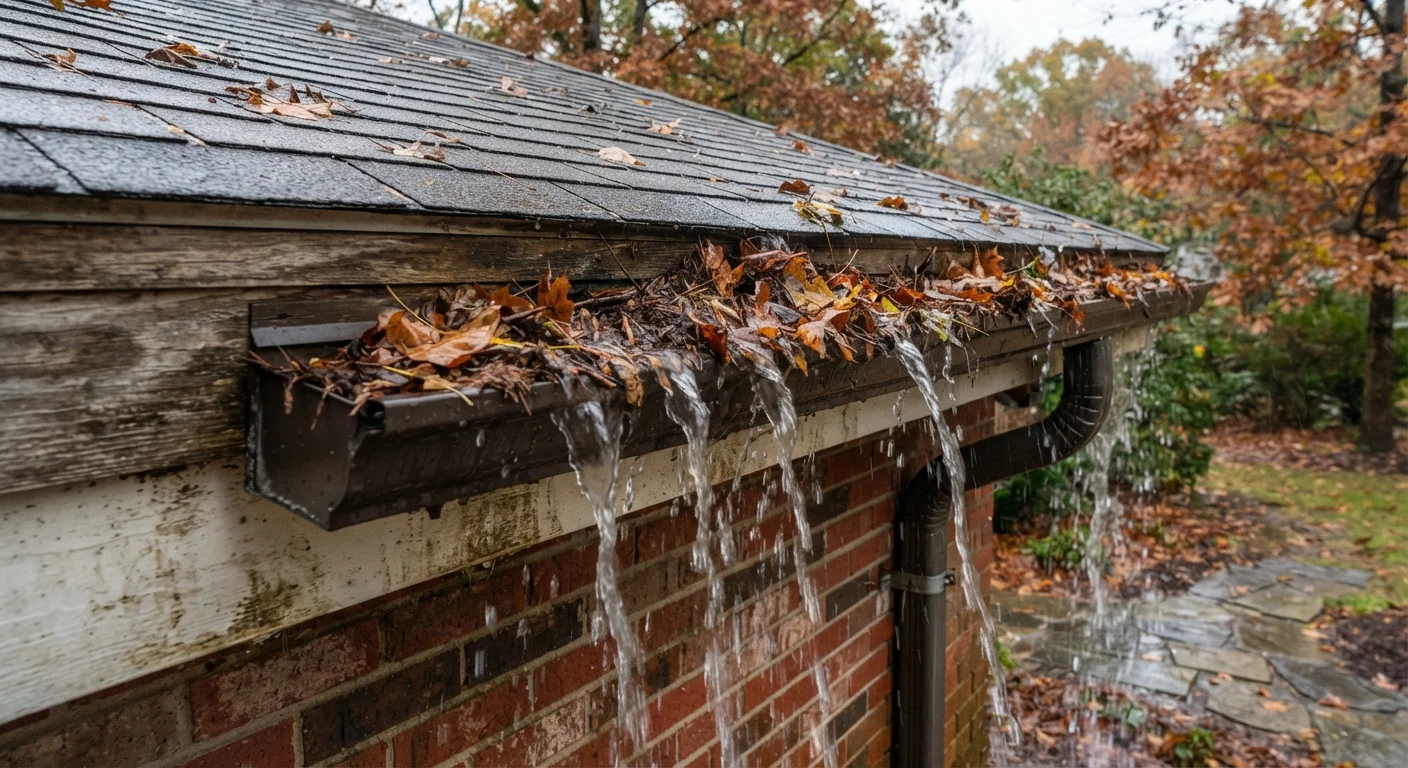
Gutters serve one deceptively simple function: move rainwater away from the structure of your home. When they fail - even partially - water has nowhere controlled to go. It backs up against fascia boards, seeps behind siding, saturates soil against the foundation, and accelerates the kind of structural decay that is expensive to reverse. As our guide to deferred maintenance costs explains, small neglected systems reliably compound into major financial problems.
The good news is that gutter failure is almost never sudden. It follows recognizable patterns, and each pattern has a practical fix - if caught early enough.
Cleaning gutters on a fixed calendar rather than after major leaf-drop or storms.
Why it happens: Homeowners set a once-a-year reminder and consider the job done, not accounting for seasonal variation or heavy tree coverage.
Ignoring gutter pitch, which causes water to pond instead of drain toward the downspout.
Why it happens: Gutters sag gradually as hanger fasteners loosen or wood fascia softens, and the change is too slow to notice without deliberate inspection.
Directing downspout discharge too close to the foundation.
Why it happens: Many builders terminate downspouts just at the foundation line, and homeowners assume that is correct.
Overlooking leaking seams and end-cap joints until staining appears on the fascia.
Why it happens: Seam leaks often drip behind the gutter and aren't visible from the ground until staining or rot is already developing.
Installing gutter guards and then stopping all maintenance.
Why it happens: Gutter guard products are commonly marketed as low-maintenance or maintenance-free, which sets unrealistic expectations.
What a Proper Maintenance Schedule Actually Includes
Routine gutter maintenance is less about products and more about consistency and inspection discipline. A reliable schedule for most US climates includes:
- Spring cleaning: Clear debris that accumulated over winter, flush the entire system with a hose, and check for joint separation caused by freeze-thaw cycles.
- Fall cleaning: Clear fallen leaves after the majority have dropped - cleaning too early means a second pass is needed.
- Post-storm checks: Heavy wind and rain events can dislodge hangers, shift sections, or deposit debris in unexpected quantities.
- Annual sealant inspection: Run water through the system and watch for drips at seams and end caps. Gutter sealant typically needs reapplication every three to five years.
For homes under heavy tree cover, quarterly cleaning is more appropriate. This is part of a broader exterior care strategy - see The Complete Guide to Caring for Your Home's Exterior for a full framework.
~$10,000
Average cost of foundation repair from water intrusion
According to HomeAdvisor cost data, foundation repairs caused by water damage typically range from $2,000 to over $15,000 depending on severity and method.
2×/year
Minimum recommended gutter cleanings
The National Association of Home Inspectors recommends cleaning gutters at least twice annually, with more frequent cleaning for homes near heavy tree coverage.
When budgets are constrained, gutters should stay near the top of the priority list. Water intrusion from failed gutters can damage multiple systems simultaneously - fascia, soffit, siding, insulation, and even framing. Prioritizing by damage risk is the most cost-effective approach when resources are limited.
This article provides general home maintenance information. Local conditions, building codes, and roof configurations vary. For work involving roof access or structural repair, consult a licensed contractor.