
What the Skin Barrier Actually Is
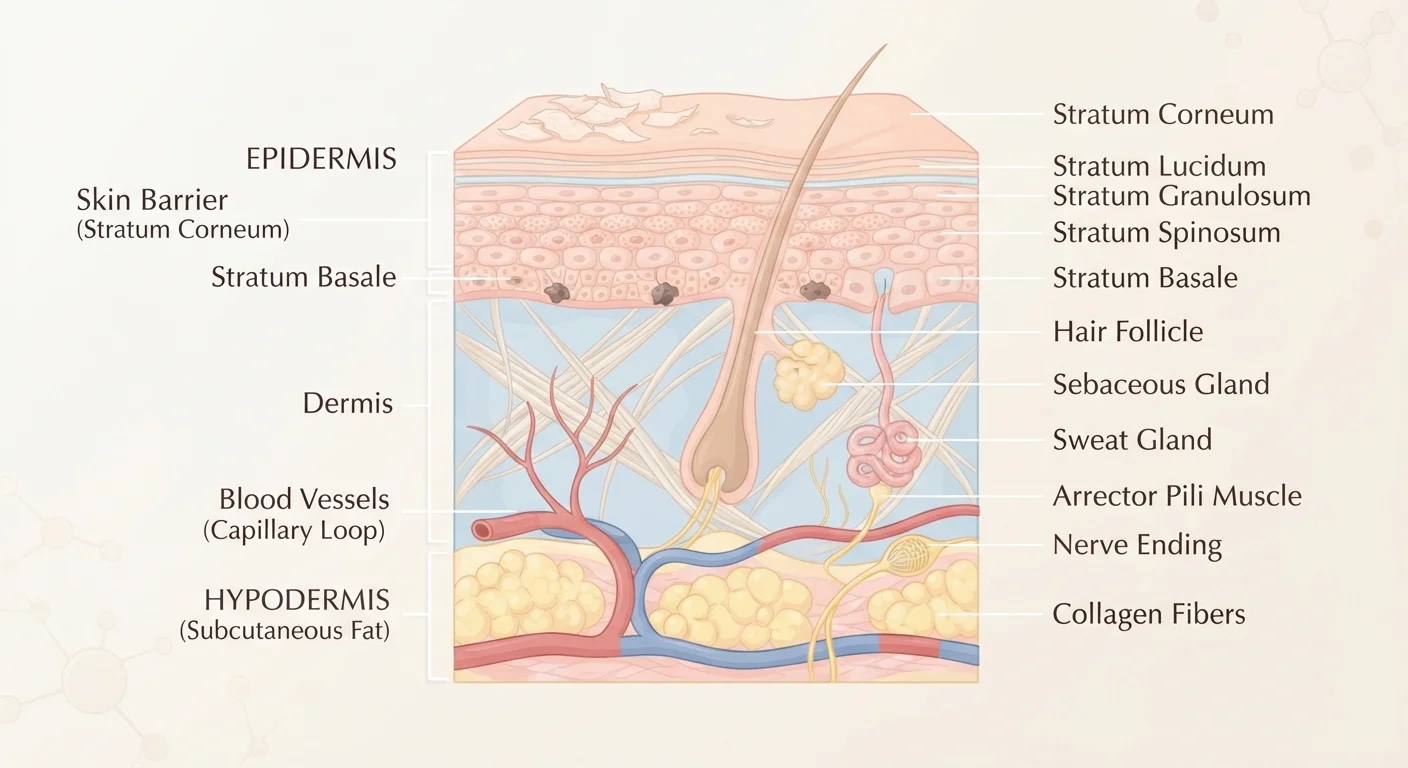
Your skin is more than a surface - it is a layered, living system. The outermost portion of the epidermis, called the stratum corneum, is what most skincare professionals mean when they refer to the skin barrier. It consists of flattened, protein-rich dead skin cells (corneocytes) embedded in a matrix of lipids - primarily ceramides, cholesterol, and free fatty acids - arranged in a structure often compared to a brick-and-mortar wall.
This analogy holds up well: the corneocytes are the bricks, and the lipids are the mortar. Both are necessary. Remove or damage either, and the wall's integrity fails. The result is a barrier that leaks water out and lets irritants in.
Stratum corneum
The outermost layer of the skin, made up of dead skin cells and lipids. It acts as the physical skin barrier.
Transepidermal water loss (TEWL)
The process by which water passively evaporates from the skin's surface. High TEWL is a marker of a compromised barrier.
Ceramides
Naturally occurring lipid molecules that form a significant portion of the skin barrier's structure. They help hold cells together and prevent water loss.
Acid mantle
A thin, slightly acidic film on the skin's surface that helps protect against bacteria and supports healthy enzyme activity.
Corneocytes
Flattened, protein-filled skin cells that make up the 'bricks' of the skin barrier's brick-and-mortar structure.
Humectant
An ingredient that attracts water molecules from the environment or deeper skin layers to the surface, helping maintain hydration.
For a deeper look at the structural science, see The Science Behind Your Skin Barrier and Why It Matters, which goes into greater molecular detail. This primer focuses on what that science means in day-to-day skin care practice.
How the Barrier Keeps You Protected
The skin barrier performs two essential jobs simultaneously: it limits transepidermal water loss (TEWL) - the passive evaporation of water from inside the body - and it blocks environmental threats including allergens, pathogens, pollution particles, and chemical irritants.
Healthy skin also maintains a naturally acidic surface, often called the acid mantle, with a pH typically between 4.5 and 5.5. This acidic environment discourages the growth of harmful bacteria and supports the enzymes responsible for normal skin cell shedding. Products or behaviors that shift skin pH significantly toward alkaline - such as frequent use of traditional bar soap - can disrupt this balance and weaken barrier function over time.
Understanding this dual role helps explain why concepts like hydration versus moisture matter: hydration refers to water content within skin cells, while moisture refers to the lipid-based sealing of that water in. Both require a functioning barrier.
Signs Your Skin Barrier Is Compromised
Barrier disruption rarely announces itself dramatically. More often, it shows up as a cluster of persistent, low-grade symptoms that many people attribute to having sensitive skin - when in fact the sensitivity has a structural cause.
- Tightness or dryness that does not fully resolve after moisturizing
- Stinging, burning, or itching when applying products that previously caused no reaction
- Flakiness or rough texture that returns quickly after exfoliation
- Redness or uneven tone without an obvious cause
- Breakouts or congestion that appear alongside dryness (a paradoxical combination common in over-stripped skin)
These signals indicate that the barrier is failing to retain water and exclude irritants effectively. They do not diagnose any specific condition - persistent or severe skin symptoms always warrant evaluation by a qualified dermatologist.
Track Symptoms Before You Diagnose
If you notice a cluster of these symptoms, try noting when they appear and which products you recently used. This kind of simple log can help you (or a dermatologist) identify triggers more accurately. Changing multiple variables at once makes it harder to know what is actually helping.
What Damages the Skin Barrier
Several factors - many of them everyday habits - can erode barrier function over time.
Over-cleansing and harsh surfactants
Washing skin more than necessary, or using high-pH cleansers (including many conventional bar soaps), strips the lipid matrix. The choice of cleanser matters considerably; Cleansing Oils, Micellar Water, and Traditional Soap compares how each interacts with the skin's chemistry - a useful reference if you are re-evaluating your cleansing routine.
Excessive exfoliation
Both physical scrubbing and chemical exfoliants (such as AHAs and BHAs) accelerate cell turnover. Used appropriately, they improve texture and clarity. Overused, they thin the stratum corneum faster than it can regenerate.
Environmental stress
Cold, dry air reduces lipid production and accelerates TEWL. UV radiation degrades structural lipids and proteins. Air pollution generates free radicals that break down the barrier at a molecular level.
Intrinsic factors
Age naturally reduces ceramide production and skin cell renewal. Genetic conditions such as atopic dermatitis are associated with structurally deficient barriers. Hormonal fluctuations also influence lipid composition and hydration levels.
Retinoids and Acids Require Caution on a Compromised Barrier
If your barrier is already disrupted, introducing or continuing strong chemical exfoliants, retinoids, or vitamin C can worsen irritation significantly. It is generally advisable to pause these ingredients and allow the barrier to stabilize before reintroducing them at a lower frequency. Consult a dermatologist if you are unsure about your current regimen.
How to Support and Restore Your Skin Barrier
Barrier restoration is primarily about removal and replacement - removing disruptive habits and replacing structural components the barrier has lost.
Simplify your routine
A disrupted barrier is not the time to introduce new actives or experiment with multiple products. Stripping back to a gentle cleanser, a barrier-supportive moisturizer, and daily SPF is the most evidence-aligned starting point.
Choose ingredients that match barrier biology
Look for formulations containing ceramides, cholesterol, and fatty acids - the same lipids found naturally in the stratum corneum. Humectants like glycerin and hyaluronic acid draw water into the skin and pair well with these lipids. For a broader ingredient reference, the Body Care Ingredients Glossary covers the full range of actives and emollients commonly found in body care.
Extend the same care to your body
Barrier health is not limited to the face. Body skin - particularly the shins, hands, and arms - is frequently exposed to harsh cleansers and low humidity. A consistent body moisturizing routine, applied within a few minutes of bathing while skin is still slightly damp, significantly reduces TEWL. See A Full-Body Moisturising Routine, Built Around Skin Type for a practical framework tailored to different skin types.
For those navigating the broader landscape of Skincare Basics, understanding the barrier is the most foundational step - most other skincare decisions build on whether the barrier is functioning well.
This article is for general informational and educational purposes only and is not a substitute for professional medical advice. If you have persistent or severe skin concerns, please consult a qualified dermatologist or healthcare provider.