
How Each Method Actually Works
Exfoliation is the process of removing accumulated dead skin cells from the stratum corneum - the outermost layer of skin. The two primary approaches differ fundamentally in their mechanism, not just their texture.
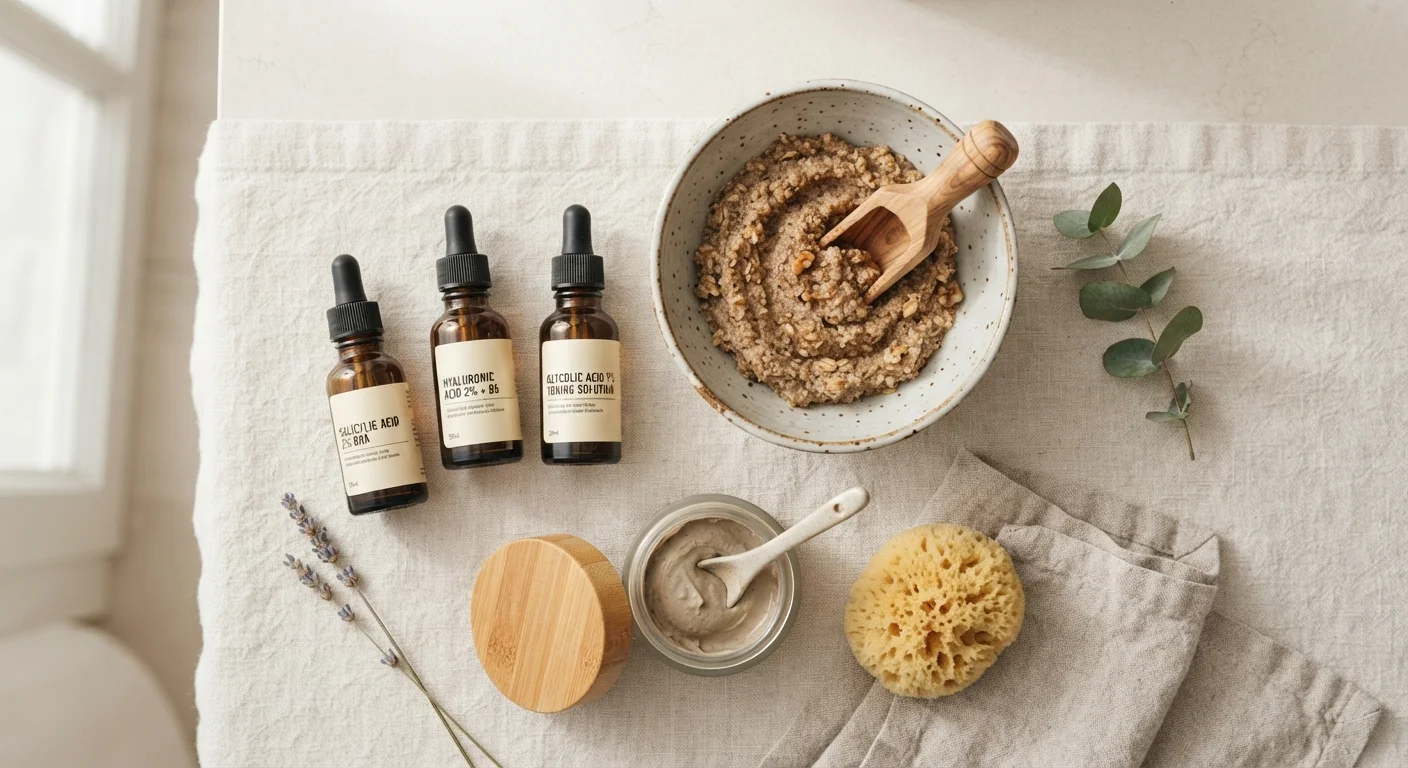
Physical scrubs use friction to mechanically dislodge dead cells. The abrasive agent - whether sugar, salt, ground nut shells, or synthetic microbeads - physically buffs the surface when massaged against skin. The result depends heavily on particle shape, size, and the pressure applied. Jagged or irregularly shaped particles can cause micro-abrasions, particularly on facial skin, which is thinner and more vascularised than body skin.
Chemical exfoliants work biochemically. Rather than scrubbing cells away, they break the cohesion forces holding dead cells to the surface. The main categories are:
AHAs (alpha-hydroxy acids) - water-soluble acids such as glycolic, lactic, and mandelic acid that act on the skin surface, loosening the bonds between dead cells to encourage shedding. They're associated with improving surface texture and tone.
BHAs (beta-hydroxy acids) - salicylic acid is the primary example. It is oil-soluble, allowing it to penetrate into the pore lining and address congestion from within.
Enzyme exfoliants - typically derived from papaya (papain) or pineapple (bromelain), these digest keratin proteins in dead skin cells without the acidity of AHAs or BHAs, making them among the gentler options available.
For a deeper look at how AHAs interact with other widely used actives, see how AHAs earn their place alongside retinol and vitamin C.
| Criterion | Chemical Exfoliants | Physical Scrubs |
|---|---|---|
| Mechanism | Dissolves intercellular bonds biochemically | Mechanically buffs cells via friction |
| Penetration depth | Surface to pore (BHAs go deeper) | Surface only |
| Pore congestion | Effective - especially BHAs | Limited - cannot reach pore interior |
| Sensitivity risk | Low to moderate (dose-dependent) | Moderate to high (particle/pressure-dependent) |
| Barrier disruption risk | Low when used correctly | Higher with irregular particle shapes |
| Sun sensitivity after use | Increased - SPF is essential | Minimal additional photosensitivity |
| Best skin type | All types; formulation-dependent | Normal to oily; body skin |
| Ease of use control | High - concentration is set | Variable - pressure affects outcome |
Skin Barrier Impact and Risk of Over-Exfoliation
Both methods carry a shared risk when misused: compromising the skin barrier. The stratum corneum is not simply dead debris - it forms a structured, lipid-rich layer that retains moisture and protects against pathogens and environmental aggressors. Disrupting it excessively leads to transepidermal water loss, increased sensitivity, and paradoxically, more pronounced skin concerns over time.
Physical scrubs pose a specific concern with granular consistency. Walnut shell powder, for instance, has been noted in dermatology discussions for its irregular, jagged edges. Round-particle alternatives - such as jojoba beads - are generally considered less likely to cause micro-trauma. On body skin with greater thickness, the risk profile is lower than on the face.
Chemical exfoliants carry their own risks at higher concentrations or frequencies. Glycolic acid, the smallest AHA molecule and therefore deepest-penetrating, can cause stinging, redness, and photosensitivity if used without appropriate sun protection. Starting at a low concentration - typically 5-10% for at-home use - and limiting use to two to three times per week is a generally recommended approach, though individual tolerance varies.
Sun Protection Is Non-Negotiable After AHAs
Alpha-hydroxy acids increase the skin's sensitivity to UV radiation by removing the outermost protective layer of cells. This is a well-established, temporary effect that makes daily broad-spectrum SPF 30 or higher essential when using AHAs regularly. Skipping sun protection after chemical exfoliation can worsen the very concerns - such as hyperpigmentation - that AHAs are commonly used to address.
If you're building a routine that includes multiple actives, introducing them methodically reduces the risk of barrier disruption and makes it easier to identify what's causing any reaction.
Matching the Method to Your Skin and Concern
No single exfoliation approach is right for everyone. The appropriate choice depends on skin type, specific concerns, and how a product is formulated and applied.
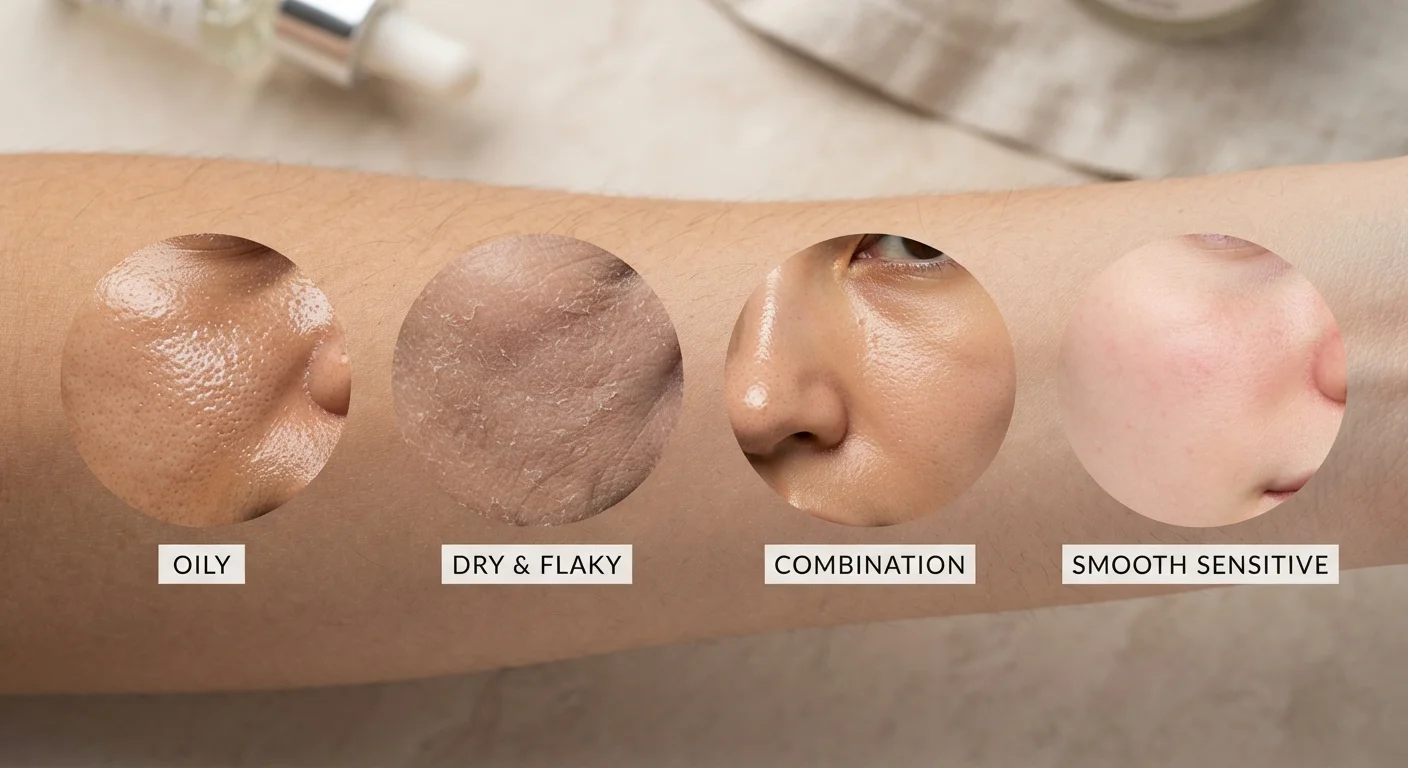
For oily, acne-prone skin: BHAs are strongly supported by dermatological consensus. Salicylic acid's lipophilic (oil-attracting) nature makes it functionally better suited to clearing pores than a surface scrub, which cannot reach sebum trapped within follicles.
For dry or mature skin: Lactic acid - an AHA with a larger molecular size than glycolic - tends to be better tolerated and also has humectant properties, meaning it attracts moisture to the skin. It improves texture without the same level of potential irritation as higher-strength glycolic formulations.
For sensitive or rosacea-prone skin: Enzyme exfoliants are often cited as the most appropriate entry point. However, those with active rosacea, eczema, or other diagnosed inflammatory skin conditions should consult a dermatologist before adding any exfoliant to their routine.
For body skin: Physical scrubs are more defensible here. Thicker skin on elbows, knees, and heels tolerates mechanical exfoliation better, and the satisfying in-shower experience is practical. Look for formulations with rounded, uniformly sized particles and built-in emollients to support the barrier after exfoliation.
To understand how these ingredients are categorised and classified in formulations, the body care ingredients glossary provides a useful plain-language reference across the full spectrum of actives.
~4-6 weeks
Typical timeframe to see visible exfoliant results
Dermatologists generally note that a full skin cell turnover cycle takes roughly four to six weeks, meaning consistent use over this period is needed before judging efficacy.
2-3×/week
Commonly recommended maximum exfoliation frequency
Most dermatology guidance suggests limiting exfoliation - chemical or physical - to two to three times per week for the face to avoid compromising the skin barrier.
5-10%
AHA concentration range for at-home use
At-home AHA formulations are typically available at these concentrations; higher percentages used in professional settings require trained oversight due to greater irritation risk.
This article is for general informational and educational purposes only and does not constitute medical advice. If you have a diagnosed skin condition or concerns about your skin health, consult a qualified dermatologist or healthcare professional before changing your skincare routine.