
Why Ingredient Literacy Matters for Body Care
Body care labels are governed by the same INCI (International Nomenclature of Cosmetic Ingredients) naming conventions used in facial skincare - yet most of us pay far less attention to them. Whether you are selecting a body lotion, a chemical exfoliant, or an SPF, knowing what each category of ingredient does helps you make more informed choices and spot potential irritants before they become a problem.
This glossary covers the most commonly encountered actives, emollients, humectants, occlusives, and preservatives found in body care formulations. For a deeper look at how these naming conventions work across hair products, see our guide on reading an ingredient list on a shampoo or conditioner. And if you want to understand how the skin barrier processes all of these ingredients, our skin barrier primer is a useful companion read.
| Ingredient list order | Listed highest to lowest concentration (by weight) (US FDA cosmetic labelling regulations) |
| Naming standard | INCI (International Nomenclature of Cosmetic Ingredients) (Required in US and EU cosmetic labelling) |
| Zinc oxide regulatory status | FDA Category I - generally recognised as safe and effective sunscreen active (US FDA sunscreen monograph) |
| Phenoxyethanol max concentration | Up to 1% in finished cosmetic products (EU Cosmetics Regulation; US cosmetic industry guidance) |
| AHA photosensitivity note | Alpha-hydroxy acids increase UV sensitivity; daily SPF use is recommended (US FDA advisory on AHA-containing products) |
| Urea concentration range | 2-10% humectant; higher concentrations for keratolytic (exfoliant) effect (Dermatology literature consensus) |
A-Z Glossary of Key Body Care Ingredients
The entries below are grouped by function, then listed alphabetically within each group. Concentrations and effects vary by formulation; this content is general education, not medical or dermatological advice. Consult a qualified healthcare professional for personal skin concerns.
Actives & Exfoliants
AHAs (Alpha-Hydroxy Acids) - Water-soluble acids derived from fruits, milk, or sugarcane (e.g., glycolic acid, lactic acid, mandelic acid). They loosen the bonds between dead skin cells on the surface, promoting exfoliation. Lactic acid is generally considered milder and may suit drier or more sensitive skin. All AHAs increase photosensitivity, so sun protection is important when using them.
BHAs (Beta-Hydroxy Acids) - Oil-soluble exfoliants, most commonly salicylic acid. Because they can penetrate into pores, BHAs are often used on areas prone to congestion such as the back or chest. They also have documented anti-inflammatory properties, which is why they appear in formulations targeting body acne.
Retinol & Retinoids - Vitamin A derivatives that support cell turnover and collagen synthesis. Retinol is the over-the-counter form; prescription-strength retinoids (such as tretinoin) are prescribed by clinicians. On the body, retinol is used in formulations targeting rough texture or uneven tone. Irritation risk is real, particularly at higher concentrations - see our article on introducing active ingredients without disrupting your skin for a methodical approach.
Vitamin C (L-Ascorbic Acid & Derivatives) - An antioxidant that neutralises free radicals and plays a role in collagen production. Stability is a known formulation challenge; derivatives like ascorbyl glucoside or sodium ascorbyl phosphate are more stable but may have lower potency. For a side-by-side breakdown of retinol, AHAs, and vitamin C, visit our retinol, AHAs, and vitamin C guide.
Humectants
Glycerin (Glycerol) - One of the most studied and widely used humectants in skin care. It draws water from the environment and the deeper dermis toward the skin's surface, supporting hydration. Generally well tolerated across skin types.
Hyaluronic Acid (HA) - A naturally occurring polysaccharide that can hold significant amounts of water relative to its weight. In body care, it is typically found in serums and richer lotions. Different molecular weights penetrate to different depths in the skin.
Urea - A naturally occurring compound in the skin's natural moisturising factor (NMF). At lower concentrations (roughly 2-10%), it acts as a humectant; at higher concentrations, it can exfoliate thickened or calloused skin. Commonly used in foot creams and treatments for dry, rough skin conditions - a clinician can advise on appropriate concentrations for specific concerns.
Emollients & Occlusives
Ceramides - Lipids that are naturally present in the skin barrier. Topical ceramides help replenish the intercellular matrix that holds skin cells together, supporting barrier function and reducing transepidermal water loss (TEWL).
Petrolatum (Petroleum Jelly) - One of the most effective occlusives in dermatology, meaning it forms a physical barrier on the skin's surface to prevent water evaporation. It does not moisturise on its own but locks in existing hydration. Cosmetic-grade petrolatum is considered safe by major regulatory bodies.
Shea Butter & Plant Oils - Emollients derived from plant sources that soften and smooth the skin by filling in gaps between skin cells. Their fatty acid profiles vary; for example, oils high in linoleic acid may be better tolerated by acne-prone skin compared to those high in oleic acid.
UV Filters & Protectants
Zinc Oxide - A mineral (physical) UV filter that reflects and scatters UV radiation. It provides broad-spectrum protection (UVA and UVB) and is generally considered less irritating than many chemical filters, making it a common recommendation for sensitive or reactive skin. Zinc oxide is FDA-recognised as a Category I (generally recognised as safe and effective) sunscreen ingredient.
INCI
International Nomenclature of Cosmetic Ingredients - the standardised naming system used on cosmetic labels worldwide. INCI names are derived from Latin botanical, chemical, or pharmaceutical nomenclature and are required on product labels in the US and EU.
Humectant
An ingredient that attracts and binds water molecules to the skin. Humectants draw moisture from the environment or from deeper skin layers toward the surface to maintain hydration. Common examples include glycerin, hyaluronic acid, and urea.
Emollient
An ingredient that softens and smooths skin by filling in the microscopic gaps between skin cells. Emollients improve texture and flexibility without necessarily forming a seal against water loss. Examples include shea butter and most plant oils.
Occlusive
An ingredient that forms a physical barrier on the skin's surface to reduce transepidermal water loss (TEWL). Occlusives do not add moisture directly but seal in existing hydration. Petrolatum and beeswax are well-known examples.
Transepidermal Water Loss (TEWL)
The passive evaporation of water through the skin barrier into the surrounding environment. Elevated TEWL is associated with a compromised skin barrier and conditions such as eczema. Occlusives and ceramides help reduce TEWL.
Broad-Spectrum Protection
A UV filter or sunscreen designation indicating that the product protects against both UVA rays (associated with skin aging and deeper damage) and UVB rays (the primary cause of sunburn). US FDA regulations define specific criteria a product must meet to use this label.
Natural Moisturising Factor (NMF)
A collection of water-attracting compounds naturally found in the skin's outermost layer (stratum corneum). NMF includes amino acids, urea, lactic acid, and other substances that help maintain the skin's hydration and flexibility.
Photosensitivity
Increased susceptibility to UV-induced skin damage, often triggered by certain topical ingredients such as AHAs or retinoids. Individuals using photosensitising ingredients are generally advised to apply broad-spectrum SPF daily and limit unprotected sun exposure.
Preservatives & Stabilisers
Phenoxyethanol - A widely used preservative that prevents microbial growth in water-containing formulations. It is approved for use at concentrations up to 1% in cosmetics under EU and US regulatory frameworks. Some individuals report sensitivity; patch testing is a sensible precaution with any new product.
Tocopherol (Vitamin E) - Used both as an antioxidant (to protect formula stability) and as a skin-conditioning agent. It helps prevent oxidative degradation of oils within a formula and may support barrier function at the skin level.
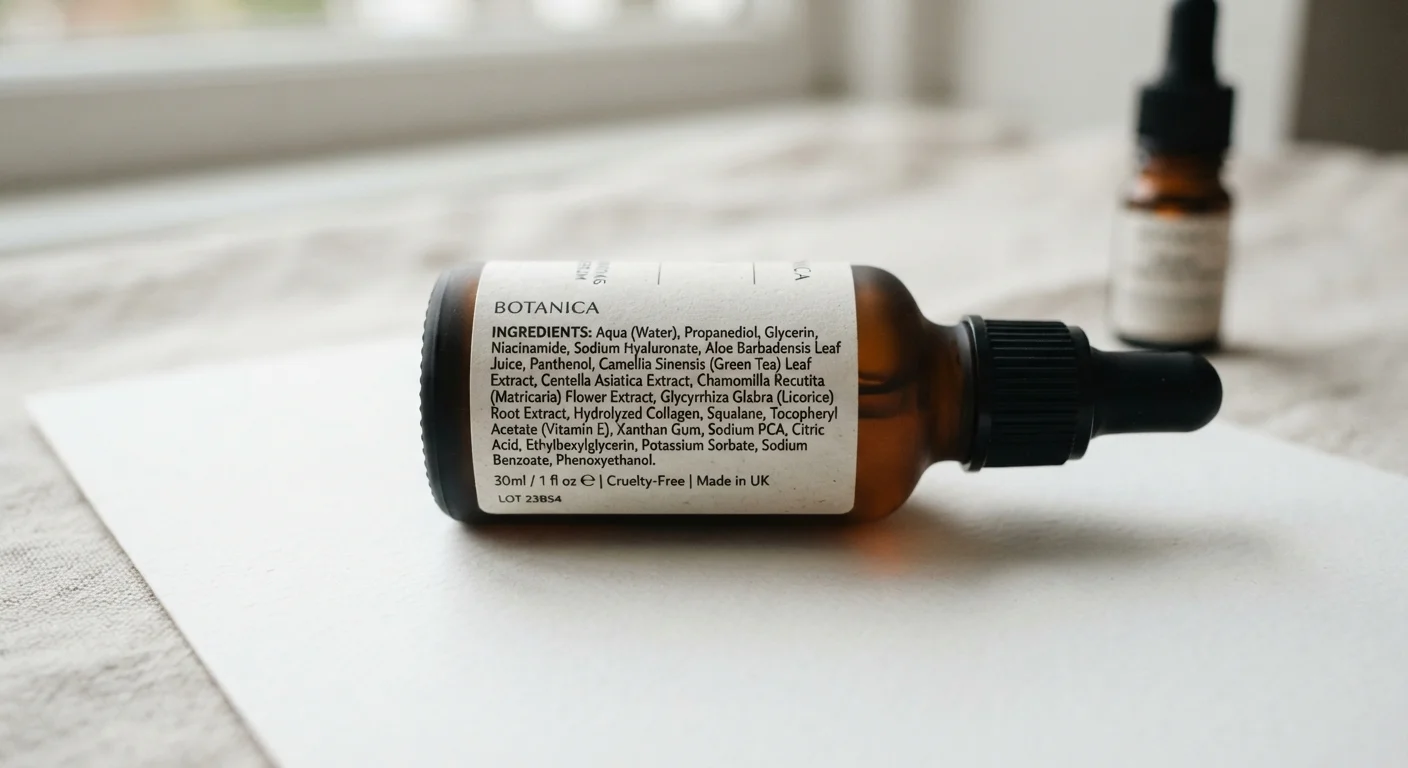
For a full guide to reading these ingredients in order on a label - including what concentration position reveals - see our article on decoding a skincare label. If you are curious about which ingredient combinations may cause irritation when layered together, our article on ingredient interactions that can irritate your skin covers the most commonly flagged pairings.
This article is for general informational and educational purposes only and does not constitute medical, dermatological, or personal skincare advice. Always consult a qualified healthcare professional for personal skin concerns or conditions.