
Why Ingredient Lists Look So Complicated
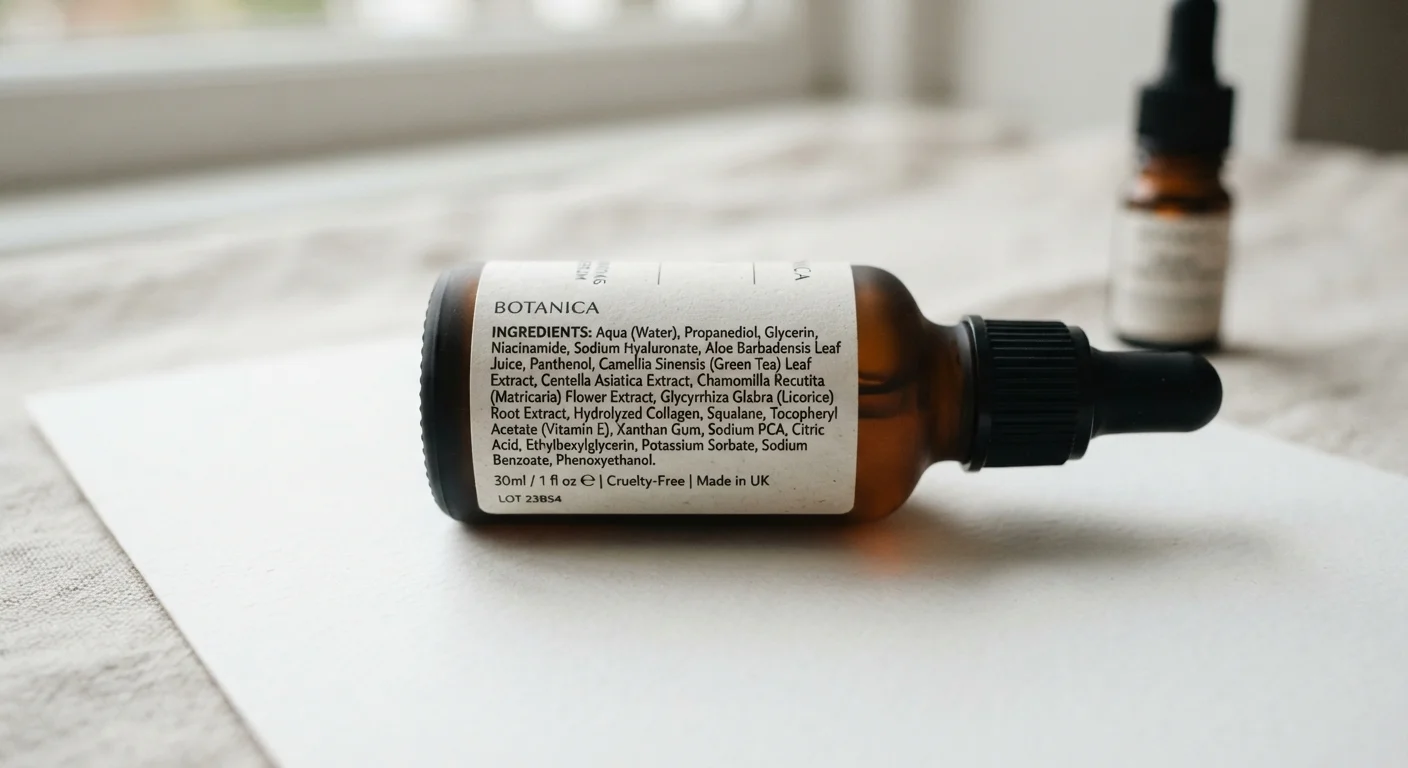
Cosmetic ingredient labels in the US follow a system called INCI - a globally standardized naming convention that uses Latin botanical names and scientific chemical names rather than marketing language. This is why cocos nucifera appears instead of 'coconut oil,' and sodium lauryl sulfate instead of 'foaming agent.' Once you understand this convention, the list becomes far more readable.
The FDA requires that all rinse-off cosmetics sold in the US list ingredients in descending order of concentration by weight, with one important exception: any ingredient present at 1% or less may be listed in any order after those present above 1%. This means the tail end of a long list - where preservatives, fragrance, and specialty actives often appear - doesn't necessarily reflect a strict hierarchy.
For a deeper look at how this same logic applies to body and face products, see our guide to decoding a skincare label.
The Functional Categories You Actually Need to Know
Rather than memorizing individual ingredients, it's more useful to recognize functional categories. Most shampoo and conditioner formulas are built around the same core building blocks:
- Surfactants (shampoos): These create lather and lift oil and debris from the scalp and hair shaft. Common examples include sodium laureth sulfate, cocamidopropyl betaine, and sodium cocoyl isethionate. Their type and concentration determine how 'stripping' or gentle a cleanser feels.
- Conditioning agents (conditioners and 2-in-1s): Quaternary ammonium compounds - often called 'quats' - such as behentrimonium chloride and cetrimonium chloride are positively charged molecules that adhere to the negatively charged surface of hair, reducing static and improving slip.
- Emollients and occlusives: Fatty alcohols like cetyl alcohol and stearyl alcohol (despite their name, these are not drying) provide texture and seal the cuticle. Natural oils such as argania spinosa (argan) kernel oil serve a similar function.
- Humectants: Glycerin, panthenol (provitamin B5), and sodium PCA attract moisture from the environment into the hair shaft, supporting softness and flexibility.
- Preservatives: Phenoxyethanol, sodium benzoate, and potassium sorbate prevent microbial growth. Their presence is a sign of a properly formulated product, not a red flag.
Our body care ingredients glossary provides plain-language definitions for hundreds of these terms if you want to go deeper.
Concentration Clues in the Middle of the List
Ingredients listed between positions 6 and 12 often include specialty additives - proteins, botanical extracts, and vitamins - present at low but potentially meaningful concentrations. These are the ingredients brands most often highlight in marketing. Their position doesn't make them ineffective, but it does provide useful context about how much of the formula they represent.
How to Read a Label Step by Step
Identify the First Five Ingredients
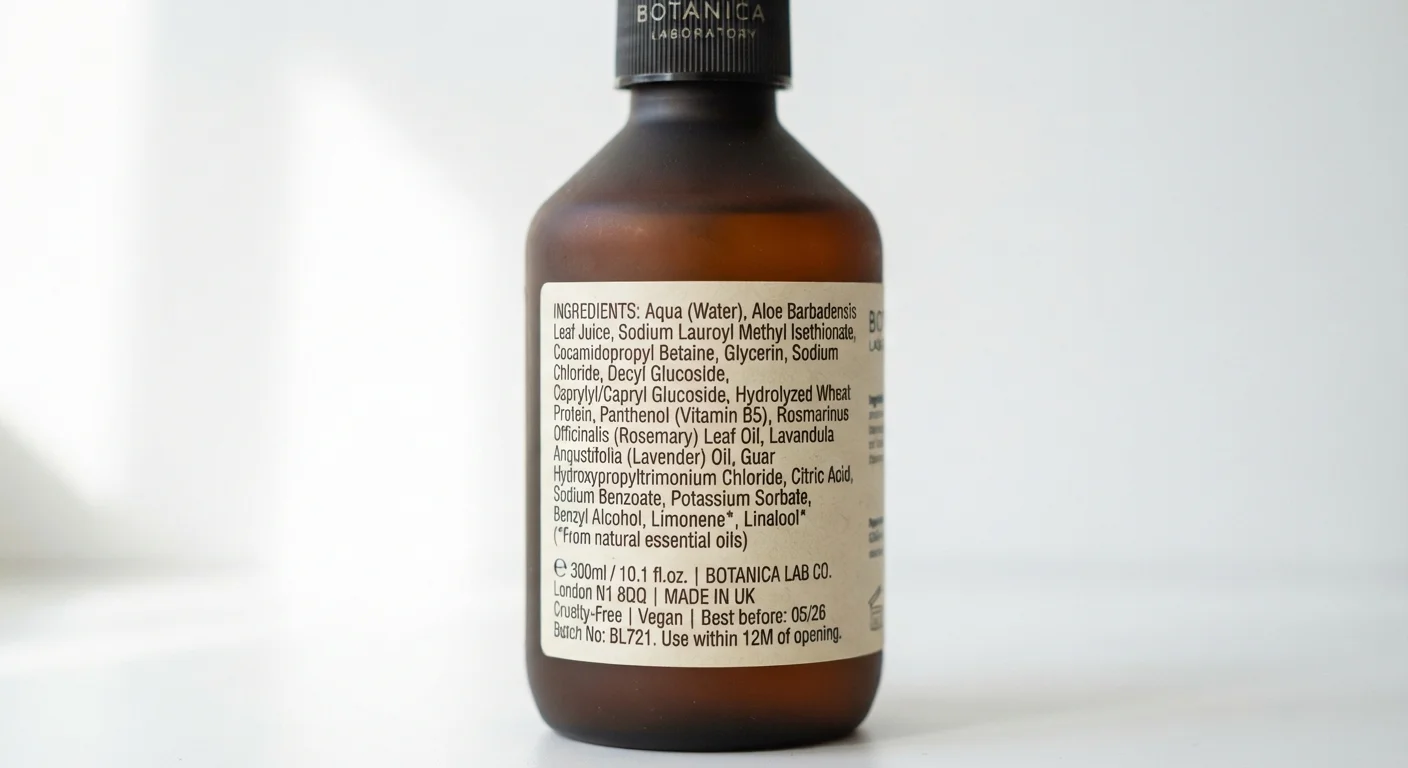
Scan the list and mentally isolate the first five to six entries. These typically account for 80-95% of the formula by weight. In a shampoo, you'll nearly always see water (aqua) first, followed by one or two surfactants. In a conditioner, water is followed by fatty alcohols and conditioning agents. What's prominent here defines the product's core performance.
Recognize the Surfactant System
In shampoos, locate the primary cleansing agent. Sulfate-based surfactants (sodium lauryl sulfate, sodium laureth sulfate) are highly effective but can be drying for some hair types. Milder alternatives include cocamidopropyl betaine, sodium cocoyl isethionate, and decyl glucoside. A formula with a blend of surfactants generally balances cleansing power with gentleness better than one relying on a single agent.
Check the Conditioning and Moisturizing Agents
In conditioners, look for quaternary ammonium compounds (quats) like behentrimonium methosulfate or cetrimonium chloride - these are functional conditioning actives, not just texture enhancers. Fatty alcohols (cetyl alcohol, stearyl alcohol) add slip and structure. Humectants like glycerin or panthenol improve moisture retention. A conditioner without any of these functional classes is unlikely to deliver meaningful detangling or softness.
Locate Fragrance and Potential Sensitizers
Scan for the words 'fragrance,' 'parfum,' or individual fragrance allergens (linalool, limonene, citronellol are common examples now increasingly disclosed on labels). If you have a sensitive scalp or known contact allergies, identifying these entries is important even when they appear at the bottom of the list, since fragrance compounds can be reactive at very low concentrations.
Cross-Reference Unfamiliar Names
For any ingredient you don't recognize, use the INCI name to look it up in a reliable cosmetic ingredient database. The PCPC maintains a publicly accessible CosIng-aligned reference, and the EU's CosIng database is freely available online. These resources provide functional class, safety assessment status, and usage context - far more useful than social media commentary.
Common Points of Confusion
A few recurring sources of label confusion are worth addressing directly:
"Free from" claims: Phrases like 'sulfate-free' or 'paraben-free' are marketing statements, not regulatory categories. They tell you what's absent but say nothing about what replaces those ingredients or whether the alternatives perform better for your hair type. For a grounded look at what the evidence actually shows, see our article on sulfates, parabens, and silicones.
Fragrance (parfum): Both 'fragrance' and 'parfum' are umbrella terms that can cover dozens of undisclosed compounds under trade secret protections. For people with sensitive scalps, this single entry can be the most consequential on the label. Our detailed coverage of fragrances in personal care explains what to look for and why reactions occur.
Water (aqua): Water is almost always the first ingredient in rinse-off formulas and serves as the solvent in which other ingredients are dissolved or dispersed. Its top position doesn't indicate low quality - it's structurally necessary.
Don't Rely on Front-Label Claims Alone
Terms like 'nourishing,' 'strengthening,' or 'for damaged hair' are not regulated categories and carry no standardized definition. Always cross-reference front-label claims with the actual ingredient list to assess whether the formula contains functional ingredients that support those claims. Marketing language and formulation reality don't always align.