
What the Four Skin Types Actually Mean
The four-type framework - oily, dry, combination, and sensitive - has been the foundation of clinical and consumer skincare for decades. Each label describes a physiological tendency rather than a permanent state.
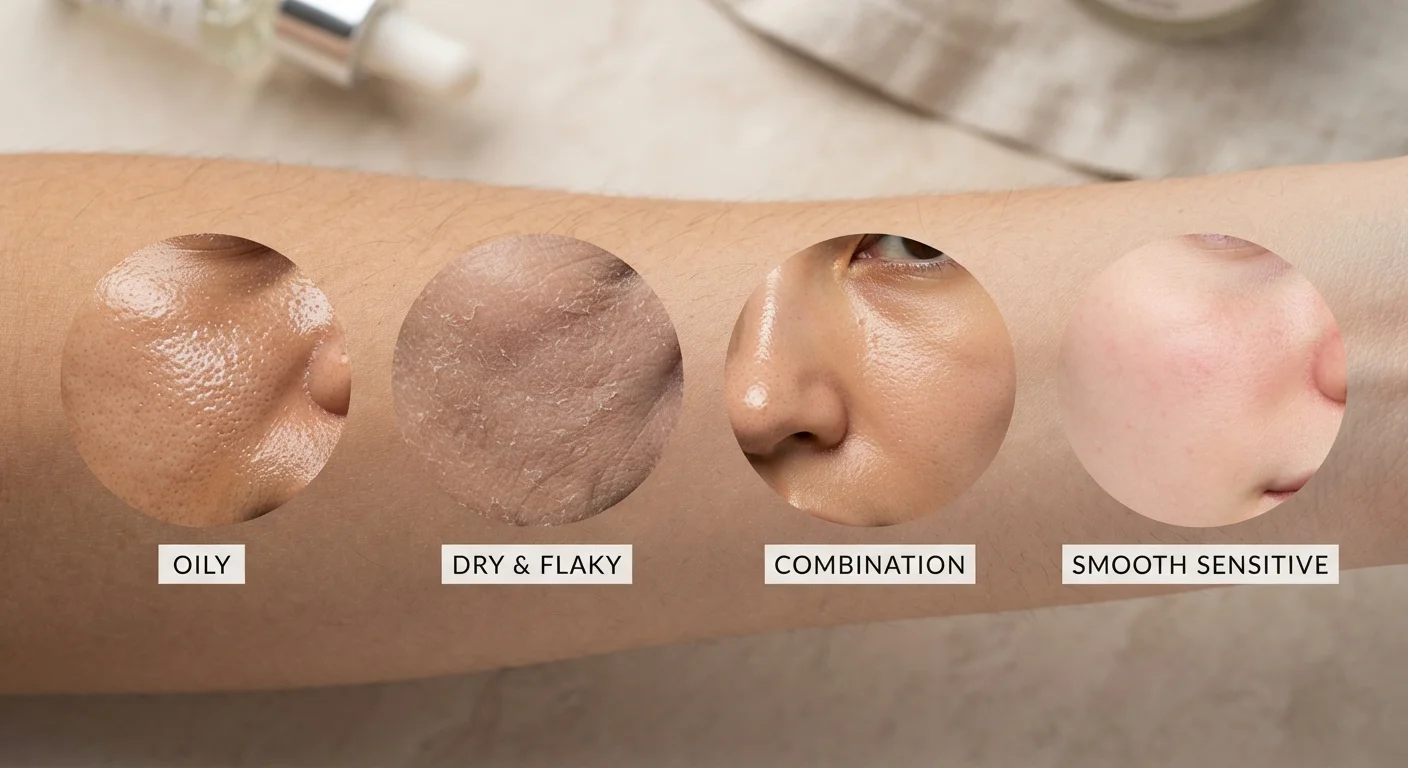
- Oily skin produces excess sebum from enlarged or overactive sebaceous glands, leaving a visible shine, particularly across the forehead, nose, and chin. Pores often appear larger due to the volume of oil passing through them.
- Dry skin is defined by low sebum output and a compromised lipid barrier, leading to reduced ability to retain moisture. Transepidermal water loss (TEWL) - the rate at which water evaporates through the skin - is measurably higher in dry skin types.
- Combination skin presents both characteristics simultaneously: oiliness in the T-zone (forehead, nose, chin) alongside normal or dry cheeks. It is actually the most common presentation in adults.
- Sensitive skin describes a reactivity pattern - a tendency toward redness, stinging, or irritation - rather than a sebum-based category. It can co-exist with any of the three structural types above.
A fifth category, normal skin, is sometimes listed separately and describes skin that is balanced: neither excessively oily nor dry, with minimal reactivity. In practice, dermatologists consider this a subset of the broader framework rather than a distinct type.
How Skin Type Is Clinically Assessed
Dermatologists use standardized methods to assess skin type, moving beyond subjective feel to measurable indicators. Two primary tools are used in clinical settings:
- Sebumeter readings - a device that quantifies the lipid content on the skin surface over a set time period, giving an objective sebum measurement.
- TEWL (transepidermal water loss) measurement - an evaporimetry-based reading that reflects the integrity of the skin barrier; elevated TEWL is characteristic of dry or compromised skin.
Assessments are made after a controlled washout period - typically the patient avoids applying products for several hours - and under stable temperature and humidity conditions. This ensures the reading reflects baseline skin behavior, not product effects or temporary environmental influence.
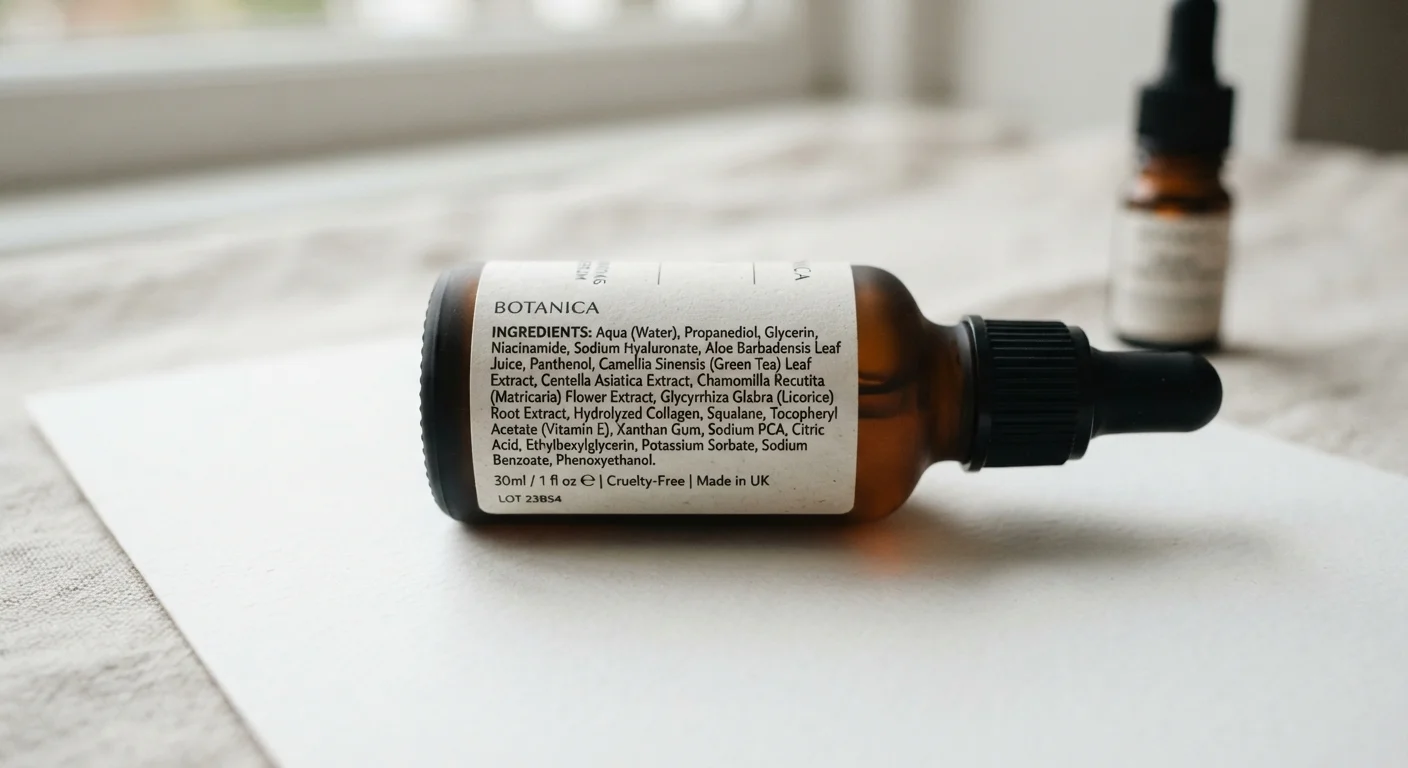
At home, the most reliable self-assessment method is the bare-face test: cleanse with a gentle, neutral cleanser, wait 60-90 minutes without applying anything, then observe shine, tightness, and how the skin feels across different zones. It won't replicate clinical precision, but it provides a useful personal baseline. Understanding what's inside your skincare products can also help you identify whether a formula is appropriate for your type.
~50%
Adults reporting combination skin
Combination skin is consistently cited in dermatology literature as the most prevalent self-reported type among adult populations.
~40%
Reduction in sebum production with age
Research published in dermatology journals indicates sebum secretion can decline by roughly 40% between early adulthood and the sixth decade of life.
38-71%
Adults self-reporting sensitive skin
A wide range of population studies suggest sensitive skin self-reporting varies significantly by region and definition, reflecting how subjective the category remains.
Why Skin Type Isn't Fixed
Skin type is often treated as a permanent characteristic, but the biology tells a more dynamic story. Several factors cause meaningful, sometimes lasting, shifts in how skin behaves:
Hormonal Changes
Androgens stimulate sebaceous gland activity, which is why oily skin and acne commonly peak during adolescence. As androgen levels change through adulthood - during pregnancy, postpartum recovery, perimenopause, or andropause - sebum production shifts accordingly. Many people find their skin becomes progressively drier from their late thirties onward.
Age and Barrier Degradation
Over time, the skin produces fewer lipids and ceramides - the structural components of the barrier - and collagen turnover slows. This typically leads to drier, thinner skin in later decades, even for those who had oily skin in youth.
Climate and Seasonal Conditions
Temperature, humidity, UV exposure, and wind all influence sebum and moisture levels on a seasonal cycle. These fluctuations affect skin condition (how the skin behaves right now) rather than underlying skin type, but the distinction matters for routine-building. Our seasonal skincare adjustment guide covers this in detail.
Skincare Habits
Overuse of harsh cleansers, exfoliants, or alcohol-based products can strip the barrier and induce a temporarily dry or sensitized state regardless of underlying type. Conversely, heavy occlusive moisturisers used on already oily skin can exacerbate congestion.
Reassess Your Skin Type Seasonally
Rather than performing a single skin-type assessment and treating it as permanent, consider doing the bare-face test at the start of each new season. Winter and summer conditions can shift your skin's behavior enough to warrant a different product approach. Small adjustments - swapping a gel moisturiser for a cream in colder months, for example - can make a meaningful difference in comfort and barrier health.
Applying Skin Type Knowledge to Your Routine
Knowing your skin type is most useful as a starting point for product selection - not a rigid prescription. A few evidence-aligned principles apply across types:
- Oily skin benefits from lightweight, non-comedogenic formulas and gel or water-based moisturisers. Skipping moisturiser entirely can backfire: dehydrated oily skin may compensate by producing more sebum.
- Dry skin responds well to barrier-supporting ingredients - ceramides, fatty acids, and humectants like glycerin and hyaluronic acid - applied to slightly damp skin to improve absorption.
- Combination skin often calls for zone-specific application rather than a single formula across the whole face.
- Sensitive skin typically benefits from minimal-ingredient formulas, fragrance-free products, and slow introduction of any new active ingredient.
Because skin type can shift, it's worth reassessing your routine periodically - particularly after significant hormonal changes, a move to a new climate, or entering a new decade. Our full-body moisturising guide maps these principles beyond the face. For hair, hair porosity plays an analogous role in determining what care routines actually work.
This article is for general informational purposes only and does not constitute medical or dermatological advice. Consult a licensed dermatologist for personal concerns about your skin.