
Why the Calendar Matters for Your Skin
Your skin is a dynamic organ, not a static surface. The outermost layer - the stratum corneum - acts as a physical and chemical barrier, and its function is measurably affected by environmental conditions. When temperature drops, sebaceous gland activity slows, transepidermal water loss (TEWL) increases, and the lipid matrix that holds skin cells together contracts. When humidity rises in summer, the opposite pressures apply. These aren't minor fluctuations; dermatological research consistently links seasonal shifts to changes in barrier integrity, hydration levels, and inflammatory responses.
The practical consequence is that a routine perfectly calibrated for August can actively work against you in February - and vice versa. Understanding the underlying mechanisms helps you make smarter adjustments rather than guessing or overcorrecting. For readers also navigating skin conditions, our guide on grooming for sensitive skin conditions outlines additional considerations worth layering in. Below, five seasonal adjustment principles stand out as most evidence-informed and broadly applicable.
Swap Moisturiser Weight, Not Your Entire Routine
The single most impactful seasonal adjustment for most people is changing the occlusive weight of their moisturiser. In warmer, more humid months, a gel-based or lightweight lotion with humectants like hyaluronic acid or glycerin is generally sufficient - and a heavier formula can feel suffocating and even contribute to congestion in oilier areas. As temperatures fall and indoor heating reduces ambient humidity, the barrier needs more lipid reinforcement. Richer creams containing ceramides, fatty acids, or occlusives like petrolatum or dimethicone help reduce TEWL more effectively in cold, dry air.
The key insight is that you're adjusting one variable - texture and lipid content - not rebuilding from scratch. Your active ingredients (vitamin C, retinoids, niacinamide) can largely remain consistent; it's the delivery vehicle that needs to respond to environmental demand.
Adjust moisturiser weight seasonally - your actives can largely stay the same.
Maintain SPF Year-Round, Adjust Application Strategy Seasonally
Broad-spectrum sun protection is not a summer-only concern. UVA radiation - which drives photoageing and contributes to skin cancer risk - penetrates cloud cover and glass, and its intensity varies far less by season than UVB does. What changes with the seasons is the UVB index and the amount of incidental sun exposure you accumulate, which affects how you think about reapplication.
In summer, especially if you're outdoors for extended periods, higher SPF, water resistance, and consistent reapplication every two hours matter more. In winter, you may spend less time directly exposed, but a morning application of SPF 30 or above as part of your AM routine remains warranted. Those planning travel or extended outdoor activity should also review pre-holiday hair and skin prep for environment-specific SPF strategies.
UVA radiation persists year-round - SPF is a daily non-negotiable in every season.
Recalibrate Exfoliation Frequency With the Season
Chemical exfoliants - AHAs (alpha-hydroxy acids) and BHAs (beta-hydroxy acids) - are effective tools for cell turnover, but their use warrants seasonal consideration. In summer, photosensitivity is a material concern: AHAs in particular can increase UV sensitivity, so if you're using them, consistent SPF and possibly reduced frequency are both reasonable responses to higher UV months. In winter, when the barrier is already under stress from cold air and low humidity, over-exfoliation can strip lipids and impair recovery, leading to reactive or sensitised skin.
A pragmatic approach: use exfoliants consistently but taper frequency when your skin signals irritation or tightness - both more common in winter - and ensure SPF habits are solid before escalating use in summer. The relationship between your AM and PM routines also factors here; morning vs evening routine timing explains why exfoliant placement in your schedule matters independently of season.
Exfoliation frequency should flex seasonally - barrier stress in winter and UV risk in summer both warrant adjustment.
Address Humidity Swings Before Your Skin Forces You To
Indoor environments introduce a layer of complexity that outdoor temperature alone doesn't capture. In winter, central heating dramatically reduces indoor relative humidity - often to levels that accelerate TEWL even when you're not exposed to outdoor cold. In summer, air conditioning can have a similar drying effect in offices or homes. This means your skin may be navigating rapid humidity transitions multiple times a day.
Practical responses include applying moisturiser to slightly damp skin to maximise humectant uptake, using a humidifier in sleeping spaces during heating season, and - where skin is already compromised - favouring fragrance-free, minimal-ingredient formulas that reduce the risk of additional irritation. Ingredients to prioritise in low-humidity conditions include ceramides (barrier repair), glycerin (water-binding), and squalane (lipid replenishment without heaviness).
Indoor heating and air conditioning can be as drying as outdoor conditions - account for both.
Treat Transitional Seasons as Gradual Recalibrations
Spring and autumn are frequently underestimated as skincare inflection points. The temptation is to flip routines abruptly - switching to lightweight products the day temperatures rise in March, or loading up on heavy creams the moment October arrives. In practice, the skin barrier adapts more successfully to gradual transitions. A sudden change in formulation can cause temporary purging, reactivity, or a misread of what the skin actually needs, since barrier adaptation lags behind ambient changes by days to weeks.
A more measured approach: begin introducing your seasonal adjustments two to three weeks before the weather shift is established. If you're moving toward winter, add a richer moisturiser two or three nights a week initially. If you're heading into summer, incorporate your lighter formula progressively rather than all at once. This also gives you time to identify how your skin is genuinely responding rather than assuming one season's routine will translate cleanly to the next.
Gradual product transitions in spring and autumn outperform abrupt seasonal switches for most skin types.
Building a Routine That Moves With the Year
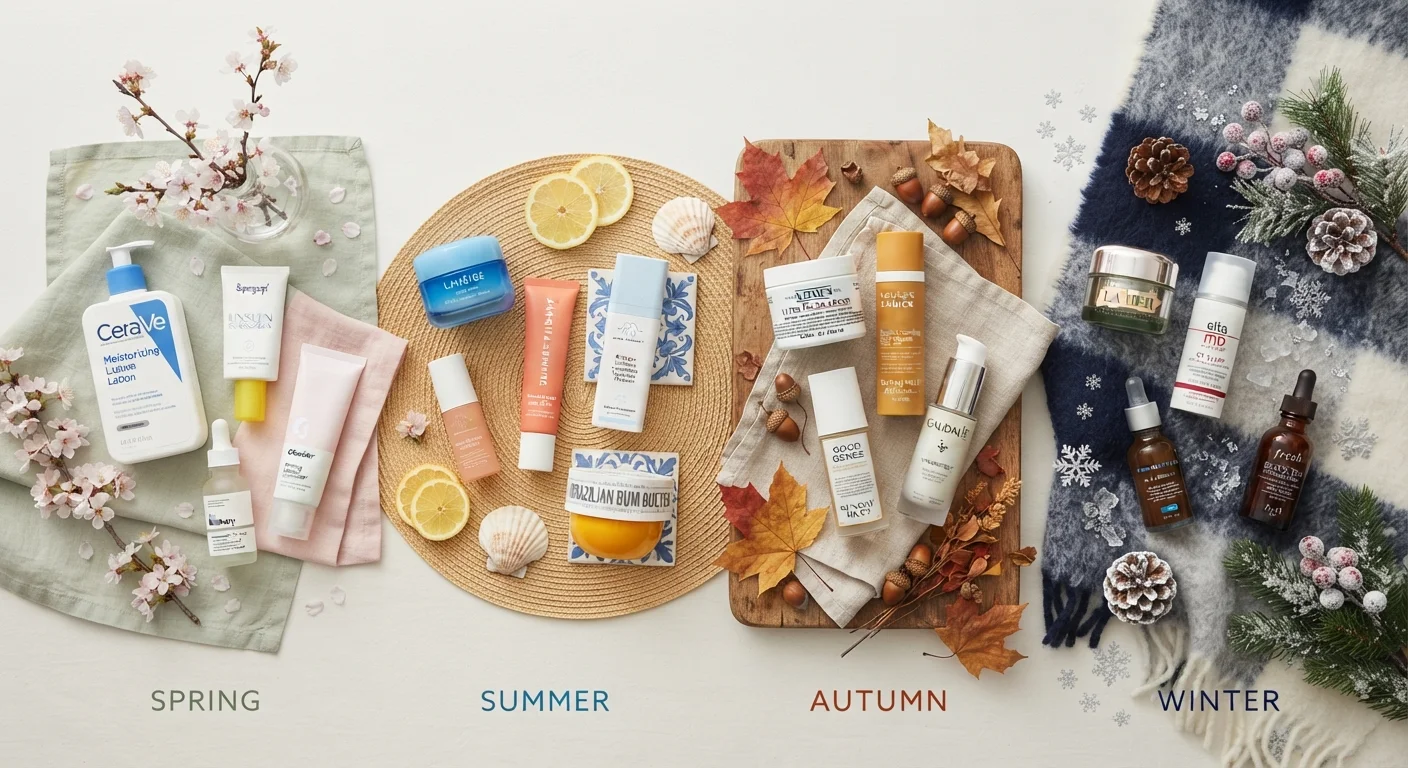
Seasonal skincare adaptation isn't about buying a new product lineup every three months. It's about understanding which variables have genuinely changed - humidity, UV index, indoor heating - and making targeted, proportionate responses. For most people, that means two substantive routine shifts per year (summer-to-winter and winter-to-summer) and two lighter recalibrations during the transitional months.
Track Your Skin Across the Year
Keeping a brief monthly note - even just a few words about how your skin feels and what's in your routine - makes seasonal patterns much easier to identify. Over a year or two, you'll likely spot predictable dry spells in winter or breakout-prone periods in summer that you can get ahead of rather than react to. This kind of observational record is also useful context to share with a dermatologist if concerns arise.
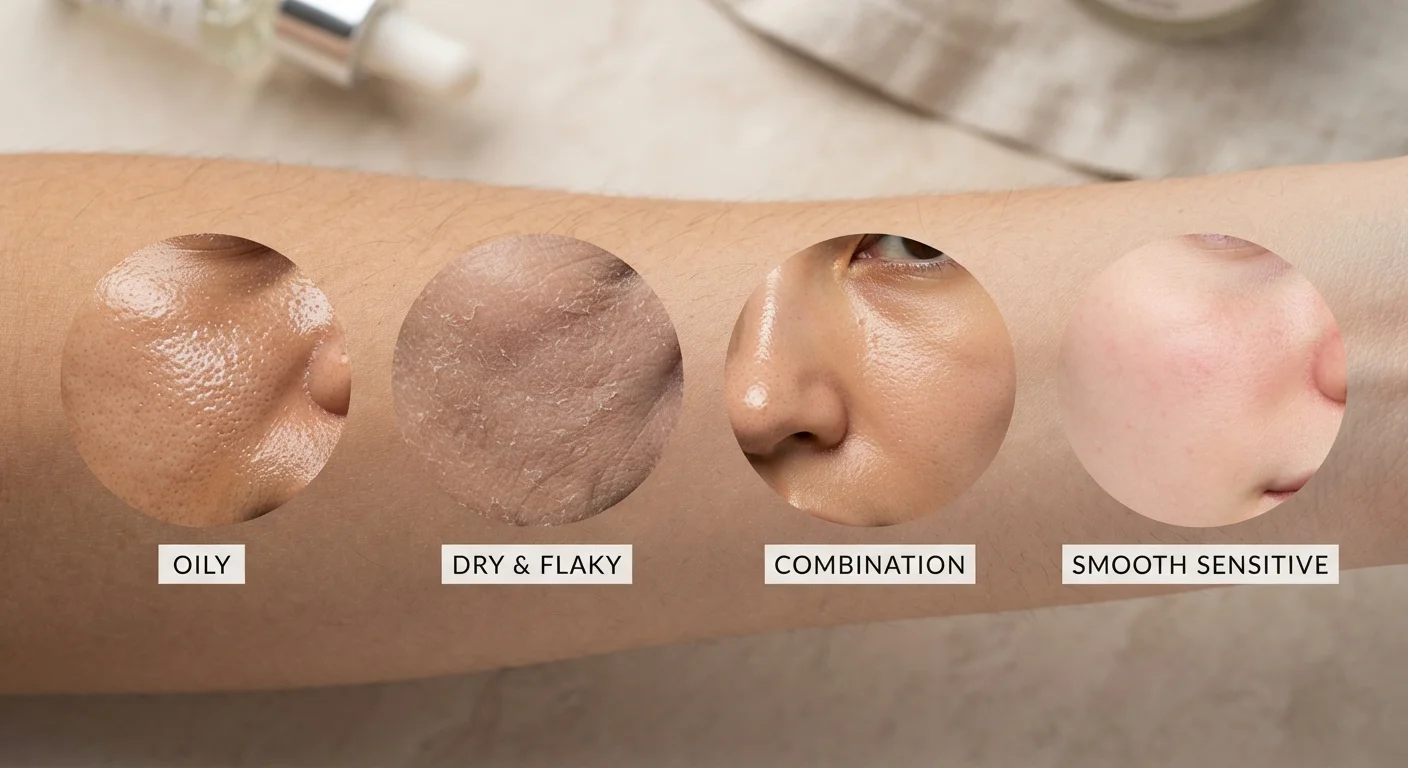
It's also worth recognising that skin type itself isn't always fixed. What reads as oily in July may behave as combination in January. Our explainer on how skin type is determined and can change offers a useful framework for interpreting those shifts. And if your routine includes the rest of your body - not just your face - a full-body moisturising routine built around skin type is a practical complement to the adjustments above.
This article is for general informational purposes only and does not constitute medical or dermatological advice. If you have a skin condition or concerns about your skin health, consult a qualified healthcare or dermatology professional.