
Why ingredient literacy matters
Marketing copy on a skincare product's front label is not regulated the way ingredient declarations are. Terms like "nourishing," "brightening," or "clinically tested" carry no standardized legal definition. The ingredient list, by contrast, is governed by FDA regulations and provides the most transparent, factual picture of what you are actually applying to your skin.
Developing even a basic ability to read an INCI list shifts the dynamic: rather than relying on claims, you can evaluate a formula on its actual contents. This matters whether you are navigating a sensitive skin condition, trying to avoid a known irritant, or simply making more informed purchasing decisions.
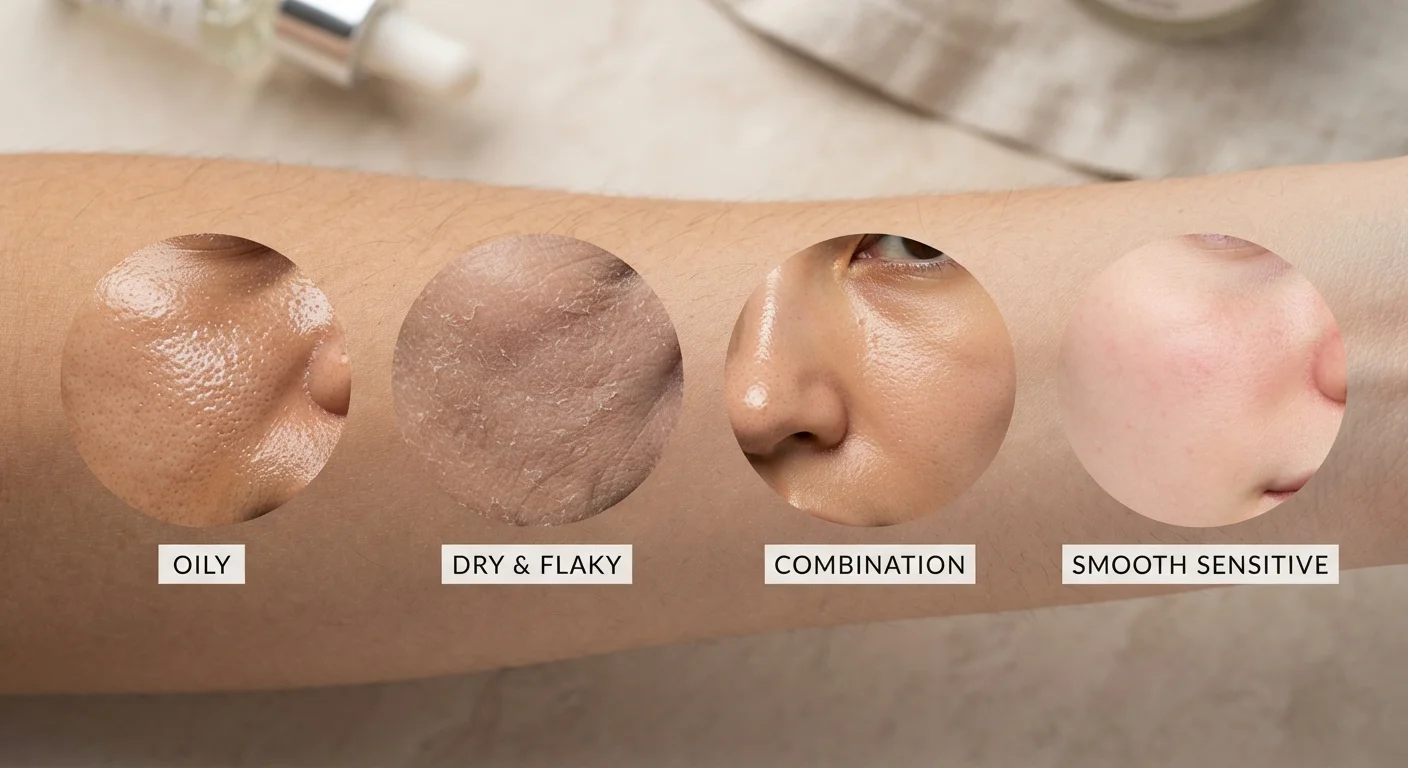
Your skin type also influences how you should prioritize ingredients. If you are unsure how your skin type is defined - or whether it may have shifted - how skin type is determined and how it can change provides useful grounding.
What you will need
Product packaging or leaflet
The primary source of the full INCI ingredient list required by US FDA regulations.
Ingredient lookup database (e.g., a reputable cosmetic chemistry reference)
Helps decode unfamiliar INCI names and understand each ingredient's function.
Magnifying glass or phone camera zoom
Useful for reading fine-print ingredient lists on small product packaging.
Step-by-step: reading your ingredient list
Understand the INCI naming system
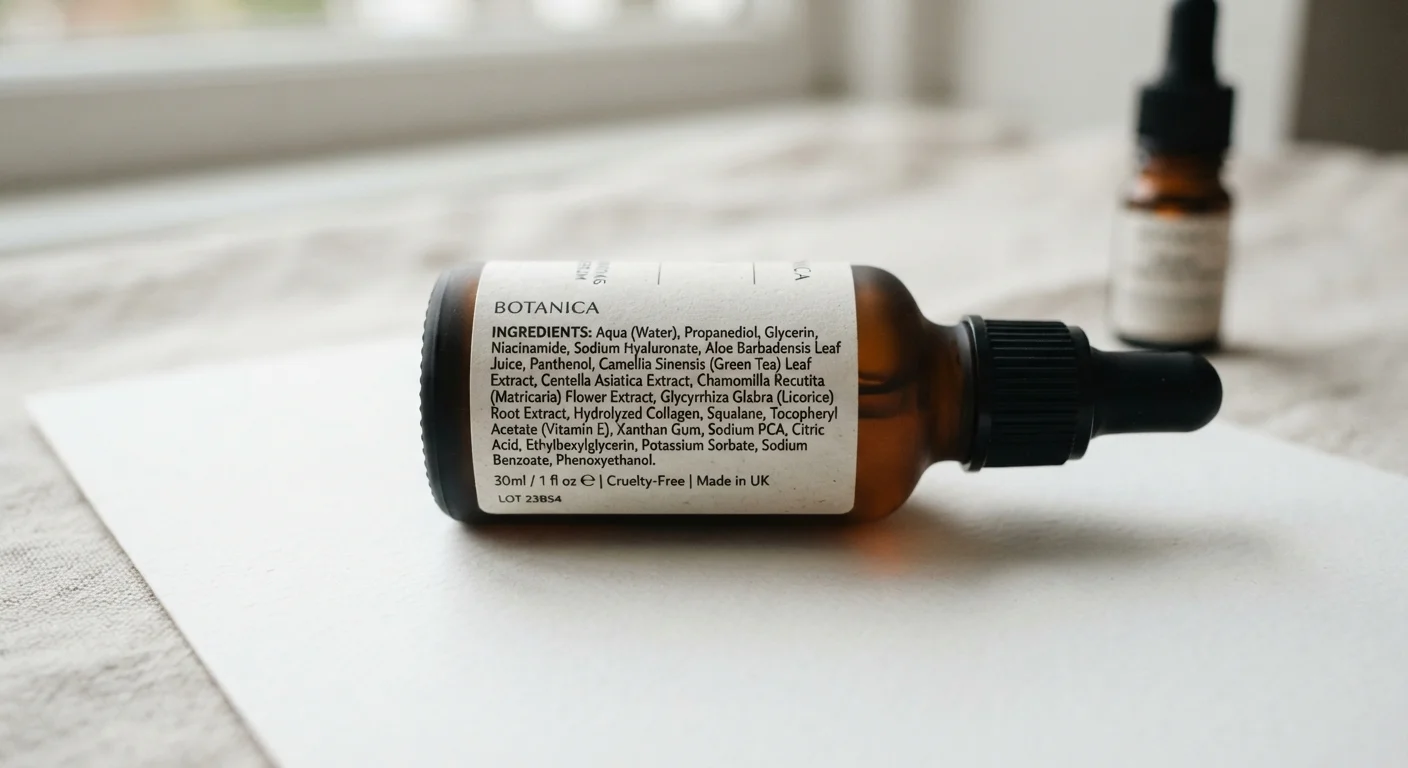
Every skincare product sold in the US must list ingredients using INCI (International Nomenclature of Cosmetic Ingredients) names. These are standardized Latin botanical names or chemical names adopted globally so that the same ingredient reads consistently regardless of brand or country. For example, Butyrospermum parkii is shea butter; Tocopherol is vitamin E. Once you learn a handful of common INCI names, the list becomes far less intimidating.
Water usually appears first as Aqua. Recognizing this anchor point helps orient you within any formula.
Read the list by concentration order
US regulations require that ingredients be listed in descending order of concentration by weight. This means the first ingredient is present in the greatest amount, and each subsequent ingredient is present in equal or lesser amounts. Typically, the first three to five ingredients account for the majority of the formula's volume - often water, humectants like glycerin, or emollient bases like fatty alcohols.
Actives you specifically want - such as niacinamide, hyaluronic acid, or a chemical exfoliant - should appear high enough on the list to suggest a meaningful concentration. If a star ingredient appears near the very end, its functional impact on skin is likely minimal.
Identify the 1% threshold zone
US regulations permit ingredients present at 1% or less to be listed in any order after all ingredients above 1% have been declared in concentration sequence. This is why you'll often see a cluster of actives, preservatives, and fragrance components grouped together near the end of a list - they may all be present at or below 1%.
This threshold has practical implications: an ingredient listed after a known 1%-threshold marker (such as a common preservative like phenoxyethanol) is almost certainly present at a very low level, regardless of how prominently the brand features it in marketing.
Spot functional ingredient categories
Ingredients generally fall into recognizable functional roles. Learning a few categories helps you assess what a formula is designed to do:
- Humectants (e.g., glycerin, sodium hyaluronate): attract water to the skin's surface.
- Emollients (e.g., squalane, cetearyl alcohol): smooth and soften by filling gaps in the skin barrier.
- Occlusives (e.g., petrolatum, dimethicone): form a physical barrier to reduce moisture loss.
- Actives (e.g., retinol, ascorbic acid, azelaic acid): ingredients with targeted, evidence-supported effects on skin function or appearance.
- Preservatives (e.g., phenoxyethanol, ethylhexylglycerin): prevent microbial contamination and extend shelf life.
For a plain-language breakdown of many of these ingredient types, see the body care ingredients glossary.
Flag potential sensitivity triggers
Certain ingredient types warrant closer attention, particularly for sensitive or reactive skin. Fragrance - listed as Fragrance, Parfum, or individual fragrant compounds - is one of the most common causes of contact dermatitis. Essential oils (e.g., lavender oil, citrus extracts) carry similar risks. Formaldehyde-releasing preservatives (e.g., DMDM hydantoin, quaternium-15) are another category to note if your skin is prone to irritation.
If you are building a routine around multiple actives, it's worth understanding how they interact. Ingredient interactions that can irritate your skin covers combinations commonly flagged by dermatologists.
Put it all together: assess the formula as a whole
Once you can read concentration order, recognize INCI names, and spot functional categories, you can form a realistic picture of what a product is likely to do. Ask yourself: Are the ingredients I want present at a meaningful position on the list? Does the formula include a logical combination of functional types? Are there potential irritants I need to account for?
For a deeper understanding of specific high-impact actives like retinol, AHAs, and vitamin C, see when each ingredient actually earns its place.
Cross-reference ingredient lists across products
When layering multiple skincare products, scan each ingredient list for overlapping actives. Using two products that both contain high concentrations of the same exfoliating acid, for instance, can amplify irritation without improving results. A methodical approach to stacking products helps you get more from your routine with less risk.
Hair and body care labels follow similar rules
The INCI and concentration-order principles covered here apply to shampoos, conditioners, and body lotions as well. If you want to apply the same reading skills to hair care products, reading an ingredient list on a shampoo or conditioner walks through the key patterns specific to rinse-off formulas.
Common misconceptions about ingredient lists
A few widely held assumptions are worth addressing directly:
- "Natural" ingredients are inherently safer. Natural and synthetic are not synonymous with safe and unsafe. Many natural extracts - essential oils, botanical allergens - are among the most common irritants in skincare formulas.
- More ingredients means a more effective product. Formula complexity does not equal efficacy. A well-targeted product with a short, considered ingredient list can outperform a cluttered one. What matters is whether the right actives are present at functional concentrations.
- "Fragrance-free" and "unscented" mean the same thing. They do not. "Unscented" products may still contain masking fragrance to neutralize chemical odors. "Fragrance-free" means no fragrance compounds were added.
Concentration matters - not just presence
An ingredient appearing on a label does not confirm it is present at a level shown to be effective in published research. Many studies establish efficacy at specific concentration ranges. A product may list niacinamide, retinol, or vitamin C while containing that ingredient at a fraction of the studied dose. When an active's concentration is central to your reason for choosing a product, look for brands that disclose percentages - and treat unlisted concentrations with appropriate skepticism.
This article is for general informational and educational purposes only. It is not a substitute for personalized skincare or medical advice. Consult a qualified dermatologist or healthcare professional for guidance specific to your skin concerns or health history.