
What Hair Porosity Actually Measures
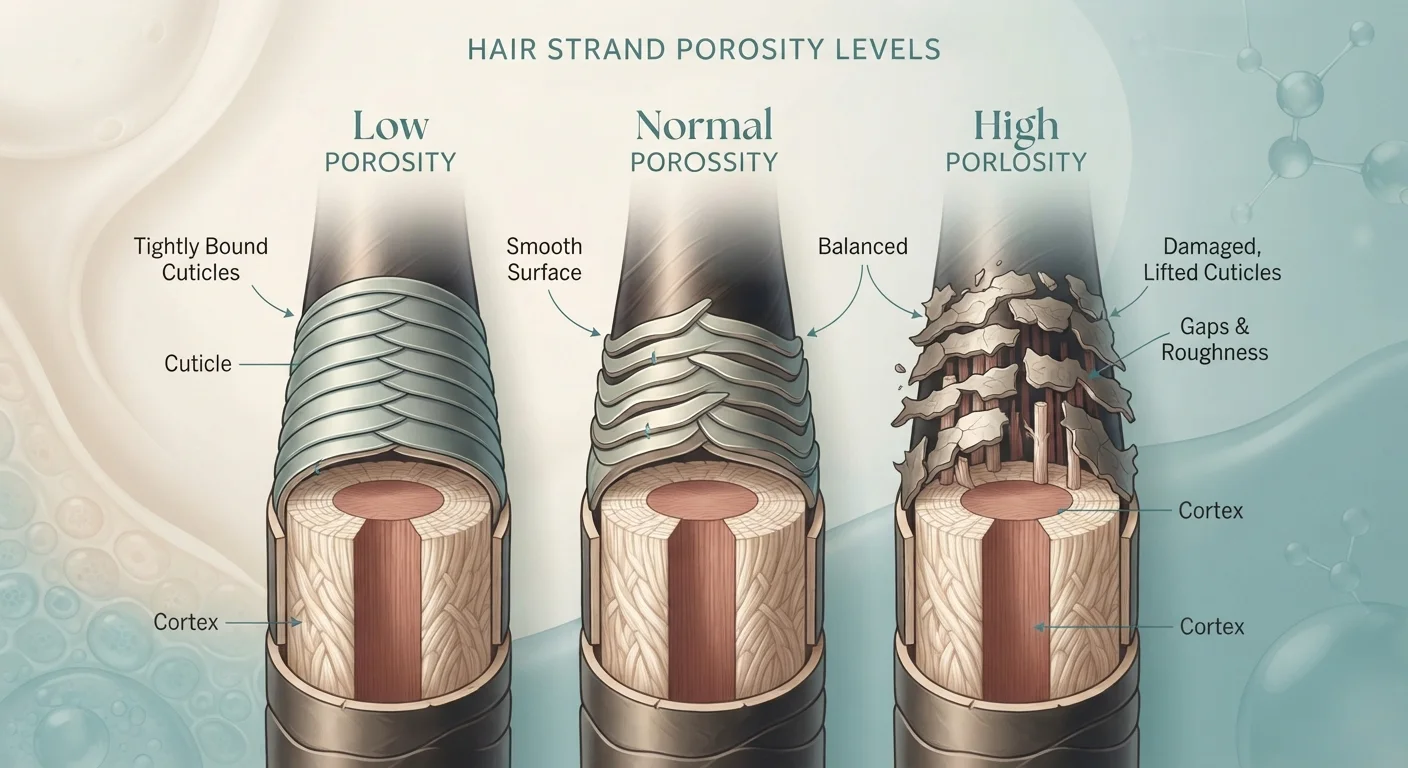
Every hair strand is composed of three layers: the medulla (innermost core), the cortex (which gives hair its strength and color), and the cuticle - the outermost protective layer made of overlapping, shingle-like cells called cuticle scales. Porosity is entirely a property of this outer cuticle layer.
When cuticle scales lie flat and compact, they form a relatively impermeable surface. Water and conditioning agents have difficulty entering the cortex, but the hair also loses moisture slowly. This is low porosity. When the scales are more open - either naturally or due to damage - moisture moves in quickly. The challenge is that it leaves just as fast. This is high porosity. Medium porosity falls in between: the cuticle allows moderate, relatively balanced moisture exchange.
Understanding porosity matters because it explains why two people can use identical products and get dramatically different results. The cuticle structure determines how any formula - moisturizer, conditioner, or treatment - physically interacts with the strand.
Porosity vs. Hair Type: A Key Distinction
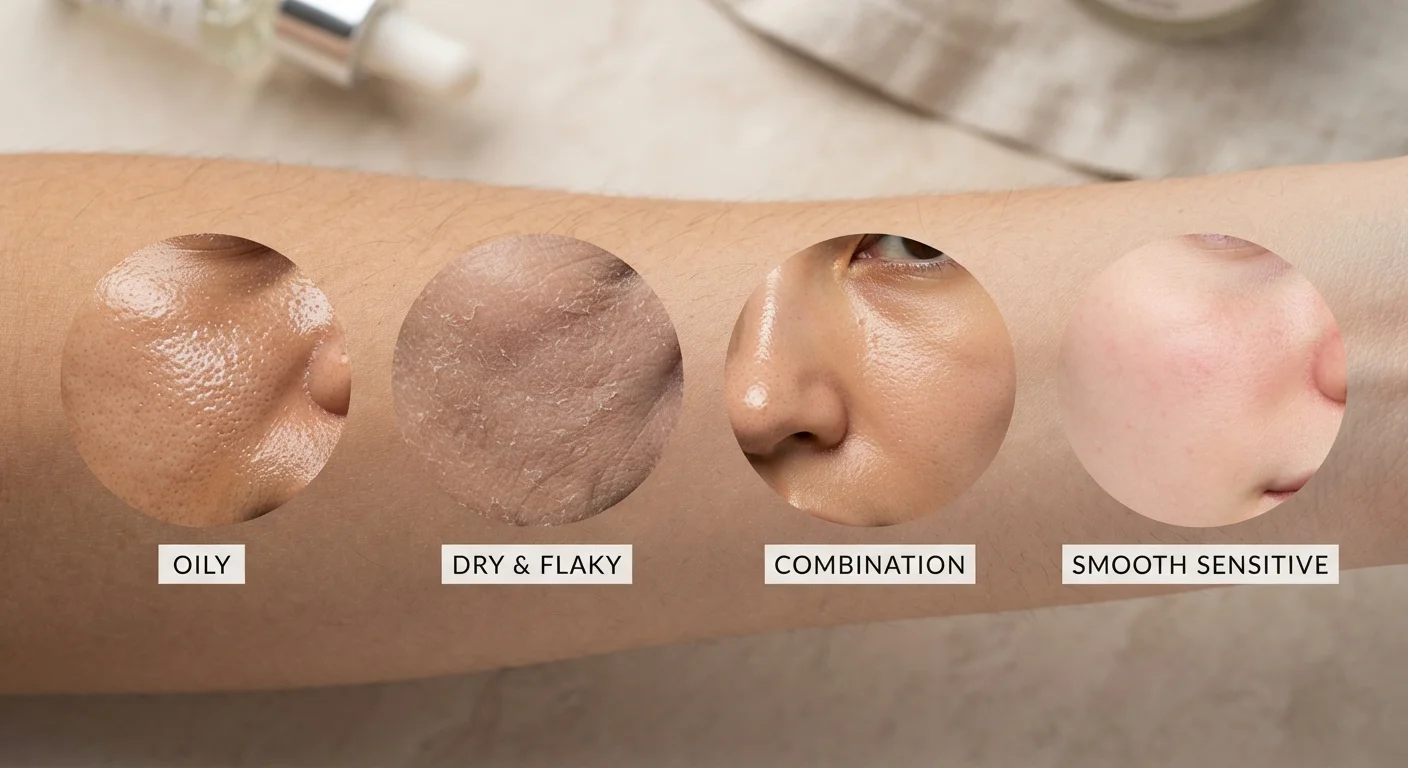
Hair type (straight, wavy, curly, coily) and hair porosity are separate properties that often get conflated. Your hair type describes the strand's curl pattern and is largely genetic. Porosity describes cuticle behavior and can change significantly over time. Just as skin type is not always fixed, neither is hair porosity - both are dynamic properties influenced by environment and habits.
How to Assess Your Hair's Porosity
No at-home test is a substitute for a professional trichological assessment, but two simple methods can give you a reasonable working estimate.
- The float test: After washing your hair (to remove product buildup), place a shed strand in a glass of room-temperature water and observe it for two to four minutes. Hair that sinks relatively quickly tends toward high porosity; hair that floats persistently tends toward low porosity; hair that gradually sinks is often in the medium range.
- The slip-and-feel method: Take a strand between two fingers and slide them from tip to root. Smooth movement suggests a flatter cuticle (low porosity); a rough, catching sensation suggests raised cuticle scales (higher porosity).
Results can vary along the same head of hair - the ends, which are oldest and have endured the most styling, are often more porous than the roots. Keep this in mind when interpreting your results.
Test Multiple Strands for Accuracy
Because porosity can vary along a single strand and across different regions of the scalp, test a few strands from different areas - crown, nape, and temples. If results differ noticeably, you may have what's sometimes called 'mixed porosity,' which is common in longer hair where the ends have experienced more cumulative styling stress than the roots.
Why Porosity Shifts - and What Drives It
Baseline porosity is partly genetic. Hair morphology research consistently shows that curlier hair textures, which have more curvature points along the strand, tend to have more naturally raised cuticle regions. However, porosity is not static, and several common habits accelerate cuticle damage:
- Heat styling: Repeated high-temperature exposure from flat irons, curling wands, and blow dryers progressively degrades cuticle integrity.
- Chemical processing: Bleaching, coloring, and relaxing use alkaline agents that deliberately swell and open the cuticle - repeated use causes cumulative structural change.
- Mechanical stress: Vigorous towel drying, tight styles, and aggressive detangling fracture cuticle edges over time.
- Environmental factors: Hard water mineral deposits, chlorine, and UV radiation all contribute to cuticle surface degradation.
Just as the skin barrier can become compromised by external stressors, the hair cuticle responds to its environment in cumulative ways. Once cuticle scales are significantly raised or chipped, the only way to truly restore the structure is through new growth.
~40%
Hair strength loss from repeated bleaching
Research on chemically processed hair has documented significant reductions in tensile strength following repeated bleaching cycles, reflecting cumulative cuticle and cortex damage.
3 layers
Structural layers in every hair strand
The cuticle, cortex, and medulla form the full architecture of a hair fiber; porosity is a property of the cuticle layer alone.
~6 years
Average lifespan of a scalp hair strand
Because hair cannot self-repair after structural damage, the years of styling and environmental exposure accumulated along any strand directly shape its porosity by the time it reaches its full length.
Tailoring Your Routine to Your Porosity Level
Matching your product choices and application techniques to your porosity level is where the science becomes practical.
Low Porosity
Focus on lightweight, water-based products that won't sit on the surface and cause buildup. Applying conditioners and treatments under gentle heat - a warm towel or hooded dryer - temporarily opens the cuticle enough to allow deeper penetration. Avoid heavy butters and oils as a first layer; use them sparingly to seal after moisturizing.
Medium Porosity
This category generally offers the most flexibility. A balanced routine - moisturizing conditioner, occasional protein treatment to maintain strength, and a light sealant - tends to maintain the cuticle's condition well. The main goal is preservation: avoid the heat and chemical patterns that shift hair toward high porosity.
High Porosity
Heavier, film-forming conditioners and leave-ins help compensate for the cuticle's inability to hold moisture. Protein treatments (keratin, hydrolyzed wheat protein) can temporarily fill gaps in raised cuticle scales, improving texture and reducing breakage. Sealing with an oil or butter after applying a water-based moisturizer helps slow moisture loss. Cold or cool water rinses can temporarily encourage cuticle scales to lie flatter after conditioning.
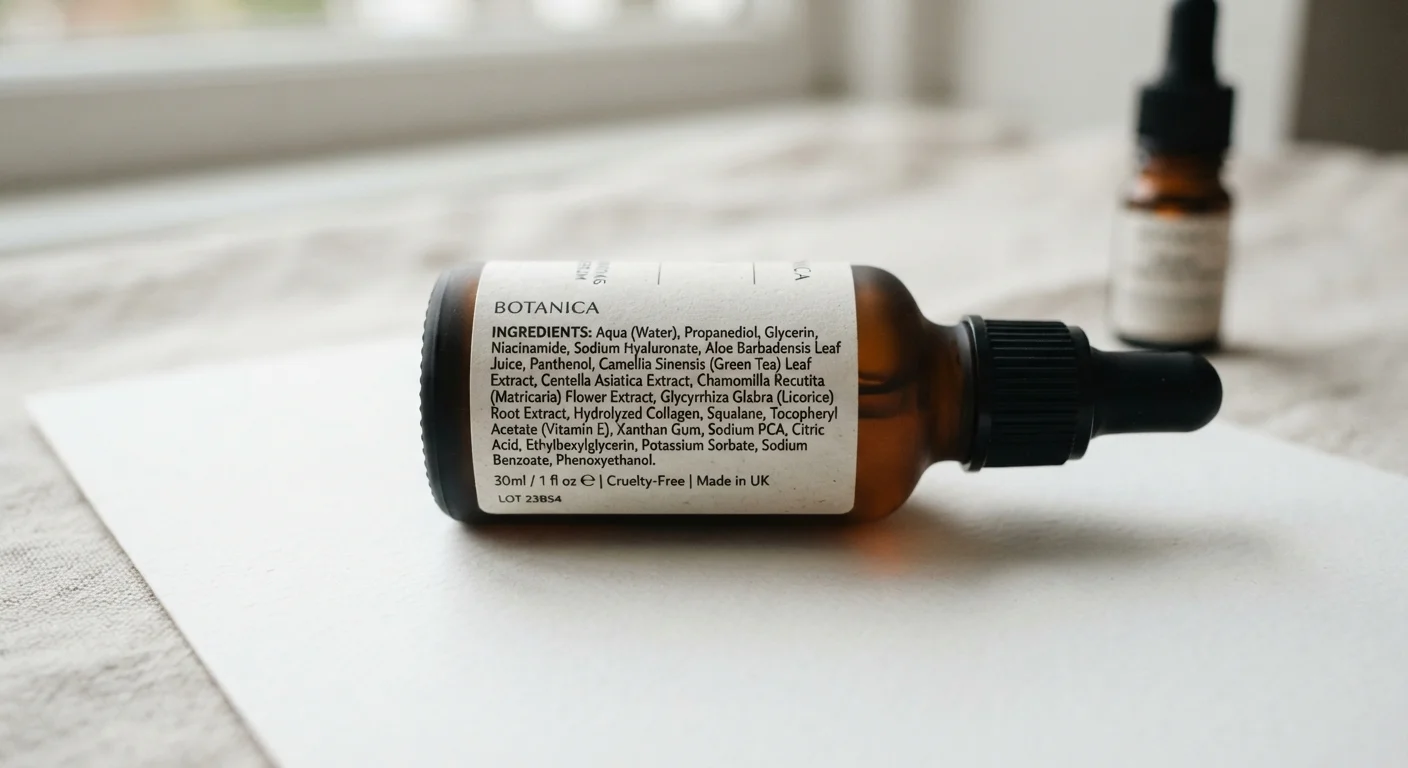
If you're adjusting how frequently you wash, it's worth understanding how wash frequency affects scalp behavior alongside your strand care - these are connected but distinct considerations. Equally, learning to decode a shampoo or conditioner's ingredient list makes it far easier to choose formulas suited to your porosity profile.
This article is for general informational and educational purposes only. It is not a substitute for professional advice from a licensed trichologist, dermatologist, or healthcare provider. If you are experiencing significant hair loss, scalp conditions, or changes in hair or scalp health, consult a qualified healthcare professional.