
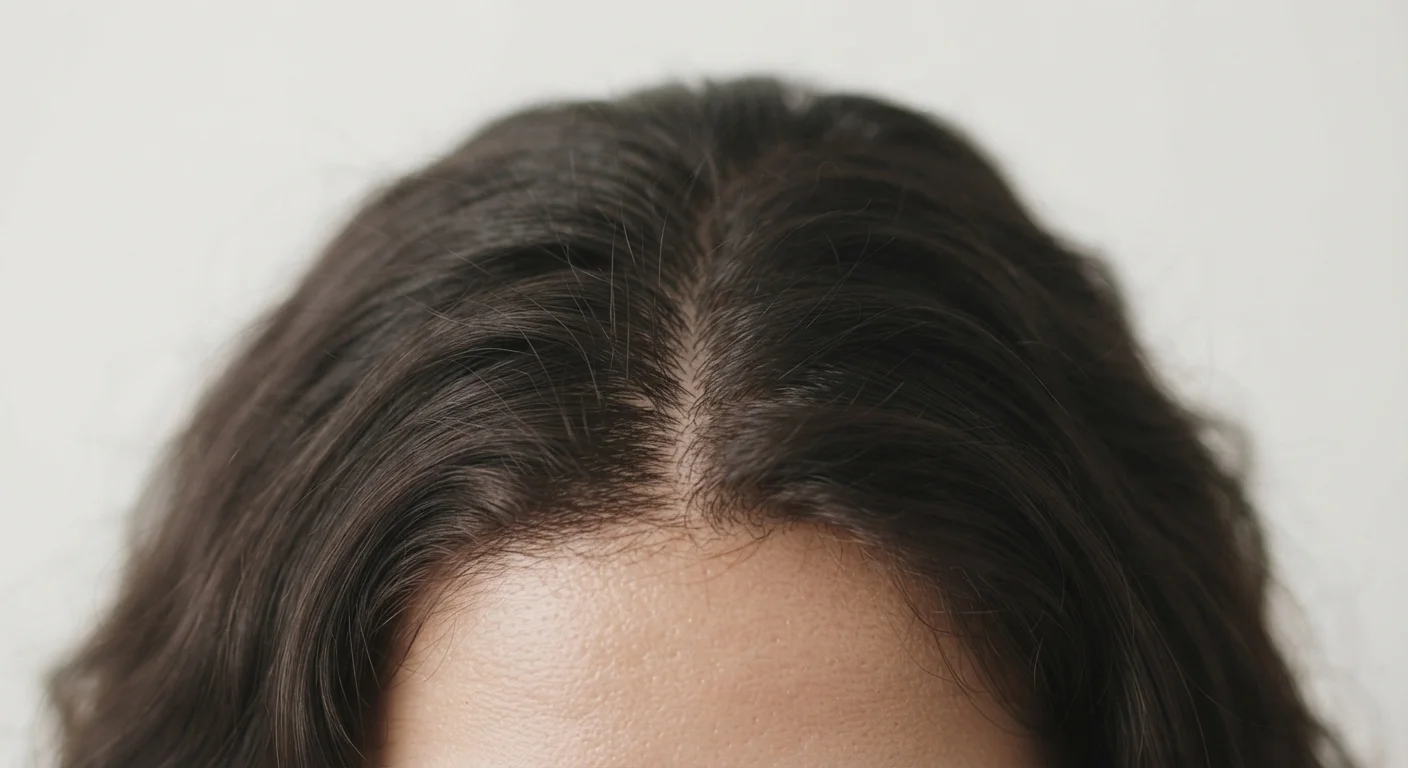
Why Sebum Accumulation Is More Complex Than It Looks
The popular claim that washing hair less often "trains" the scalp to produce less oil is intuitive but scientifically oversimplified. Sebaceous glands - the structures responsible for producing sebum - are primarily regulated by androgens (hormones), genetics, and diet. Wash frequency is not a meaningful input into that hormonal loop.
What does change with reduced washing is how sebum distributes along the hair shaft and how long it sits on the scalp before removal. Over an adjustment period that many people describe as two to four weeks, the sensation of greasiness may become more tolerable - but this reflects a perceptual shift, not a measurable reduction in gland output. Scalp health operates by different rules than hair health, and sebum accumulation affects both systems distinctly.
~1-2 mm/day
Average sebum travel rate along straight hair
Research on sebum distribution suggests sebum migrates from root to tip significantly faster on straight hair than on coiled or textured hair types.
~50%
Adults affected by dandruff at some point
Dermatology literature broadly estimates that roughly half of the adult population experiences dandruff at some stage, with Malassezia implicated in most cases.
2-4 weeks
Reported scalp adjustment window
Anecdotal and clinical accounts consistently describe a transitional period of several weeks when switching from frequent to infrequent washing.
The Scalp Microbiome Responds to Changing Wash Habits
The scalp hosts a complex community of bacteria and fungi - most notably Malassezia yeast species - that coexist in a state of relative balance under normal conditions. Sebum is their primary nutrient source, so when more sebum is present for longer periods, the microbial environment shifts.
For some individuals, this can actually stabilise microbiome diversity by reducing the frequency of a disruptive chemical intervention (shampoo). For others - particularly those with a predisposition to seborrheic dermatitis or dandruff - increased sebum availability creates conditions that allow Malassezia to overgrow, triggering inflammation, flaking, and irritation. There is no universal outcome, which is why individual scalp history matters enormously when evaluating this practice.
Microbiome Research Is Still Evolving
The science of the scalp microbiome is an active area of research, and many findings are preliminary. While connections between Malassezia, sebum, and conditions like dandruff are well-established, the full picture of how washing frequency shapes microbial communities over months remains under investigation. Treat generalizations with appropriate caution, and consult a dermatologist for persistent scalp concerns rather than relying solely on emerging research.
Hair Texture and Porosity Shape the Experience
Hair structure significantly influences whether low-frequency washing is comfortable or problematic. On straight, fine hair, sebum travels rapidly from root to tip, meaning the hair looks and feels oily within a day or two of washing. On coarser or tightly coiled hair, the same sebum travels much more slowly along the curved shaft, providing natural moisture without visible greasiness.
Hair porosity also plays a role: high-porosity hair loses moisture quickly and may benefit from sebum retention between washes, while low-porosity hair resists both moisture and product absorption. Understanding your hair's structural characteristics - not just copying a trending routine - is the starting point for any wash frequency change. Consider also that everyday habits accumulate into real structural damage regardless of how often you shampoo.
Match Wash Frequency to Your Hair Type
Rather than following a fixed schedule, pay attention to how your scalp and hair actually feel and look. Oiliness, itching, and product buildup are useful signals. If dry shampoo becomes a daily necessity, your current interval may be longer than your scalp can comfortably sustain. Adjust incrementally - one extra day at a time - rather than making dramatic changes.
What the Long-Term Picture Looks Like
Over months of reduced washing, several patterns tend to emerge. Product buildup - from dry shampoos, styling products, and environmental particulates - accumulates on the scalp surface and within follicular openings. While a single wash session generally clears this, chronic buildup without adequate cleansing can contribute to follicular congestion, which some dermatologists associate with scalp inflammation and, in sustained cases, disruption of the hair growth environment.
Those who successfully adopt lower wash frequencies typically do so by choosing gentle, sulfate-free formulas when they do wash, co-washing (conditioning-only washing) between sessions, and adjusting expectations based on season, exercise frequency, and hair type. It is also worth noting that certain scalp conditions - psoriasis, folliculitis, contact dermatitis - are unrelated to wash frequency but may be exacerbated by poor scalp hygiene. If you're navigating myths about hair loss alongside scalp changes, see what evidence actually says about hair loss.
This article is for general informational purposes only and is not a substitute for professional medical or dermatological advice. If you experience persistent scalp symptoms, consult a qualified healthcare provider.