
Why Gradual Damage Is Hardest to Catch
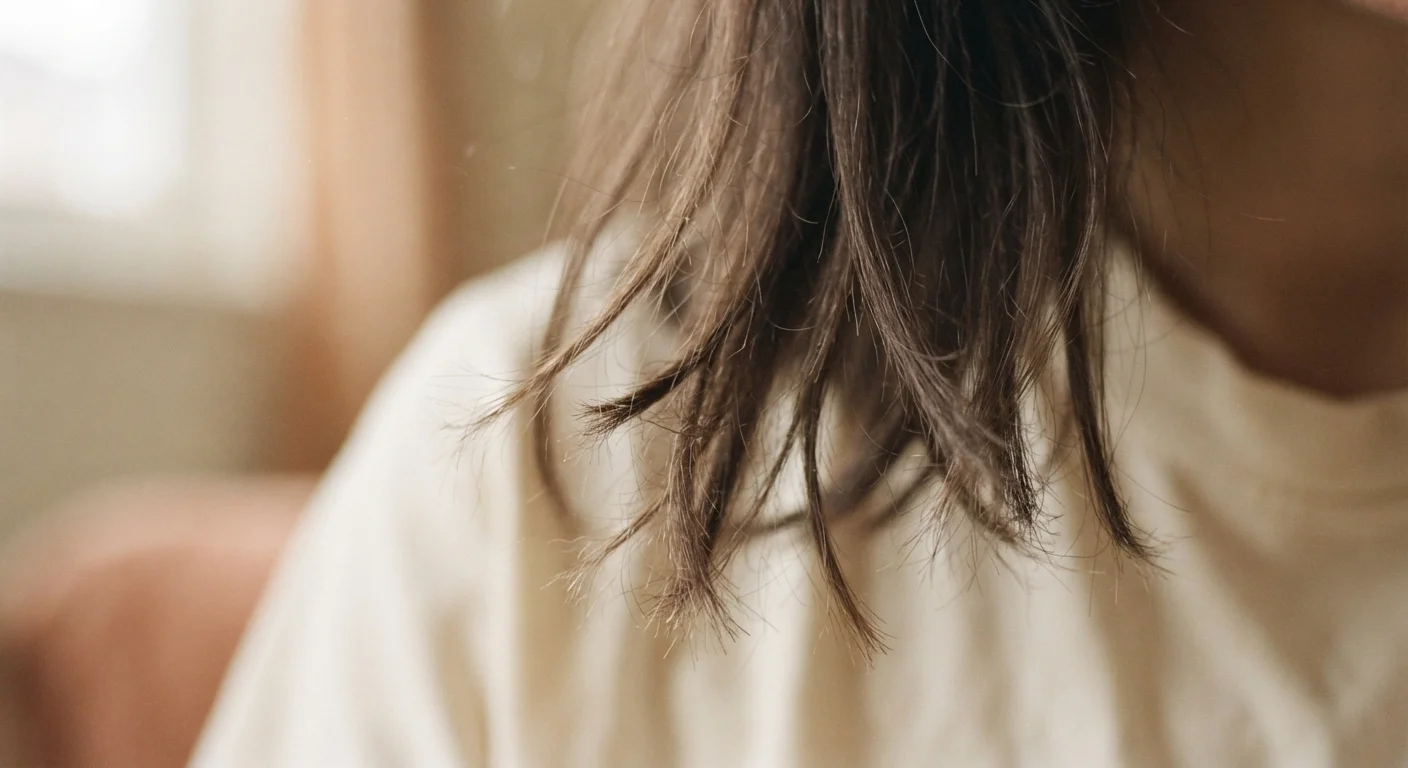
Hair damage rarely announces itself dramatically. A single aggressive brushing session or one forgotten conditioning treatment won't visibly alter your hair's health. But when these small stressors repeat daily, the cumulative effect on the hair shaft, cuticle layer, and follicle environment becomes measurable - and eventually undeniable.
Unlike acute damage from a chemical process gone wrong, slow structural harm tends to be normalized. Hair that once felt resilient begins to snap mid-length, lose its sheen, or stall in length - a phenomenon explored in depth in our article on length retention and breakage. Understanding which habits are eroding your hair quietly is the first step to reversing the pattern.
Wearing tight elastics and high-tension styles daily
Repeated mechanical tension on the same sections of hair - particularly at the hairline and mid-shaft where elastics grip - creates a pattern of stress fractures in the cortex. Over months, this manifests as noticeable breakage at predictable points: the classic "halo" of short, broken strands around the face or a thinning ponytail base.
Switching to seamless, fabric-covered ties, alternating your part location, and varying your style height each day distributes tension more evenly and gives stressed sections time to recover.
Tension at the same hair point daily creates cortex stress fractures that accumulate into visible breakage.
Rough towel-drying after washing
Wet hair is in its most structurally vulnerable state. The hydrogen bonds within the cortex are temporarily broken by water, and the cuticle - the overlapping scale-like outer layer - is raised and easily disrupted. Rubbing vigorously with a terry cloth towel abrades these lifted scales, causing them to chip, crack, and separate from the shaft.
The fix is straightforward: blot and squeeze rather than rub, using a microfiber towel or a soft cotton T-shirt. The difference in friction is substantial, and the change in hair texture over weeks is usually noticeable.
Wet hair's raised cuticle is especially fragile - rubbing with terry cloth chips and cracks those scales repeatedly.
Skipping conditioner consistently
Conditioner does more than add slip for detangling. It temporarily seals the cuticle layer, replenishes lipids stripped by surfactants in shampoo, and reduces static electricity that causes strands to snag against each other. Hair that is consistently washed without conditioning becomes progressively more porous and brittle - it loses moisture rapidly and is more vulnerable to both environmental stressors and mechanical handling.
Even low-porosity hair that tends to resist product absorption benefits from lightweight conditioners applied mid-length to ends. Scalp application is generally unnecessary, but the lengths need that protective coating to maintain flexibility.
Conditioner seals the cuticle and replenishes lipids - skipping it regularly increases porosity and brittleness over time.
Using heat tools without a protectant
Thermal damage operates on a cumulative model. At temperatures above approximately 320°F (160°C), the keratin proteins that form the hair's cortex begin to denature - losing their structural integrity in ways that do not fully reverse. A heat protectant product creates a barrier that slows heat transfer to the shaft, reducing peak temperature exposure by a meaningful margin.
Using a flat iron or curling tool at moderate settings without any protectant, repeatedly, degrades the hair's protein structure month by month. The result is hair that appears dull, feels rough to the touch, and loses its ability to hold a style - signs often mistaken for humidity effects rather than structural damage.
Keratin denaturation from heat is cumulative and irreversible - a protectant significantly reduces peak temperature exposure.
Neglecting the scalp environment
A well-functioning scalp is the foundation of healthy hair growth. Infrequent cleansing allows sebum, product residue, and environmental pollutants to accumulate around the follicle opening, potentially impeding healthy hair emergence and contributing to scalp inflammation. Conversely, harsh, aggressive scrubbing or over-washing can disrupt the scalp's microbiome and strip the protective lipid barrier.
Finding the right cleansing frequency for your scalp type - which varies considerably by individual - matters more than adhering to any universal rule. For a detailed look at how washing frequency affects the scalp over time, see our piece on what happens to the scalp when you wash less often.
Scalp buildup and chronic inflammation quietly impair the follicle environment long before hair loss becomes visible.
Detangling from root to tip with force
Starting detangling at the root and dragging a brush or comb downward compresses knots and tangles into tighter snarls, requiring greater force to break through. That force is transferred directly to the hair shaft, creating micro-fractures that weaken the strand over time. The hair snaps rather than grows - a frustrating cycle that can be significantly reduced by changing technique alone.
Working from ends upward, in small sections, using a wide-tooth comb or a detangling brush on damp (not soaking wet) hair dramatically reduces the mechanical stress per session. The cumulative difference across hundreds of detangling sessions over a year is substantial.
Root-to-tip detangling compresses knots into tighter snarls, forcing breakage that ends-first technique largely avoids.
Building Toward Healthier Hair Habits
The encouraging reality is that most of these habits are reversible once identified. Hair that has experienced cumulative damage can often regain elasticity and tensile strength with consistent, lower-manipulation care over several months. The key is treating behavioral change the same way you'd treat a workout routine - small, sustainable adjustments compound just as reliably as damaging habits do. That parallel is worth noting: the same logic that applies to fitness habits that quietly undermine physical health applies here too.
Start With One Habit Change at a Time
Attempting to overhaul your entire hair care routine at once often leads to inconsistency. Choose the single habit on this list most relevant to your current hair concerns and practice it for four to six weeks before adding another change. Hair responds slowly - a full growth cycle takes months - so patience and consistency matter more than speed.
If you use protective styles to reduce daily manipulation, be aware they carry their own risk profile when worn too long or installed under high tension - a balance covered in our guide on protective styling trade-offs. Progress comes from making informed decisions consistently, not from achieving perfection in a single wash day.
This article is for general informational and educational purposes only. For concerns about scalp health, hair loss, or underlying conditions, consult a qualified dermatologist or healthcare professional.