
Why Ingredient Combinations Matter
Layering multiple actives has become a standard part of many skincare routines - but not every combination is chemically compatible. Some pairings reduce each other's efficacy; others can directly compromise the skin barrier, triggering redness, stinging, peeling, or prolonged sensitivity. Understanding why these interactions occur is the foundation of a routine that actually works.
The key factors are pH sensitivity, oxidative instability, and competing mechanisms of action. Many actives require a specific pH range to remain effective or stable. When two incompatible ingredients share the same layer, one may deactivate the other - or together they may create a more aggressive environment than either would alone. Before reviewing common flagged pairings, familiarize yourself with the core terms below.
Stratum Corneum
The outermost layer of the epidermis, composed of dead skin cells (corneocytes) embedded in lipids. It acts as the skin's primary barrier against environmental stressors and moisture loss. Disrupting it - through over-exfoliation or incompatible actives - can trigger sensitivity and inflammation.
AHA (Alpha-Hydroxy Acid)
A class of water-soluble exfoliating acids derived from natural sources, including glycolic acid (from sugarcane) and lactic acid (from milk). They work at the skin's surface to dissolve the bonds holding dead cells together and require a low pH (typically 3-4) to be effective.
BHA (Beta-Hydroxy Acid)
A class of oil-soluble exfoliating acids - salicylic acid being the most common - that penetrate into pores to dissolve sebum and dead cell buildup. Like AHAs, BHAs are pH-dependent and are widely used for acne-prone and congested skin.
Retinoid
A family of vitamin A derivatives - including retinol, retinaldehyde, and prescription-strength tretinoin - that accelerate cell turnover and support collagen synthesis. They are pH-sensitive and degrade in the presence of oxidizing agents like benzoyl peroxide or direct sunlight.
L-Ascorbic Acid
The biologically active, water-soluble form of vitamin C used in skincare. It is a potent antioxidant that requires a low pH (below 3.5) to remain stable and penetrate the skin effectively. It is highly susceptible to oxidation when exposed to air, light, or incompatible ingredients.
Niacinamide
A form of vitamin B3 widely used in skincare for its ability to support the skin barrier, regulate sebum, and reduce the appearance of uneven tone. It is notably stable across a wide pH range, making it broadly compatible - though its reaction with high-concentration L-ascorbic acid warrants timing awareness.
Commonly Flagged Ingredient Pairings
The following combinations are consistently noted by dermatologists as sources of unnecessary irritation or reduced efficacy. This is general educational information - consult a dermatologist if you have persistent reactions or a complex skin condition.
| pH of effective AHAs/BHAs | 3.0-4.0 (Standard cosmetic chemistry reference range) |
| Optimal pH for retinoids | 5.0-7.0 (Dermatology formulation guidance) |
| Benzoyl peroxide mechanism | Oxidizing agent - degrades retinoids on contact |
| L-Ascorbic acid stability pH | Below 3.5 (Cosmetic chemistry consensus) |
| Recommended patch test duration | Minimum 2 weeks per new active (General dermatologist guidance) |
Retinoids + AHAs or BHAs
Retinoids (including retinol and prescription tretinoin) function best at a neutral-to-slightly-alkaline pH, while alpha-hydroxy acids (AHAs) such as glycolic acid and beta-hydroxy acids (BHAs) such as salicylic acid are effective only in a low-pH environment. Using both in the same step not only destabilizes retinoid conversion but dramatically increases irritation risk - the combination can thin the stratum corneum faster than it can repair. Separating them into different application times (acids in the morning, retinoids at night, or on alternating nights) is the widely recommended approach.
Vitamin C (L-Ascorbic Acid) + Niacinamide
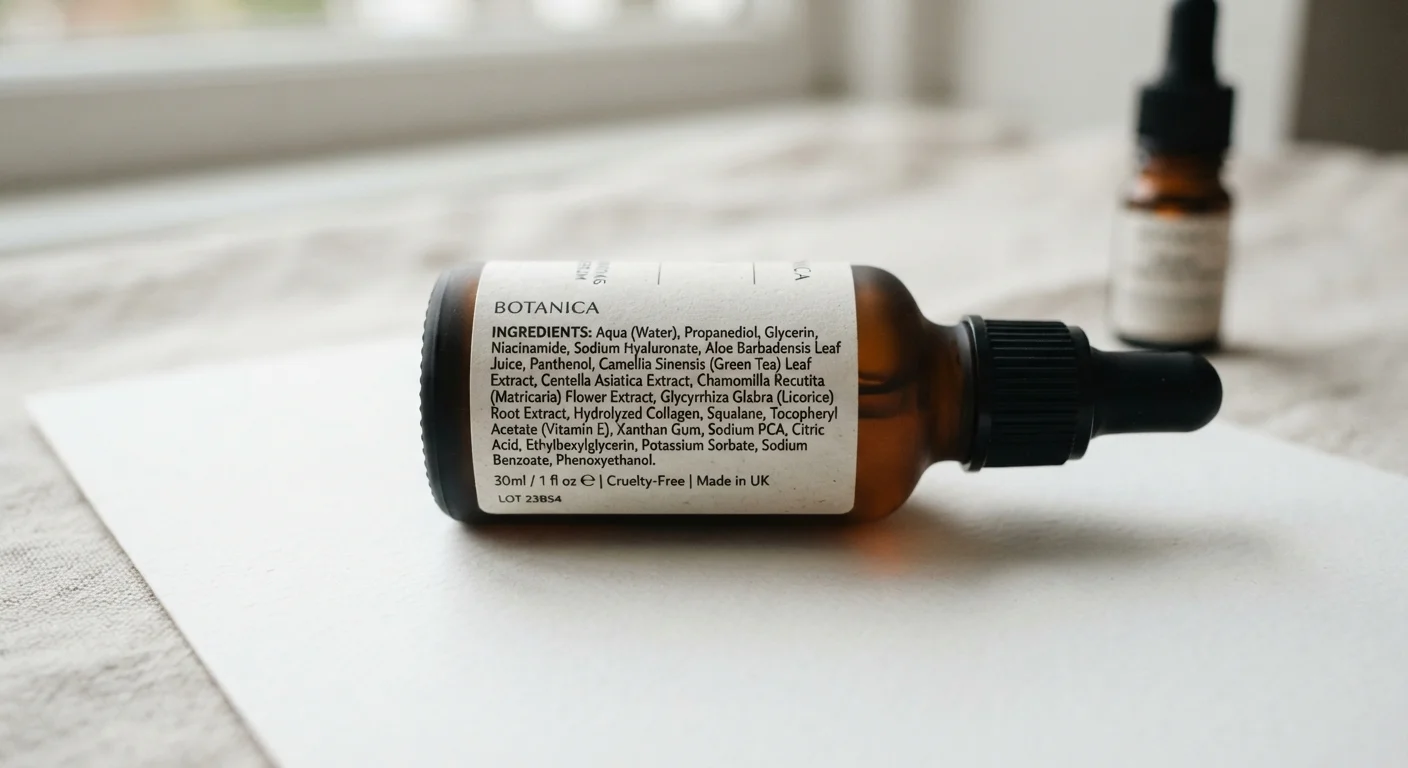
This pairing is widely discussed and frequently misunderstood. At high concentrations, L-ascorbic acid and niacinamide can react to form a yellow compound called niacin, which may contribute to flushing in some individuals. Formulated products that combine them do so at concentrations and pH levels engineered to minimize this reaction - but mixing two separate single-ingredient serums raises the risk. Applying them at separate times of day is the conservative approach. See how to read ingredient labels for guidance on identifying concentrations.
Multiple Exfoliating Acids Together
Stacking AHAs and BHAs in the same routine step, particularly at higher concentrations, does not deliver proportionally better exfoliation - it increases the risk of barrier disruption, micro-inflammation, and post-inflammatory hyperpigmentation, especially on darker skin tones. One well-formulated acid at an appropriate concentration is generally more effective and safer than several layered simultaneously.
Benzoyl Peroxide + Retinoids
Benzoyl peroxide is an oxidizing agent; retinoids are susceptible to oxidative degradation. When applied together, benzoyl peroxide can oxidize retinol or tretinoin, rendering the retinoid less potent. Dermatologists typically recommend using benzoyl peroxide in the morning and retinoids at night to preserve efficacy and reduce irritation risk.
Prescription Topicals Require Extra Caution
If you are using prescription-strength tretinoin, clindamycin, azelaic acid, or other dermatologist-prescribed topicals, ingredient interaction risk increases significantly. Do not layer additional actives - including over-the-counter exfoliants or vitamin C serums - without first discussing it with your prescribing provider. General self-care guidelines are not a substitute for personalized clinical advice in these cases.
If you're adding new actives to your routine for the first time, a methodical approach to introducing actives can help you avoid common overload patterns.
Practical Strategies for Safer Layering
Ingredient conflicts are largely manageable through timing, formulation awareness, and restraint. A few reliable principles:
- Separate by AM/PM: Vitamin C and SPF-supporting antioxidants work well mornings; retinoids and strong exfoliants are better tolerated at night.
- Wait between application steps: Applying a low-pH acid and then immediately following with niacinamide may create brief pH competition. Waiting 10-20 minutes between steps, or using them on different evenings, is a practical workaround.
- Patch test new combinations: Introduce one new active at a time and observe for at least two weeks before adding another.
- Fragrance compounds in actives serums: Fragrances can compound irritation when layered with potent actives. Understanding how fragrance is labelled in personal care products helps identify hidden sensitizers.
No routine requires every active simultaneously. A simpler, targeted approach - using fewer ingredients with clear purpose - consistently outperforms complexity for most skin types.
This article is for general informational and educational purposes only and does not constitute medical or dermatological advice. Consult a qualified dermatologist for personalized guidance, particularly if you have a diagnosed skin condition or are using prescription topicals.