
Why Timing Matters in Skincare
Skincare is not simply about what you apply - it's equally about when. Your skin operates on a circadian rhythm, much like the rest of your body. Research into chronobiology has shown that skin cell turnover, barrier permeability, and sebum production all fluctuate across a 24-hour cycle. AM and PM routines aren't arbitrary marketing constructs; they reflect genuine biological differences in what your skin is doing at each phase of the day.
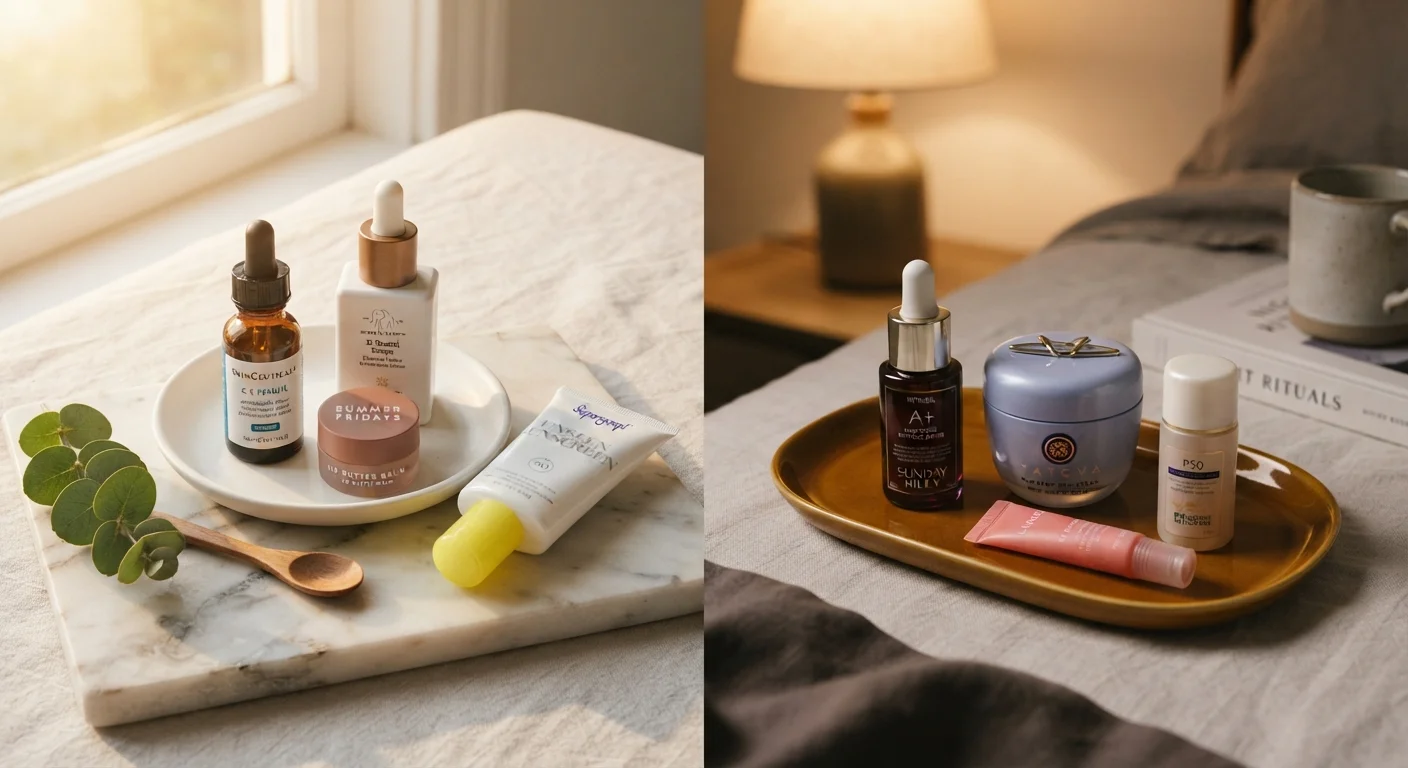
In the morning, skin is primed to defend. Sebum production peaks in the early hours, and the skin barrier is preparing to face UV radiation, pollution, and environmental oxidative stress. By evening, the skin shifts into recovery mode - cell mitosis (division) accelerates, the barrier becomes more permeable, and the skin is more receptive to repair-focused ingredients. Understanding this rhythm is the foundation of an effective, evidence-informed routine. For a broader look at how these rhythms extend beyond skincare, see how morning and evening wellness rituals align with your body's natural rhythms.
| Criterion | Morning Routine | Evening Routine |
|---|---|---|
| Primary purpose | Protection and defence | Repair and renewal |
| Skin state | Barrier strengthening, sebum rising | Higher permeability, cell turnover peaks |
| Key actives | Vitamin C, niacinamide, SPF | Retinoids, AHAs, BHAs, peptides |
| Cleanse intensity | Light rinse or gentle cleanse | Thorough; double cleanse recommended |
| Moisturiser weight | Lightweight, non-occlusive | Richer, more restorative |
| SPF required | Yes - always the final step | No - not applied at night |
| Photosensitivity risk | Low - avoid sensitising actives | Managed - actives applied before sleep |
Building an Effective Morning Routine
The morning routine's core job is protection. Steps and ingredients should be chosen with that purpose in mind.
- Gentle cleanse (or rinse): A light cleanse removes overnight oils and any residue from PM products. Over-cleansing in the morning can strip the barrier before it faces the day's stressors.
- Antioxidant serum: Vitamin C (L-ascorbic acid) is the most researched antioxidant for morning use. It neutralises free radicals generated by UV exposure and pollution, and evidence suggests it can enhance the efficacy of SPF when layered beneath it. Niacinamide is another well-tolerated morning antioxidant that supports barrier function and can address uneven tone over time.
- Moisturiser: A lightweight formula that supports barrier integrity without occluding pores excessively. Look for ingredients like hyaluronic acid, ceramides, or glycerin.
- Broad-spectrum SPF 30 or higher: This is non-negotiable. Photoageing - driven by cumulative UV exposure - is one of the most modifiable ageing factors. SPF should be the final step of every morning routine, every day, regardless of season or weather. Seasonal changes in UV intensity are worth understanding when calibrating your SPF habits year-round.
~90%
Of visible skin ageing attributed to UV exposure
Dermatological research consistently identifies chronic UV exposure (photoageing) as responsible for the majority of visible ageing changes including wrinkles, pigmentation, and loss of elasticity.
~2x
Higher cell division rate during sleep vs. waking hours
Studies in chronobiology indicate that epidermal cell mitosis is significantly elevated during nighttime rest, underpinning the rationale for applying repair-focused ingredients in the evening.
Building an Effective Evening Routine
The evening routine is your window for repair and targeted treatment. Because you won't be exposing skin to UV after application, this is when photosensitising or potentially sun-reactive actives can be used safely and effectively.
- Thorough cleanse: PM cleansing is the most critical cleanse of the day. Removing SPF, makeup, pollutant residue, and oxidised sebum is essential before applying any actives. Double cleansing - an oil-based cleanser followed by a gentle water-based one - is a widely recommended approach for this step.
- Exfoliating acids (AHAs/BHAs): Alpha-hydroxy acids like glycolic and lactic acid, and beta-hydroxy acids like salicylic acid, accelerate surface cell turnover and support texture refinement. These belong firmly in the evening, as they increase photosensitivity. Frequency depends on your skin's tolerance - not every night for most people.
- Retinoids: Vitamin A derivatives (retinol, retinal, prescription retinoids) are the most evidence-backed ingredient category for addressing fine lines, skin texture, and tone over time. They degrade in UV exposure, making nighttime the only sensible application window. Start slowly and build tolerance gradually.
- Richer moisturiser or facial oil: Overnight, the skin loses more water (transepidermal water loss increases during sleep). A more occlusive moisturiser or a nourishing facial oil supports overnight hydration and complements the repair process.
For guidance on structuring these steps correctly, layering products in the right order is a critical factor that's easy to overlook.
A Note on Retinoid Sensitivity
Retinoids are among the most effective studied ingredients in skincare, but they require a gradual introduction. Starting two to three times per week - rather than nightly - allows the skin to build tolerance and reduces the risk of dryness, flaking, and irritation. Those who are pregnant, breastfeeding, or managing a skin condition should consult a healthcare provider or dermatologist before incorporating retinoids into any routine.
Common Mistakes That Undermine Both Routines
Even well-intentioned routines can fall short when key principles are ignored. A few patterns are worth addressing directly:
- Applying retinol in the morning: Retinol degrades rapidly in UV light and can significantly increase photosensitivity. It belongs exclusively in the evening routine.
- Skipping SPF on overcast days: UV-A radiation - the type most associated with skin ageing - penetrates cloud cover and glass. SPF is a daily step, not a sunny-day step.
- Using the same product in AM and PM: Some products (like a basic moisturiser) are appropriate at both times. But actives formulated for night use are not automatically safe or effective in the morning - always check formulation intent.
- Overloading both routines with actives: Using multiple exfoliating acids, retinoids, and vitamin C across both routines simultaneously is a common cause of irritation and barrier disruption. A more streamlined approach is often more effective, particularly for skin that is new to actives.
If you're building a routine from the ground up, starting with the fundamentals will help you identify which steps to prioritise before adding any actives at all.
This article is for general informational and educational purposes only. It does not constitute medical or dermatological advice. Consult a qualified dermatologist or healthcare provider for guidance specific to your skin type, condition, or concerns.