
Why Sequencing Is a Functional, Not Aesthetic, Decision
Skincare layering order is often treated as a preference or habit rather than a science-backed strategy. In reality, the sequence in which you apply products directly affects how well each one is absorbed, how stable active ingredients remain, and whether certain combinations enhance or counteract each other.
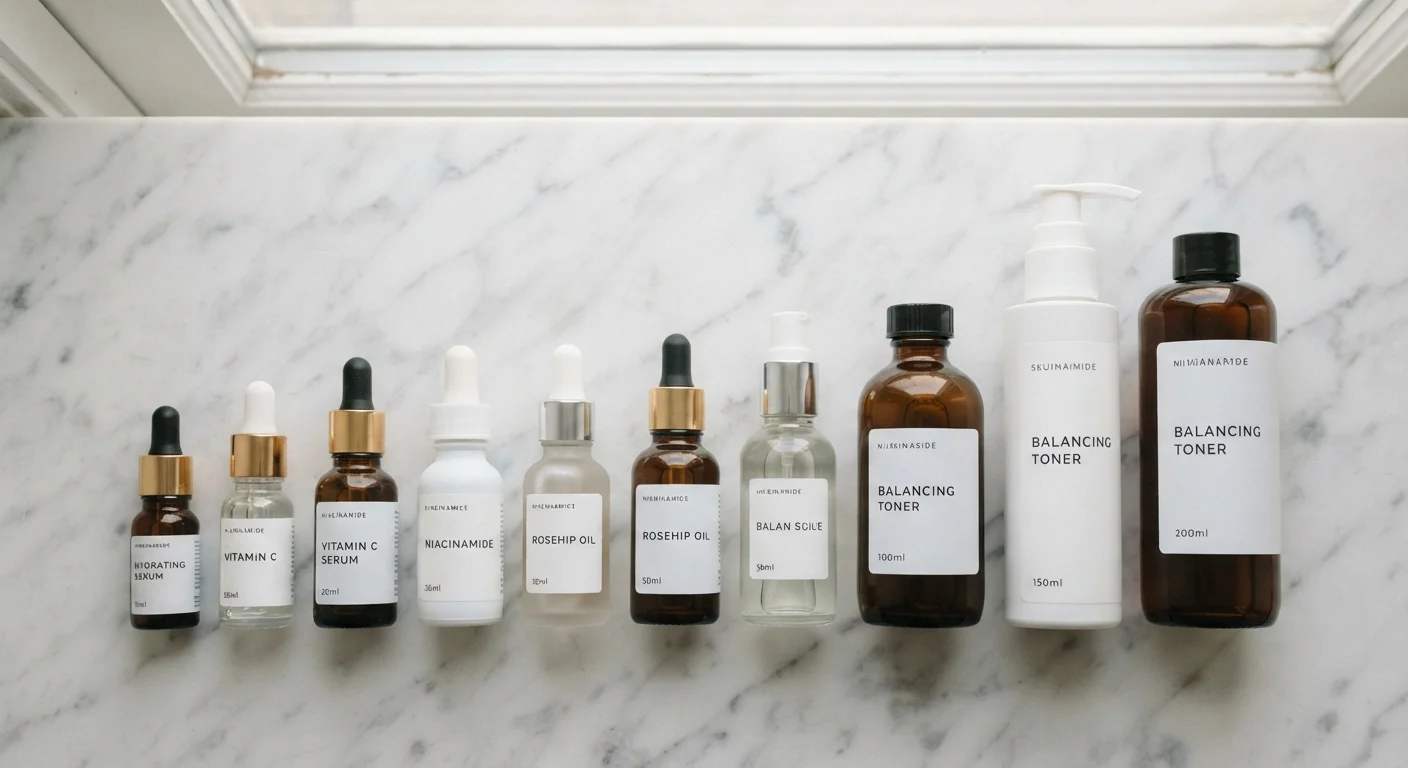
The foundational rule is straightforward: apply products from thinnest to thickest consistency, and from lowest to highest pH. Skin absorbs small, lightweight molecules more readily than large, occlusive ones. When you apply a rich cream first, you create a semi-permeable seal that limits how deeply a subsequent serum or toner can penetrate. The science here is not proprietary - it reflects how skin's lipid barrier and aqueous channels function.
If you're building a routine from the ground up, our step-by-step beginner's guide explains the foundational steps and why their sequence is non-negotiable. For those already using both morning and evening products, understanding how AM and PM routines differ is equally important context.
Applying a moisturizer or face oil before a water-based serum.
Why it happens: Thicker products feel like a logical base, and many people follow the instinct to hydrate first before adding targeted treatments.
Using an acid exfoliant immediately after a high-pH cleanser without allowing skin to re-equilibrate.
Why it happens: Most people apply products in rapid succession without accounting for the pH shift a foaming or alkaline cleanser creates on the skin surface.
Layering a vitamin C serum directly on top of, or immediately after, a niacinamide product.
Why it happens: Both are widely recommended brightening ingredients, and it seems logical to combine them for amplified results.
Applying sunscreen underneath a moisturizer rather than as the final daytime step.
Why it happens: Sunscreen is often perceived as just another product in the lineup, and some routines place it mid-sequence out of habit.
Mixing a retinoid with an AHA or BHA in the same application step.
Why it happens: Both are active ingredients associated with cell turnover and skin refinement, so combining them seems efficient.
The Logic That Prevents These Errors
Most layering mistakes share a root cause: products are chosen carefully but sequenced by convenience rather than formulation logic. Once you understand a few simple principles, the correct order becomes intuitive rather than something to memorize.
~5.0
Skin's natural surface pH range
Healthy skin maintains a slightly acidic mantle between roughly 4.5 and 5.5, which research in dermatology journals consistently links to a resilient barrier and lower susceptibility to irritation.
3-4.5
Optimal pH for AHA/BHA actives
Studies on alpha-hydroxy acid efficacy indicate that exfoliant activity drops significantly above a pH of 4.5, underscoring why pre-step product order affects results.
pH hierarchy: Acid-based products - chemical exfoliants, vitamin C serums, and AHA/BHA toners - function within a specific low-pH window, typically between 3 and 4.5. If you apply a higher-pH moisturizer first, it raises the local skin surface pH before the acid step, reducing how well those actives perform. Always use pH-sensitive products on freshly cleansed, neutralized skin.
Occlusion principle: Oils and balms are designed to occlude - to lock in what is underneath. That's a feature, not a flaw, but only when applied last. Placing a facial oil before a water-based serum means the oil acts as a barrier against the very ingredients you want delivered deeper into the skin.
If you're working actives like retinoids or exfoliating acids into your routine, sequencing becomes even more consequential. Our guide on introducing active ingredients safely covers how to phase in these steps without compounding irritation. And if you've ever wondered whether a product's ingredient list hints at how it should be layered, reading ingredient labels builds the foundational literacy that applies across all formats.
Barrier Disruption Is Cumulative
Repeatedly layering incompatible or incorrectly sequenced actives doesn't just reduce efficacy - it can progressively weaken the skin's moisture barrier over time. Signs include persistent sensitivity, redness, or tightness that wasn't present before. If these symptoms appear, simplify your routine and allow the barrier to recover before reintroducing active steps. A dermatologist can help identify whether product sequencing or ingredient interaction is the underlying cause.
This article provides general skincare education and is not a substitute for advice from a qualified dermatologist or healthcare provider. If you are experiencing skin sensitivity, irritation, or a medical skin condition, consult a licensed professional before adjusting your routine.