
Why Pre-Trip Prep Matters for Hair and Skin
Travel introduces a concentrated set of environmental stressors that your skin and hair rarely face at home simultaneously: elevated UV radiation, dry recycled cabin air, chlorinated pools, salt water, and unfamiliar humidity levels. Each of these can disrupt the skin's moisture barrier - the outer layer that keeps irritants out and hydration in - or degrade the structural proteins in hair that give it strength and elasticity.
The good news is that most of the damage is preventable with a targeted two-week run-up to departure. This checklist treats pre-holiday prep as a structured process rather than a last-minute afterthought, helping you protect what your routine has already built. For a broader view of how environmental shifts affect your skin at any time of year, see how seasonal changes affect your routine.
If you have a diagnosed skin condition such as eczema, rosacea, or psoriasis, standard pre-holiday advice may not apply without modification - grooming routines adapted for sensitive skin conditions outlines the adjustments worth discussing with your dermatologist before travel.
Pause Active Ingredients Before High-UV Travel
Retinoids, alpha hydroxy acids (AHAs), and beta hydroxy acids (BHAs) significantly increase the skin's sensitivity to UV radiation. Using these ingredients while spending extended time in strong sun raises your risk of irritation, hyperpigmentation, and sunburn. If your routine includes any of these actives, shift them to evenings only at least one week before departure, and consider pausing entirely if you'll be in a high-altitude or tropical environment.
Don't Try New Products Right Before Travel
Introducing unfamiliar products within the final week before departure is risky - reactions, breakouts, or sensitivity flares can take several days to appear and are much harder to manage away from home. Stick to tested, familiar formulas in the days leading up to your trip and reserve product experiments for when you return.
Tools and Products You'll Need
Before working through the checklist, gather the core products and tools below. You don't need a specific brand - the function matters more than the label.
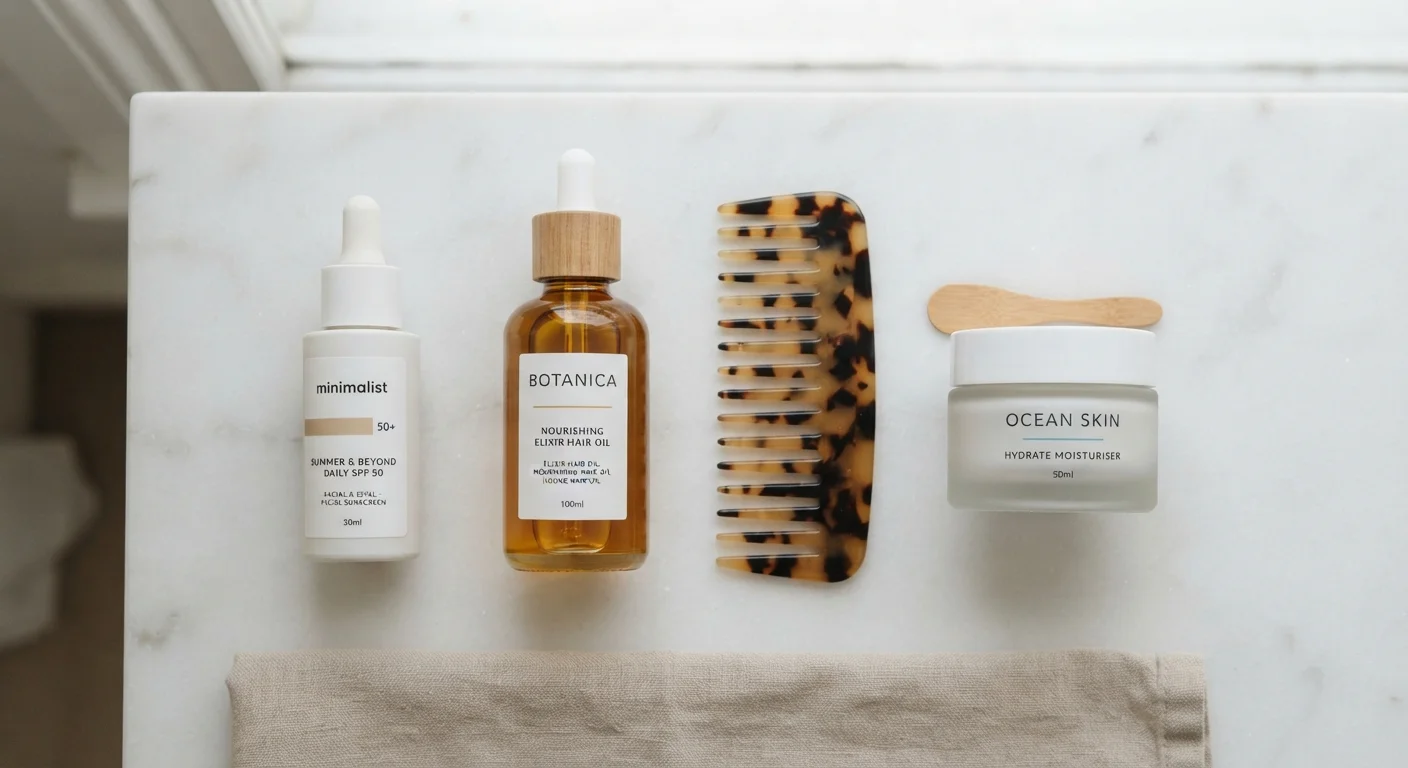
Broad-spectrum SPF 30+ sunscreen
Primary defence against UV-induced skin damage and hair colour fading during outdoor travel.
Ceramide or barrier-repair moisturiser
Reinforces the skin's moisture barrier against dry cabin air and climate extremes.
Gentle, fragrance-free cleanser
Removes sunscreen, salt, and daily buildup without stripping or irritating travel-stressed skin.
Deep conditioning or protein hair mask
Strengthens hair structure before chlorine, UV, and salt-water exposure.
Leave-in conditioner with UV protection
Provides continuous moisture and UV defence for hair throughout the day.
Aloe vera gel or calming serum
Soothes and aids recovery for skin after extended sun exposure.
TSA-compliant travel containers (3.4 oz / 100 ml)
Allows you to decant full-size products for carry-on without checked-bag dependency.
Wide-tooth comb
Detangles wet, sun-exposed hair gently to minimise breakage.
The Pre-Holiday Checklist
Work through these groups in order. Items marked must are non-negotiable; should items significantly improve outcomes; nice-to-have items are worthwhile if time and budget allow.
Two Weeks Before Departure - Skin
Two Weeks Before Departure - Hair
The Week Before - Products and Packing
In-Destination Habits
Sun Protection Is Not Optional
UV exposure is the leading environmental cause of premature skin ageing, barrier disruption, and skin cancer risk - and the risks increase substantially in beach, mountain, or tropical settings where UV index regularly exceeds 8. A broad-spectrum SPF 30 or higher applied every two hours is the single most impactful step in this entire checklist. No other skincare product compensates for missing or insufficient sun protection. If you are taking any medications, ask your pharmacist or prescribing doctor whether they increase photosensitivity before your trip.
Packing Light Without Compromising Your Routine
One of the most common pre-holiday mistakes is packing an unrealistically large skincare or haircare kit that either gets left behind or causes TSA delays. The goal is a streamlined, multi-tasking travel kit that covers your core needs without redundancy.
Consolidate where possible: a tinted SPF moisturiser replaces both your day cream and foundation for casual days. A leave-in conditioner with UV filters serves as both heat protection and sun defence for hair. A gentle, fragrance-free cleanser works for face and body in most cases.
Travel also offers a natural reset point. Reducing your routine to its most essential steps for a week or two can reveal which products your skin actually needs versus which have simply accumulated out of habit. For broader context on building an evidence-based core routine, visit skincare basics. And if your trip overlaps with other wellness goals, the wellness rituals hub covers self-care practices that travel well.
Finally, pre-holiday prep doesn't exist in isolation. If you're coordinating a full departure checklist - covering your home, documents, and safety - preparing your home before a long holiday and the pre-trip safety checklist are practical companions to this guide.
This article is for general informational and educational purposes only and does not constitute medical or dermatological advice. If you have a skin or scalp condition, consult a qualified healthcare professional before changing your routine or travelling.