
Why Damp Myths Are Costly
Damp and mould are among the most misunderstood maintenance issues homeowners face. Acting on inaccurate beliefs - whether it's reaching for a tin of paint or blaming an open window - can mean spending money on the wrong solution while the real problem silently worsens. Understanding what the evidence actually shows is the first step toward protecting your home and the people in it.
The myths below are not fringe ideas; they are genuinely common. Many appear in online forums, passed along by well-meaning neighbours, or even suggested by traders who misdiagnose the source. Getting the facts straight saves time, money, and avoidable health risks. For a practical guide to identifying what type of moisture problem you're actually dealing with, see the diagnostic guide to damp, condensation, and leaks.
Myth
Painting over mould with a specialist paint kills it and solves the problem.
Fact
Anti-mould paint may slow surface regrowth temporarily, but it does not eliminate existing mould or address the moisture source driving it.
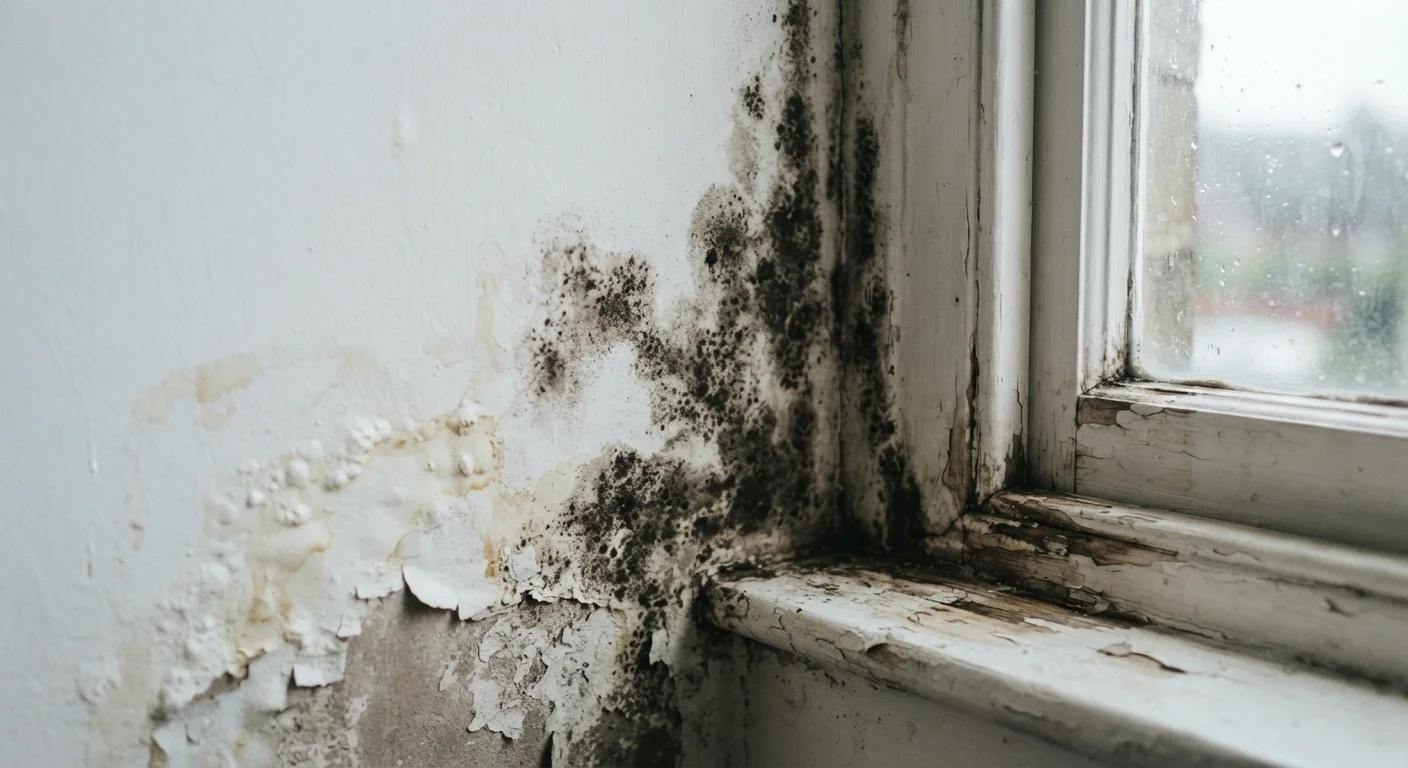
Mould is a living organism that penetrates porous surfaces including plaster, grout, and timber. Covering it with paint - even paint marketed as antimicrobial - seals over the visible growth without killing the mycelium beneath. Within weeks or months, mould typically returns, often more extensively. The only reliable approach is to identify and fix the moisture source, remove affected material where necessary, and then apply appropriate surface treatment. Skipping straight to decoration is a cosmetic fix that delays a structural one.
Myth
Damp is always caused by condensation, so opening windows more will fix it.
Fact
There are several distinct types of damp - condensation, rising damp, and penetrating damp - and each has a different cause and solution.
Condensation forms when warm, moist air meets a cold surface. It is common in poorly ventilated rooms and is often addressed through better airflow and heating consistency. Rising damp, by contrast, occurs when groundwater moves upward through masonry due to a failed or absent damp-proof course. Penetrating damp enters horizontally through defects in walls, roofs, or windows. Opening windows will not fix the latter two, and in some cases improving ventilation without addressing structural defects can mask the symptoms while damage continues. Correct diagnosis is essential before any treatment is chosen.
Myth
A little mould in the bathroom is harmless and purely a cosmetic issue.
Fact
Mould produces spores and, in some species, mycotoxins that can have real health consequences, particularly for vulnerable individuals.
For most healthy adults, low-level mould exposure causes limited harm. However, people with asthma, allergies, compromised immune systems, or chronic respiratory conditions can experience significantly worsened symptoms. Children and older adults are also at elevated risk. Public health guidance in the US, including from the Environmental Protection Agency (EPA), treats indoor mould as a genuine health concern rather than a purely aesthetic one. Dismissing bathroom mould as cosmetic delays remediation that could meaningfully affect air quality in the home.
Myth
Making a home more airtight by sealing gaps and adding insulation will reduce damp.
Fact
Sealing a home without providing controlled ventilation can increase moisture levels and make condensation problems significantly worse.
Energy-efficiency improvements that reduce air leakage are genuinely valuable, but only when paired with adequate mechanical or designed natural ventilation. In a sealed home, everyday activities - cooking, bathing, breathing - release moisture that has nowhere to go. Without extraction or fresh air intake, relative humidity rises and condensation forms on cold surfaces. This is why building standards increasingly require whole-house ventilation strategies alongside insulation upgrades. Airtightness and ventilation must be designed together, not treated as opposites.
Myth
Rising damp is extremely common and the most likely explanation for damp walls.
Fact
True rising damp is far less common than condensation or penetrating damp, and it is frequently misdiagnosed - sometimes by those who sell the treatment.
Research from the Building Research Establishment (BRE) in the UK and similar bodies has found that rising damp is often over-diagnosed. Many cases attributed to rising damp are, on closer inspection, caused by condensation tracking down walls, plumbing leaks, or bridged damp-proof courses. This matters because chemical damp-proof injection - the standard treatment sold for rising damp - is expensive and unnecessary if the real cause is something else. Independent diagnosis from a chartered surveyor, rather than a contractor with a commercial interest in the treatment, is the most reliable approach.
What Effective Damp Prevention Actually Looks Like
Once the myths are cleared away, a more evidence-based picture emerges. Effective moisture management in a home depends on three interconnected factors: controlling moisture sources, ensuring adequate ventilation, and maintaining the building fabric.
Don't Start Repairs Without a Diagnosis
Treating visible damp without identifying its source is one of the most common and expensive homeowner mistakes. Condensation, penetrating damp, and rising damp each require a different remedy - and applying the wrong one can make the underlying problem harder to detect later. Before spending money on treatments, injections, or replastering, have the cause confirmed by a qualified, independent surveyor.
Ventilation is frequently underestimated. Bathrooms and kitchens are the primary generators of airborne moisture in most homes. Extraction fans that vent to the outside - not just into a roof void - make a measurable difference. For a thorough look at how bathroom airflow affects long-term structural health, the guide to bathroom ventilation covers what adequate extraction actually looks like. Equally, maintaining bathroom grout and waterproofing is an often-overlooked part of preventing moisture ingress at the surface level.
When visible mould or persistent damp is present, the underlying cause should be professionally diagnosed before any remedial work begins. A qualified surveyor or damp specialist can distinguish between condensation, rising damp, and penetrating damp - each of which demands a different response. Attempting repairs without that diagnosis is one of the most common and expensive mistakes homeowners make. For a broader look at how renovation misconceptions drain budgets, renovation myths that cost homeowners money provides useful context.
This article is for general informational purposes only. Where damp or mould is extensive, persistent, or accompanied by health symptoms, consult a qualified building surveyor and a healthcare professional as appropriate.