
What Foundation Stress Actually Looks Like
Most homeowners encounter foundation stress not as a sudden collapse, but as a slow accumulation of small, easy-to-dismiss symptoms. Recognising these signs early - and understanding which ones demand immediate action - is one of the most valuable maintenance skills you can develop.
| Most common cause of foundation movement | Soil moisture change (shrinkage, expansion, or erosion) (American Society of Civil Engineers general guidance) |
| Crack width that warrants professional review | Wider than 1/4 inch (6 mm) or any crack showing displacement (General structural engineering practice) |
| Typical professional assessment | Licensed structural engineer (not a general home inspector) |
| Permit requirement for repairs | Most foundation repair work requires a local building permit (Verify with your local building authority) |
| Early intervention benefit | Minor stabilisation is significantly less costly than underpinning or wall replacement |
Cracking Patterns Worth Knowing
Not all cracks are equal. Hairline shrinkage cracks in poured concrete or drywall are common and generally cosmetic. The cracks that warrant closer attention are:
- Diagonal cracks running at roughly 45° from door or window corners - a classic sign of differential settlement.
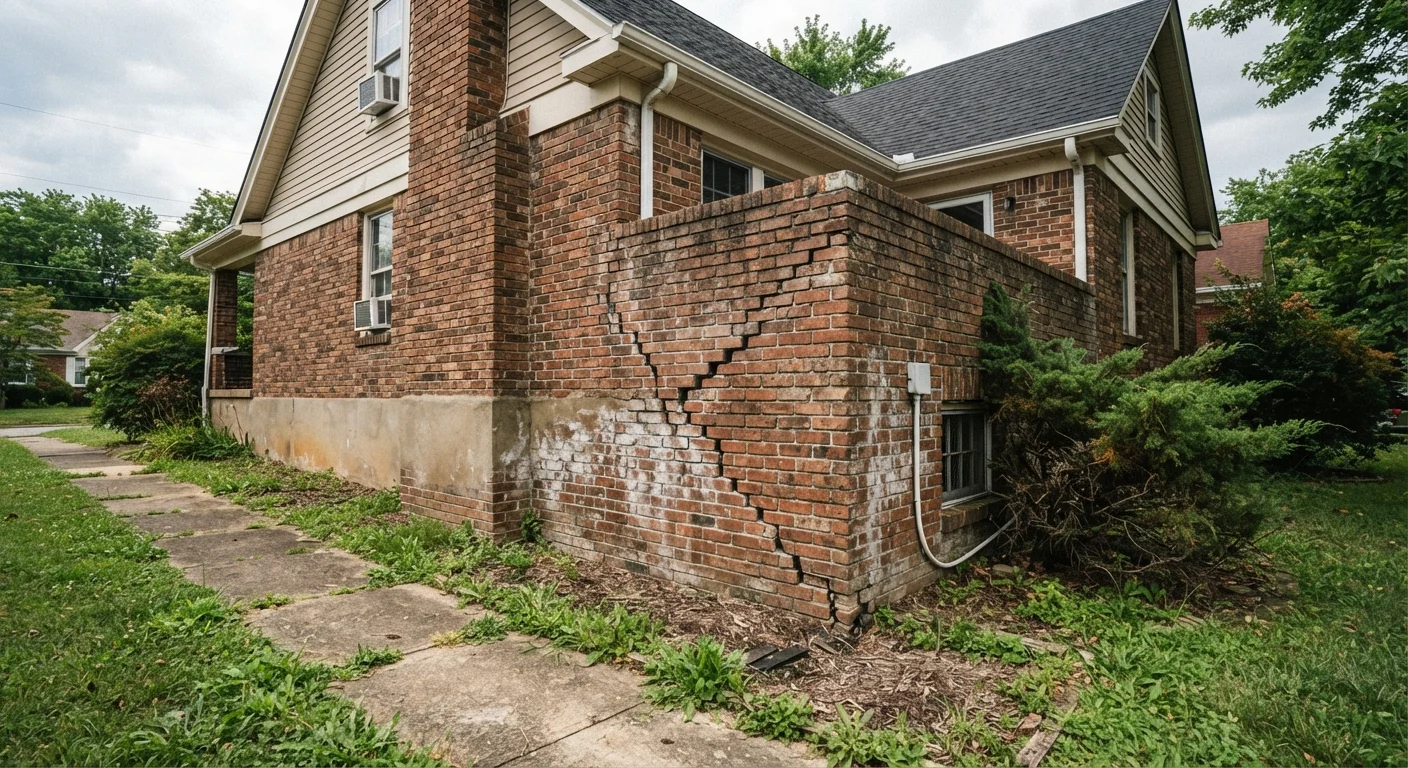
- Step cracking in brick or block mortar joints, suggesting lateral or vertical movement in the masonry.
- Horizontal cracks in basement or retaining walls - often the most serious pattern, indicating lateral soil pressure.
- Cracks wider than ¼ inch, or any crack where one side is higher than the other (displacement), regardless of direction.
Beyond the Walls
Cracks are only one indicator. Other common signs of foundation movement include:
- Doors or windows that stick, bind, or no longer sit square in their frames
- Floors that slope noticeably or feel springy in localised areas
- Gaps appearing between walls and ceilings, or between exterior brickwork and window frames
- Basement or crawl space walls that visibly bow inward
Moisture is often both a cause and a symptom. Water infiltration through foundation walls may signal hydrostatic pressure building outside. See our guide to diagnosing moisture problems for help distinguishing a drainage issue from a structural one.
This Is Information, Not a Diagnosis
Foundation behaviour varies significantly by soil type, climate, construction era, and building design. The signs described here are general educational indicators - not a substitute for assessment by a licensed structural engineer. If you suspect a serious structural problem, stop non-essential work in the affected area and seek professional advice promptly.
Understanding the Causes and When to Act
Foundation movement has several common causes, most related to how water interacts with the soil beneath the structure.
Differential Settlement
Uneven sinking of a foundation where one part drops more than another. It puts the structure under stress and is often the root cause of cracking, door misalignment, and sloping floors.
Hydrostatic Pressure
The lateral force that water-saturated soil exerts against a foundation wall. Over time it can cause bowing, cracking, or water infiltration in basements and crawl spaces.
Step Cracking
A staircase-pattern crack that follows mortar joints in brick or block masonry. It typically signals lateral movement or differential settlement rather than simple surface shrinkage.
Structural Engineer
A licensed professional who assesses load-bearing capacity and structural integrity. For foundation concerns, a structural engineer's evaluation is more definitive than a general home inspection.
Underpinning
A remediation method that extends or strengthens an existing foundation by installing piers or piles deeper into stable soil. It is a specialist operation requiring permits and professional execution.
Heave
Upward movement of soil or a foundation, often caused by expansive clay soils absorbing water. Unlike settlement, heave pushes sections of a slab or footing upward rather than downward.
Primary Causes
- Soil shrinkage
- Extended dry periods cause clay-rich soils to contract, removing support from footings and allowing sections to drop - a pattern especially prevalent in summer droughts.
- Soil expansion (heave)
- The same clay soils absorb water and swell, pushing up against slabs or footings from below.
- Poor drainage and grading
- Ground that slopes toward the house channels water against the foundation, increasing hydrostatic pressure and soil saturation. Approximately 40% of foundation problems are linked to drainage failures.
- Tree root intrusion
- Large roots near the foundation can extract soil moisture unevenly, or physically displace footings over time.
- Construction or erosion issues
- Poorly compacted fill soil beneath a slab, or erosion by underground water movement, can create voids that lead to sudden settlement.
Prioritising the Response
Not every crack demands emergency action, but none should be ignored indefinitely. A practical starting point: photograph and date any crack you find, then measure its width with a coin or ruler. Monitor it over 4-6 weeks. A crack that grows, displaces, or is accompanied by other structural symptoms - sticking doors, sloping floors - should trigger a professional review without delay.
Because foundation integrity affects every element above it, it sits at the top of any prioritised maintenance list. Our article on prioritising home maintenance on a budget explains how to weigh structural risks against other repair needs when funds are limited.
Who to Call
A general home inspector can flag concerns, but a licensed structural engineer is the appropriate professional for foundation assessment. They can differentiate cosmetic movement from active structural compromise, recommend specific remediation approaches, and provide documentation for insurance or resale purposes. Any repair work - including underpinning, wall anchors, or drainage correction - typically requires a local building permit. Always verify requirements with your local building authority before work begins.
Understanding your home's structural system more broadly - including which interior walls are load-bearing - helps you interpret foundation symptoms in context. Our guide to identifying load-bearing walls is a useful companion reference. And just as foundation inspections benefit from routine attention, so does the structure above: see how professional roof inspections fit into a complete home maintenance plan.
This article is for general informational and educational purposes only. It is not a substitute for assessment by a licensed structural engineer or qualified contractor. Always verify local permit and code requirements with your local building authority before undertaking any foundation-related work.