

Why Fluid Identification Matters Before You Panic
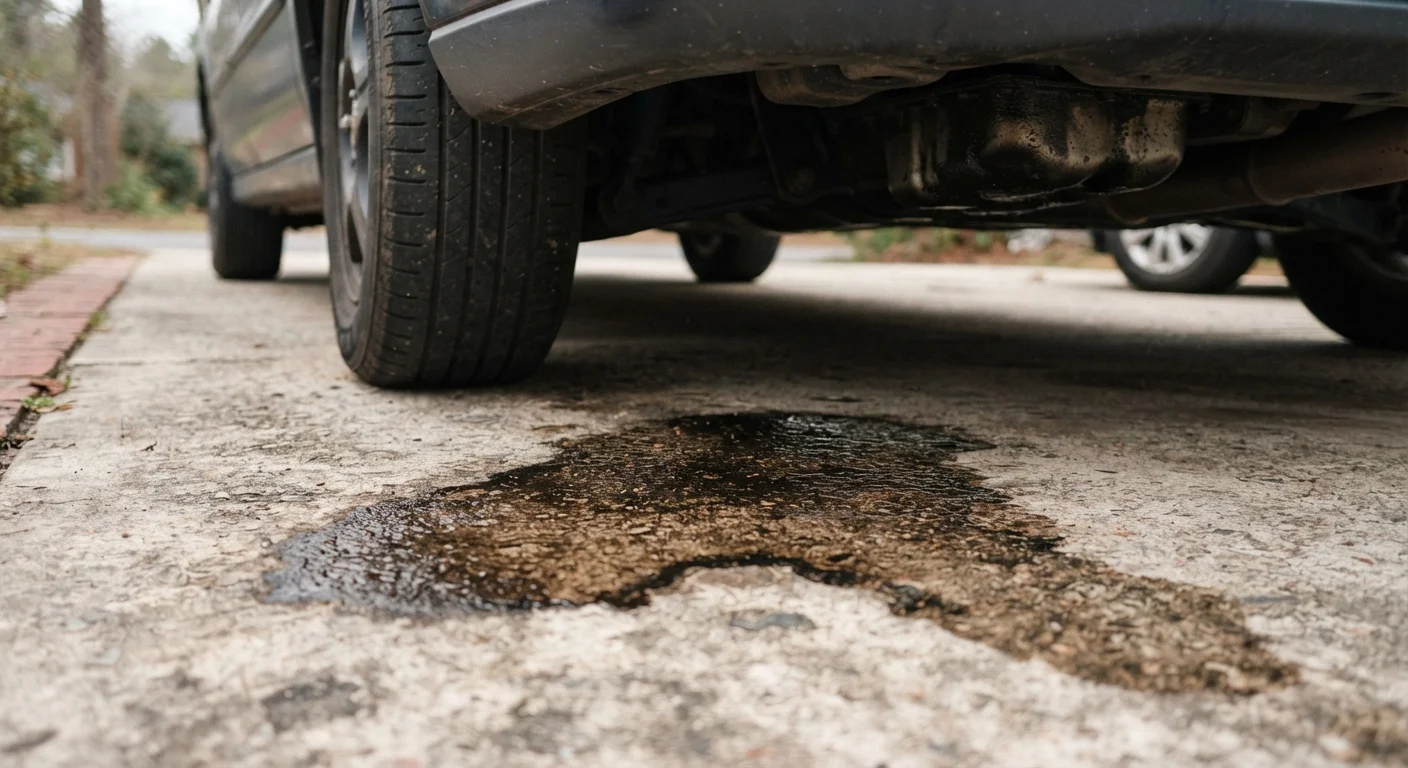
Discovering a puddle under your car tends to trigger one of two unhelpful responses: immediate alarm, or complete dismissal. Neither serves you well. The reality is that some fluids - particularly water dripping from an air conditioning system or exhaust - are entirely normal byproducts of how modern vehicles operate. Others, like brake fluid or fuel, can represent genuine safety hazards that should not be ignored.
The good news is that identifying the likely source of a leak requires no mechanical training. Colour, location, texture, and smell are all observable without tools or expertise. This guide walks you through a methodical identification process that takes less than 15 minutes and gives you a defensible answer before you call a shop or reach for your wallet.
For a broader picture of staying ahead of vehicle problems, see our guide to car maintenance without a mechanical background.
White cardboard or paper sheet
Placed under the vehicle overnight to capture and display fluid colour and drip location clearly.
Disposable gloves
Protects hands when touching or smelling unknown fluids, some of which are toxic or irritating to skin.
Flashlight or phone torch
Illuminates the undercarriage to help trace a leak back toward its likely source.
Clean white rag or paper towel
Used to dab a sample of the fluid to better assess colour, consistency, and smell.
What Each Fluid Looks Like - and What It Means
Understanding the characteristics of each common automotive fluid makes your on-the-ground inspection far more accurate.
Engine Oil
Fresh engine oil ranges from amber to golden-brown. Oil that has been in service for a while darkens to a deep brown or nearly black. It feels unmistakably greasy and leaves a persistent stain. Leaks typically originate from the valve cover gasket, oil pan drain plug, or rear main seal. Understanding engine oil viscosity and grades can also help you verify you're using the right product for your vehicle.
Coolant
Coolant comes in several formulations, but is most commonly bright green, orange, or pink. It has a distinctive sweet smell and leaves a slightly tacky residue when dry. Even a moderate coolant leak can lead to rapid overheating. Our article on how your cooling system works provides useful background on what coolant actually does.
Brake Fluid
New brake fluid is clear to very pale yellow and has a slightly oily feel with a sharp chemical odour. It is typically found near wheel wells, the brake master cylinder (on the firewall near the driver's side), or brake lines. Brake fluid is frequently overlooked, but even a slow leak can degrade braking performance over time.
Brake Fluid Leaks Are a Safety Emergency
If the fluid matches brake fluid characteristics - thin, slightly oily, clear to pale yellow, located near a wheel or the firewall - do not drive the vehicle until the brake system has been inspected by a qualified mechanic. A compromised brake circuit can cause brake failure with little or no warning.
Transmission Fluid
Automatic transmission fluid (ATF) is typically red or reddish-pink and has a faintly sweet, oily smell. It is found toward the middle or rear underside of the vehicle. Manual transmission fluid tends to be darker and more gear-oil-like in consistency.
Normal Water Condensation
If the drip is clear, odourless, and appears directly beneath the exhaust pipe after a cold start - or beneath the passenger-side front area after running the air conditioning - it is almost certainly condensation. This is a normal part of how both systems work and requires no action. If a dashboard warning light appears alongside any fluid you've found, our guide to warning lights can help you interpret what your car is communicating.
Use White Cardboard to Read the Fluid
Place a clean sheet of white cardboard or paper under your car overnight. In the morning, the colour and position of the stain will give you far more information than a spot on a dark garage floor. This simple trick makes identification significantly easier.
Step-by-Step: Identifying the Leak
Follow these steps in order for the most reliable diagnosis. Gather your materials before starting.
What you will need
Set Up Your Detection Sheet
Park the vehicle on a level surface and slide a sheet of white cardboard or paper beneath it, positioned roughly under the centre of the car. Leave it overnight or for at least two to three hours after driving. When you return, the stain's colour, size, and position will anchor everything that follows.
Note the Location of the Drip
Where the fluid lands relative to your car's layout is often as informative as its colour. Front-centre drips (near the engine) suggest oil, coolant, or power steering fluid. A drip directly behind the front wheels or near the firewall may indicate brake fluid. Rear drips near the exhaust pipe after a cold start are almost always harmless water condensation from the catalytic converter warming up.
Assess the Colour
Colour is your most immediate clue:
- Clear water: Normal AC condensation or exhaust condensation on cold starts.
- Bright green, orange, or pink: Coolant (antifreeze). Sweet-smelling and slightly slick.
- Dark brown or black, oily: Engine oil, especially if it's near the drain plug or valve cover.
- Clear to pale yellow, slightly oily: Brake fluid or power steering fluid.
- Red or pinkish, oily: Transmission fluid or power steering fluid.
- Clear and watery with a fuel smell: Gasoline or diesel - treat this as urgent.
Check the Texture and Smell
Put on disposable gloves and dab a small amount of the fluid with a white paper towel. Engine oil and transmission fluid feel distinctly slick and greasy. Brake fluid feels similarly slick but has a faintly sharp, chemical odour. Coolant feels slightly slimy and has a characteristic sweet smell. Water leaves no residue. Fuel is unmistakable by scent alone - do not handle it near ignition sources.
Cross-Check Your Fluid Levels
With the engine off and cool, open the hood and check the relevant reservoirs. Most modern vehicles have clearly labelled translucent reservoirs for coolant, brake fluid, power steering fluid, and windshield washer fluid. The engine oil dipstick is typically near the front of the engine. A significantly low level in any reservoir corroborates the leak you've identified and tells you how serious the loss rate has been.
Decide Whether to Drive or Call a Mechanic
Not every leak demands an immediate tow. A small, slow engine oil seep with an adequate oil level may allow brief, monitored driving to a shop. However, brake fluid loss, fuel leaks, or significant coolant loss should prevent you from driving until the vehicle is inspected. When in doubt, err on the side of caution - the cost of a tow is far lower than the cost of engine failure or a brake incident.
This article is for general informational purposes only. Vehicle fluid leaks can involve safety-critical systems. When uncertain about the source or severity of a leak, consult a qualified mechanic before driving the vehicle.