

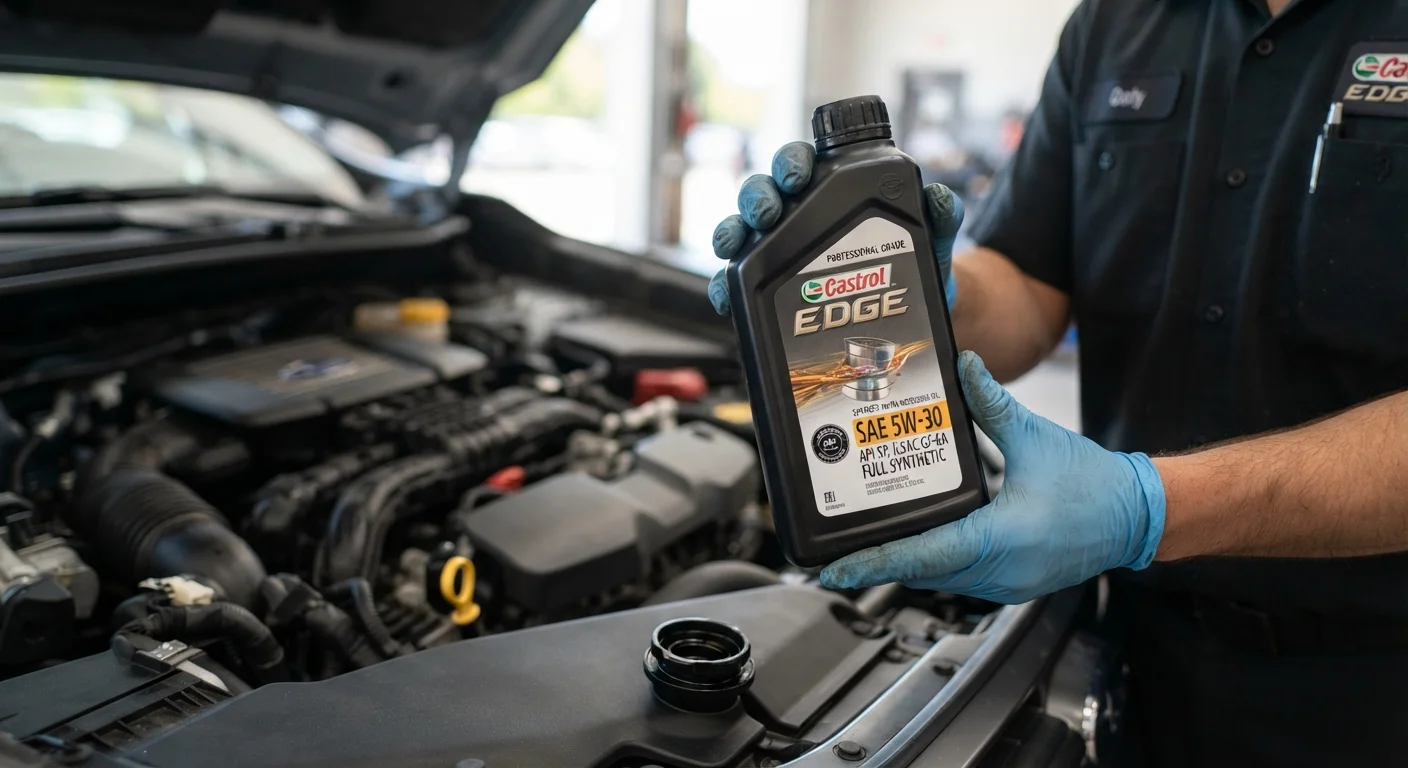
Decoding What's Actually on the Bottle
Walk into any auto parts store and you'll find shelves lined with oil bottles stamped with codes like 5W-20, 10W-40, or 0W-16. These aren't marketing labels - they're precision specifications established by the Society of Automotive Engineers (SAE) under standard J300.
Here's how to read them:
- The number before the 'W' - The 'W' stands for winter, not weight. This number indicates how the oil behaves at low temperatures. A lower number (like 0W or 5W) means the oil stays fluid enough to circulate quickly during a cold start, reducing the window of time where metal surfaces are running with minimal lubrication.
- The number after the dash - This reflects the oil's kinematic viscosity at 100°C (212°F), approximating normal operating temperature. A higher number means a thicker oil film at operating heat.
So a 5W-30 oil flows like a thin '5-grade' oil in cold conditions, then behaves like a '30-grade' oil once the engine reaches full temperature. This dual-range behavior is what makes modern multi-grade oils so practical - they eliminated the old practice of switching between lighter summer and heavier winter oils.
Single-Grade vs. Multi-Grade Oils
Before multi-grade oils became standard, drivers used single-grade oils (like SAE 30 or SAE 40) that only performed reliably within a narrow temperature range. Multi-grade oils use viscosity index improvers - polymer additives - to maintain stable flow across a much wider range. Today, nearly all passenger vehicle engines are designed around multi-grade specifications.
Why the Wrong Grade Creates Real Problems
Viscosity isn't just a number on a shelf - it's what determines whether a film of oil actually separates moving metal parts under pressure and heat. Use a grade that's too thin, and that film may break down before fully protecting components like camshaft lobes or crankshaft bearings. Use one that's too thick, and the oil may resist flowing fast enough at cold startup, leaving parts momentarily dry while the pump works harder.
Practical consequences of a mismatched viscosity grade include:
- Increased engine wear - particularly at startup, when most engine wear occurs even under ideal conditions
- Reduced fuel economy - thicker-than-specified oil creates more internal drag
- Seal deterioration - some oils are formulated for specific seal materials; incompatible grades may accelerate degradation
- Voided warranty coverage - using an out-of-spec oil grade can create grounds for a manufacturer to dispute warranty claims related to engine damage
These aren't worst-case scenarios reserved for extreme drivers. Repeated use of even a slightly wrong grade accumulates wear over tens of thousands of miles. For more context on how oil choices factor into broader ownership decisions, see common car ownership missteps.
Always Check Your Owner's Manual First
Before purchasing oil for a change or top-off, open your owner's manual and locate the lubricants section - it will list the approved SAE grade and may also specify an API or ILSAC certification category. Sticking to this specification is the single most effective step you can take to protect engine longevity. If you've lost your manual, most manufacturers publish them online by model year and VIN.
Finding the Right Grade for Your Engine
The single most reliable source for your correct oil grade is your vehicle's owner's manual. Manufacturers engineer their engines to specific tolerances and test them extensively with designated viscosity grades. That recommendation isn't conservative hedging - it's precision specification.
A few additional considerations:
- Climate and operating conditions - Drivers in consistently cold regions (below -20°F/-29°C) may benefit from a lower winter rating like 0W. Those in hot climates with stop-and-go traffic may find a slightly higher operating-temperature rating appropriate. Always cross-reference with the manufacturer's guidance before deviating.
- Engine age and mileage - Some mechanics may recommend a slightly higher operating-temperature viscosity for high-mileage engines where internal clearances have widened over time. This is a judgment call best made by a qualified mechanic familiar with your engine's condition.
- Synthetic vs. conventional base - Both oil types are available across the same SAE grades. The grade specifies viscosity behavior; the base oil type affects other characteristics like oxidation stability and additive performance. For a deeper look at that distinction, see how synthetic and conventional oils differ.
Oil grade is also one element of your broader service schedule. Understanding when and why your manufacturer calls for oil changes - and how they fit into your vehicle's overall maintenance calendar - is covered in our guide to vehicle service schedules.
~40%
Engine wear occurring at cold startup
Engineering studies consistently indicate a disproportionate share of total engine wear happens in the first moments after a cold start, before oil fully circulates - highlighting why cold-temperature viscosity ratings matter.
0W-60
SAE viscosity grade range for passenger vehicles
SAE J300 defines multiple viscosity grades from 0W to 60, giving engineers a precise spectrum to match oil behavior to engine design requirements across operating conditions.
5W-30
Most commonly specified grade in US passenger cars
Industry surveys of manufacturer specifications show 5W-30 is among the most frequently recommended grades for modern US-market passenger vehicles, though individual specifications vary widely by make and model.