

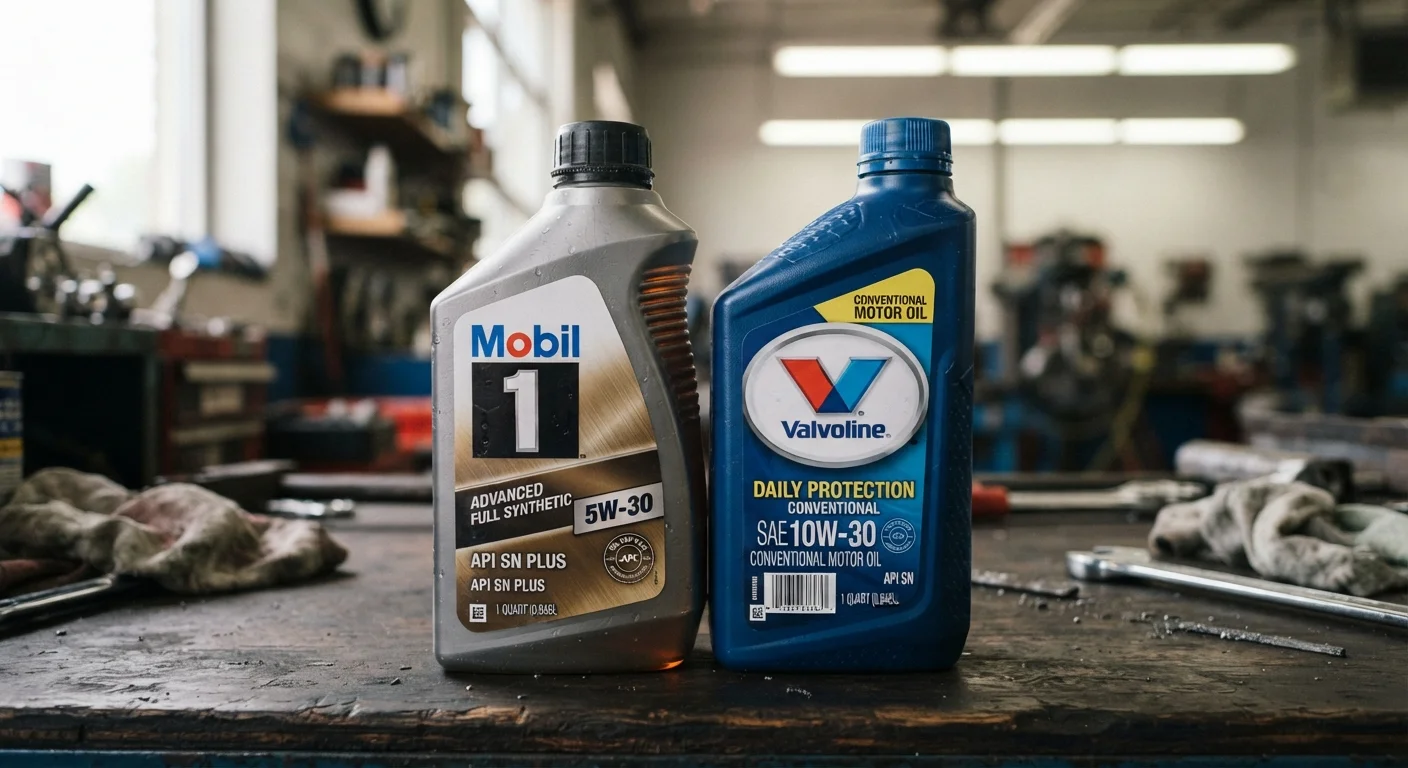
How Each Oil Is Made
The most fundamental difference between synthetic and conventional motor oil lies in their origins. Conventional motor oil is derived from crude petroleum refined through a distillation process. While refining removes many impurities, the resulting molecules vary in size and structure - a natural consequence of working with petroleum as a raw material.
Synthetic motor oil, by contrast, is chemically synthesized - typically from a base of either fully synthesized compounds (Group IV polyalphaolefins, or PAOs) or heavily processed petroleum (Group III base stocks). This manufacturing process yields molecules that are more uniform in size and structure, which has measurable implications for how the oil performs under stress.
There is also a middle category: synthetic blend oils, which combine conventional and synthetic base stocks. These offer some performance advantages over straight conventional oil at a lower cost than full synthetic, making them a common choice for certain light-truck and SUV applications.
Understanding oil grades and viscosity ratings is equally important - because both synthetic and conventional oils are available across a range of viscosities, and the right grade depends on your engine, not just your oil type preference.
Performance Differences That Matter in Practice
The engineered molecular uniformity of synthetic oil translates into several real-world performance advantages, particularly under demanding conditions.
| Criterion | Synthetic Motor Oil | Conventional Motor Oil |
|---|---|---|
| Base material | Chemically engineered compounds | Refined crude petroleum |
| Molecular uniformity | High - consistent molecule size | Variable - mixed molecule sizes |
| Cold-weather flow | Flows more readily at low temps | Can thicken significantly in cold |
| Heat resistance | Resists breakdown under high heat | More susceptible to thermal breakdown |
| Typical change interval | Often 7,500-15,000 miles (varies by vehicle) | Typically 3,000-5,000 miles |
| Sludge resistance | High | Moderate |
| Cost per quart | Generally higher | Generally lower |
| Compatibility with older engines | Verify with mechanic before switching | Widely compatible with older designs |
Temperature extremes are where the gap is most pronounced. In cold weather, conventional oil can thicken considerably before the engine fully warms up - a window of time when wear is accelerated. Synthetic oil flows more freely at low temperatures, reaching critical engine components faster. At the other extreme, synthetic oil resists thermal breakdown and oxidation better, maintaining its protective film under sustained high heat.
Oxidation and sludge resistance also differ meaningfully. Over time, conventional oil oxidizes, forming deposits and sludge that can restrict oil passages and reduce lubrication effectiveness. The cleaner molecular structure of full synthetic resists this process longer, which is one reason manufacturers of many modern vehicles specify synthetic oil and allow extended drain intervals.
~2x
Longer typical drain interval for full synthetic vs. conventional
Many full synthetic formulations support drain intervals roughly twice as long as conventional oil, though actual intervals depend on the vehicle manufacturer's specifications.
5W-30
Most common viscosity grade in new US vehicles
According to industry data, 5W-30 is among the most widely specified viscosity grades for passenger cars in North America, available in both synthetic and conventional formulations.
It's worth noting that neither oil type eliminates the need for timely oil changes. Even full synthetic degrades over time and mileage, and neglecting changes will cause harm regardless of oil type.
Which Oil Is Right for Your Vehicle?
The most reliable answer to this question is in your vehicle's owner's manual. Automakers specify oil type and viscosity based on engineering requirements, and these specifications should always take precedence over general guidelines or marketing claims.
That said, some patterns hold broadly. Modern engines - particularly turbocharged, direct-injected, or high-compression designs - are engineered with tighter internal tolerances and often require synthetic oil to meet lubrication demands. Attempting to run conventional oil in an engine specified for synthetic may void warranty provisions and increase wear risk.
Older engines with higher tolerances and simpler designs often run well on conventional oil throughout their service life. Switching a high-mileage engine with established wear patterns and possible seal degradation from conventional to full synthetic without mechanical assessment is not always straightforward - a qualified mechanic can evaluate whether a switch makes sense for a specific vehicle.
Climate and driving habits also factor in. Frequent short trips, towing, stop-and-go urban driving, and sustained high-speed highway use all increase thermal and mechanical stress on oil. In these conditions, synthetic oil's greater stability offers a more meaningful advantage.
Switching Oil Types Mid-Life: Proceed Carefully
There is a persistent myth that switching from conventional to synthetic oil will cause leaks in older engines. Modern synthetic oils are generally compatible with engine seals; however, high-mileage engines with pre-existing wear or seeping seals warrant a mechanical inspection before any oil type change. A qualified mechanic can assess your engine's condition and advise on whether a switch - or a high-mileage blend - is appropriate for your situation.
For a deeper look at how viscosity ratings interact with both oil types, see our guide on engine oil grades and viscosity - understanding those numbers helps you make a fully informed choice at the service counter.