

The Fluid That Quietly Deteriorates
Brake fluid is hygroscopic - meaning it actively absorbs moisture from the atmosphere. This isn't a defect; it's how modern glycol-based brake fluids are designed to behave, drawing water away from metal components to reduce corrosion risk. The trade-off is that the fluid itself degrades over time as that moisture accumulates.
As water content rises, the fluid's boiling point drops. Fresh DOT 3 brake fluid has a dry boiling point of around 401°F (205°C). Once it absorbs roughly 3.7% water by volume, that figure falls by more than 100°F. During hard braking - on a long downhill grade, for instance - heat transfers from the rotors and calipers into the brake lines. Degraded fluid can then vaporize, creating gas bubbles that compress under pedal pressure. The result is a spongy, inconsistent pedal and noticeably longer stopping distances.
Unlike engine oil, which turns visibly dark and gritty, brake fluid rarely signals its own deterioration. It may still look clear or slightly yellow even when its moisture content is well beyond safe limits. That invisibility is exactly why it gets ignored. See our guide to staying ahead of maintenance for a broader look at how to track fluid health without mechanical expertise.
Common Mistakes Drivers Make With Brake Fluid
Understanding what goes wrong - and why - is the first step toward avoiding it. The mistakes below are widespread across all driver experience levels, not just beginners.
Assuming brake fluid never needs to be replaced unless there's a visible problem.
Why it happens: Unlike oil or coolant, brake fluid rarely changes color noticeably, so drivers assume it's fine. There's also no dashboard warning light specifically for fluid degradation.
Topping off the reservoir with the wrong fluid specification.
Why it happens: DOT ratings (DOT 3, DOT 4, DOT 5, DOT 5.1) look similar, and drivers may grab whatever's available. Mixing incompatible types - particularly DOT 5 silicone fluid with glycol-based DOT 3 or 4 - can cause the system to malfunction.
Ignoring a spongy or soft brake pedal, attributing it to "normal" wear.
Why it happens: Pedal feel changes gradually, so drivers adapt without realizing stopping performance has diminished. A soft pedal is often chalked up to pad wear rather than fluid issues.
Skipping brake fluid checks during routine oil change visits.
Why it happens: Quick-lube services typically focus on oil, air filters, and wiper blades. Brake fluid often isn't on the standard checklist unless the customer or technician specifically raises it.
Overfilling the brake fluid reservoir after noticing a low level.
Why it happens: A low reservoir reads as a simple fluid deficit, and the instinct is to top it up. However, as brake pads wear down, fluid redistributes - overfilling and then replacing pads can cause the system to overflow.
~3.7%
Water content that significantly lowers brake fluid boiling point
Brake fluid research indicates that absorbing approximately 3.7% water by volume can reduce the boiling point of DOT 3 fluid by over 100°F, increasing vapor lock risk.
2 years
Typical manufacturer-recommended flush interval
Many vehicle manufacturers recommend replacing brake fluid every two years regardless of mileage, though intervals vary - always consult your owner's manual.
What Proper Brake Fluid Maintenance Actually Looks Like
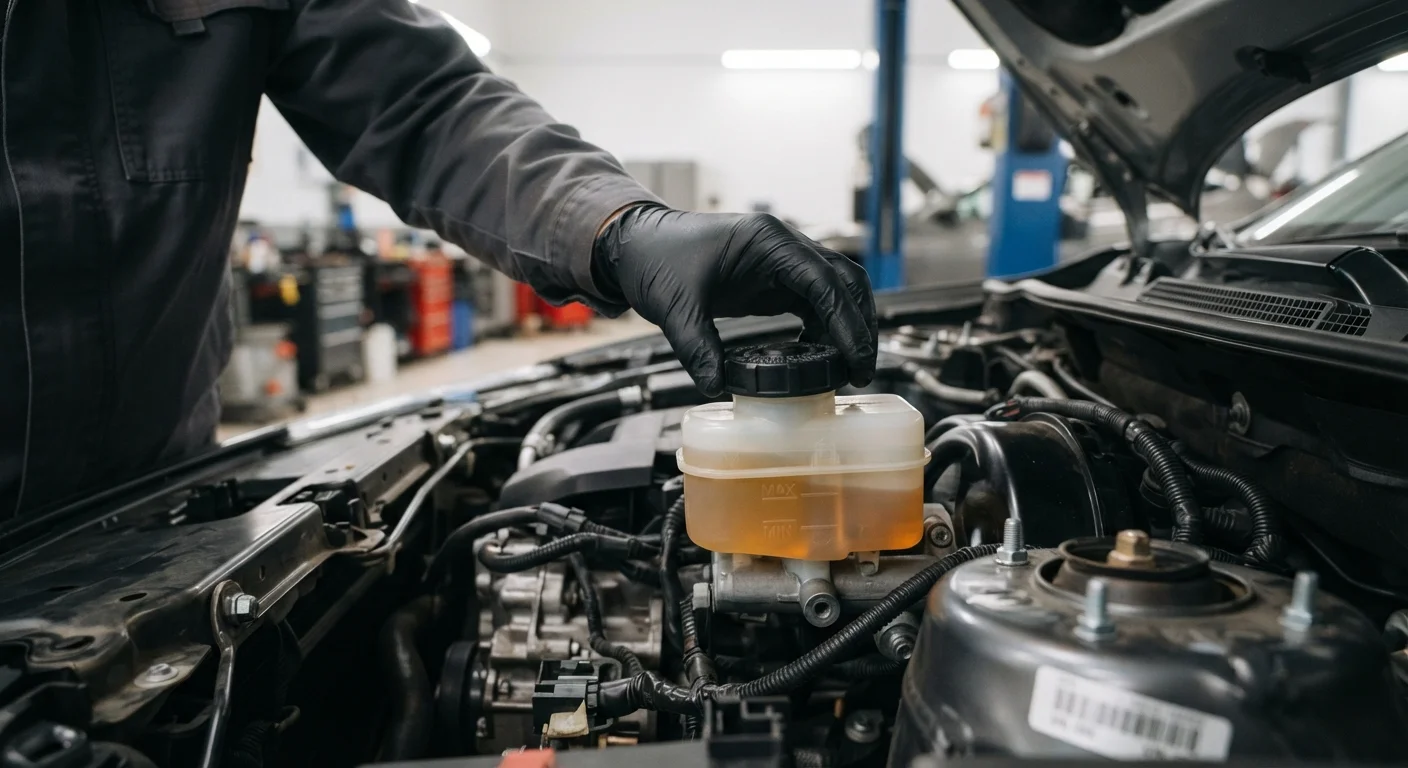
Checking and maintaining brake fluid doesn't require specialized tools or mechanical training. The reservoir is typically a small translucent plastic container near the back of the engine bay, labeled with a brake symbol. Fluid level should fall between the MIN and MAX marks. A low level can indicate either normal pad wear (as calipers extend further, they draw fluid down) or a potential leak - both warrant a closer look.
For fluid condition, a visual check isn't enough. Mechanics use inexpensive test strips or a refractometer to measure moisture content directly. If you're approaching the two-year mark since your last flush, ask a qualified technician to test it. The cost of a brake fluid flush is modest compared to replacing corroded brake lines or a seized caliper.
Never Ignore a Spongy or Sinking Pedal
A brake pedal that feels soft, sponges under pressure, or slowly sinks toward the floor is a safety concern that should be inspected by a qualified mechanic without delay. These symptoms may indicate air in the brake lines, severely degraded fluid, or a hydraulic leak - none of which should be driven on until diagnosed. Do not assume the feeling will resolve on its own.
If you notice fluid pooling beneath your vehicle, the guide to identifying car fluid leaks by color and location can help you determine whether it warrants immediate attention. Brake fluid is typically clear to light yellow and has a slightly oily feel. For context on how brake fluid maintenance compares to other cooling system fluids, see our piece on how coolant and antifreeze work.
This article is for general informational purposes only. Always consult a qualified mechanic before performing or deferring any vehicle maintenance, particularly work related to braking systems.