

What the Cooling System Actually Does
Your engine burns fuel to generate power, and that combustion process creates enormous heat - enough to destroy metal components if left unchecked. The cooling system's job is to keep engine temperature within a safe operating range, typically between 195°F and 220°F for most passenger vehicles.
Coolant flows from the radiator into the engine block, absorbs heat, and returns to the radiator where thin fins and airflow strip that heat away. A thermostat acts as a gatekeeper, holding coolant in the engine until it reaches operating temperature, then opening to allow circulation. A water pump keeps the fluid moving through this loop continuously while the engine runs.
This system also feeds your cabin heater - the heat that warms you on cold mornings comes directly from hot coolant passing through a small radiator called the heater core. So a cooling system problem can sometimes reveal itself as a heater that suddenly stops working.
Pressure Is Part of the System Design
Your cooling system operates under pressure - typically 13 to 16 psi - which raises the boiling point of the coolant mixture and makes the system more efficient. This is why a failing radiator cap, which is designed to maintain and release pressure at a set threshold, can cause overheating even when coolant levels look normal. A mechanic can pressure-test the system to check for cap integrity and leaks.
Why Coolant Formulation Matters
Not all coolants are alike, and the differences matter more than most drivers realize. There are three main categories in wide use today:
- IAT (Inorganic Additive Technology): The original green coolant, now less common in newer vehicles. Typically requires replacement every 2 years or 30,000 miles.
- OAT (Organic Acid Technology): Often orange, red, or pink in color. Longer service life - typically 5 years or 150,000 miles - and common in many modern vehicles.
- HOAT (Hybrid OAT): A blend of both technologies, used by several manufacturers. Usually yellow or turquoise.
Mixing incompatible types can compromise the corrosion inhibitors that protect your radiator, water pump, and hoses. Always check your owner's manual or the vehicle's coolant reservoir cap for the specified type before adding fluid. If you're unsure what's currently in your system, a full flush by a qualified mechanic is the safest approach.
50/50
Standard coolant-to-water mix ratio
A 50/50 blend of ethylene glycol concentrate and distilled water is the widely recommended ratio for year-round protection in most U.S. climates.
~265°F
Boil point of a pressurized 50/50 mix
Under normal system pressure, a proper coolant mixture boils at approximately 265°F - well above the typical operating range of 195-220°F.
150,000 mi
Max service life of long-life OAT coolants
Many modern OAT-based coolant formulations are rated for up to 5 years or 150,000 miles before requiring a full system flush.
Recognizing the Signs Something Is Wrong
Cooling system problems rarely appear without warning. Knowing what to look for can mean the difference between a minor repair and a catastrophic engine failure.
Temperature gauge behavior
Your dashboard temperature gauge is your most direct indicator. If it climbs toward the red zone - or spikes and drops unpredictably - the engine is struggling to maintain safe temperature. A consistently low reading can also signal a stuck-open thermostat. For a broader look at what dashboard indicators mean, see our guide to warning lights.
Fluid leaks
Coolant is typically bright green, orange, pink, or yellow and has a distinctly sweet smell. A puddle of brightly colored fluid under your parked vehicle - particularly near the front - may point to a leaking hose, a failing water pump seal, or a cracked radiator. Identifying leaks by color and location can help you assess urgency before calling a mechanic.
White exhaust smoke or a sweet engine smell
White smoke from the exhaust - especially when it persists after warm-up - can indicate coolant entering the combustion chamber, often through a failed head gasket. This is a serious issue that requires prompt professional attention.
Never Open a Hot Radiator Cap
Removing the radiator cap while the engine is hot can release scalding pressurized steam and fluid. Always wait at least 30 minutes after turning off the engine before checking or adding coolant. If you need to top off in an emergency, use the coolant reservoir rather than the radiator cap whenever possible.
Keeping the System Healthy Over Time
Coolant maintenance is straightforward when it's part of a regular routine. Here's what responsible ownership looks like:
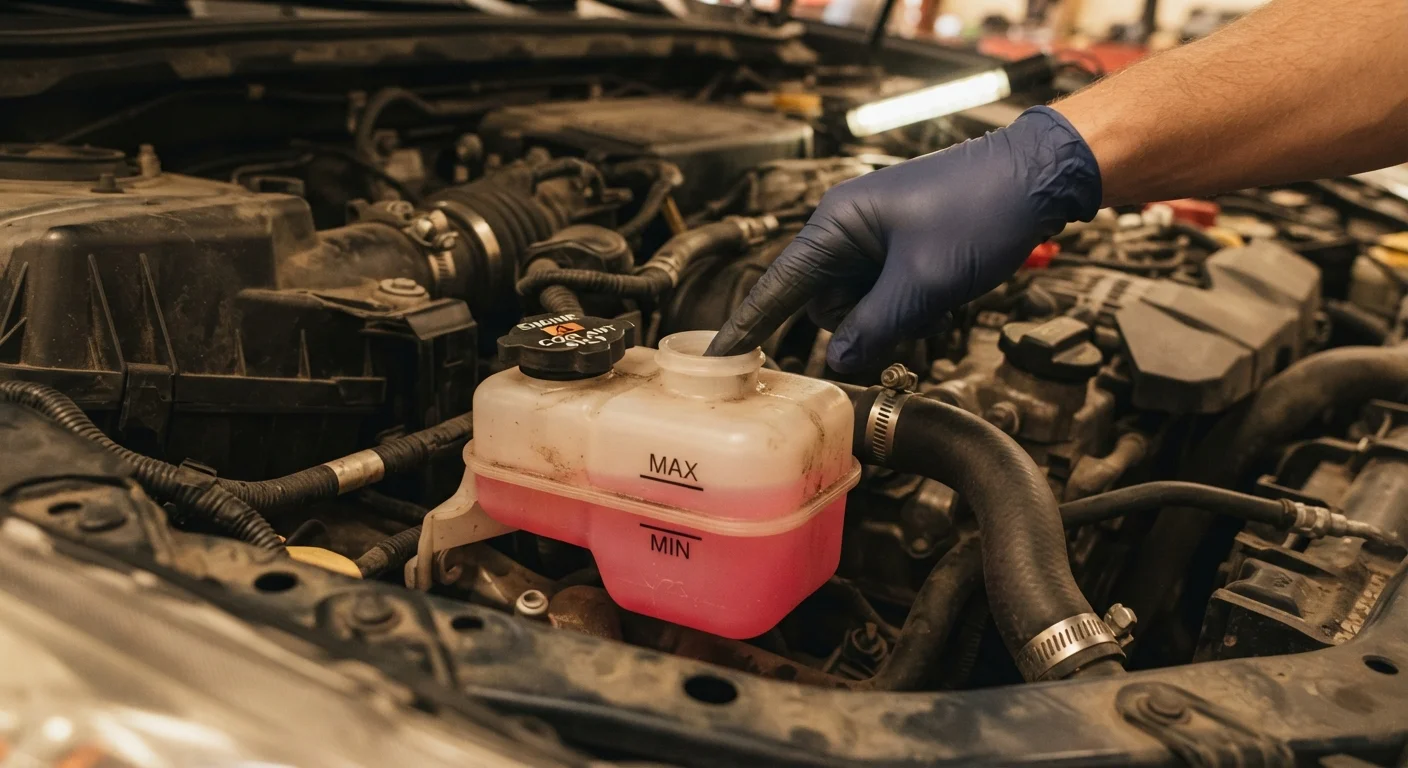
- Check the reservoir level periodically. Most vehicles have a translucent coolant reservoir with MIN and MAX markings. A visual check every month takes seconds. Never open the radiator cap on a hot engine - pressurized steam can cause serious burns.
- Follow your flush schedule. Coolant doesn't last forever. Over time, its corrosion inhibitors deplete, and the fluid becomes acidic, which can attack metal and rubber components. Your owner's manual will specify when a flush is due.
- Inspect hoses and the radiator cap. Hoses should feel firm and pliable, not cracked, soft, or swollen. A faulty radiator cap that can't hold system pressure is a surprisingly common cause of overheating.
Cooling system care pairs naturally with broader seasonal preparation. Preparing your vehicle for seasonal changes is a good framework for timing fluid checks alongside other maintenance. And if you'd like a practical approach to staying on top of maintenance without mechanical expertise, this overview for everyday drivers is a useful starting point.
Coolant is not one of those maintenance items you can safely defer indefinitely. Routine tasks that get skipped often include coolant flushes - and the consequences can be expensive.