

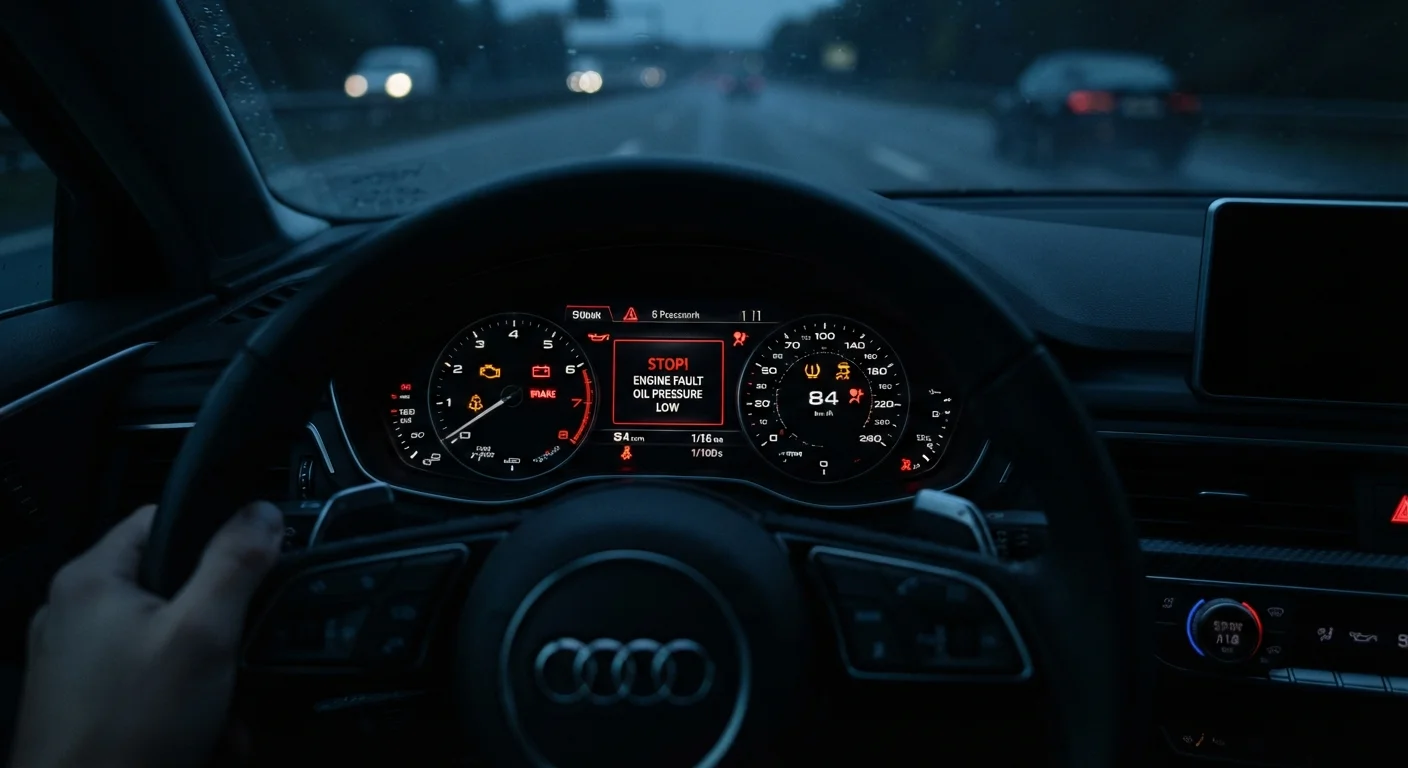
The Colour System: Your First Clue
Before decoding individual symbols, understanding the colour hierarchy saves valuable time. Under the international ISO 2575 standard that most automakers follow, red lights demand immediate attention - they signal conditions that could damage your vehicle or pose a safety risk right now. Amber or yellow lights indicate a system that needs attention soon but is not necessarily an emergency. Green and blue lights simply confirm that a feature is active, such as high beams or cruise control.
That distinction matters enormously. A red oil pressure light while driving is a reason to pull over safely and stop the engine. An amber tyre pressure light on a cold morning may simply reflect air contraction from lower temperatures - check your pressures and adjust before your next longer drive.
| Number of warning lights on modern vehicles | Up to 200+ possible indicator lights and symbols (Varies by manufacturer and trim level) |
| OBD-II standardization year | Required on all US cars from 1996 onward (U.S. Environmental Protection Agency mandate) |
| TPMS alert threshold | Activates at ~25% below recommended PSI (Federal TPMS standard, NHTSA) |
| TPMS requirement on new US vehicles | Mandatory since September 2007 (NHTSA FMVSS No. 138) |
| Engine temperature warning response time | Pull over safely within minutes if overheating (General industry guidance from ASE-certified technicians) |
| Colour coding convention | Red = immediate action; Amber/Yellow = caution; Green/Blue = system active (ISO 2575 international vehicle symbol standard) |
The Lights Drivers Encounter Most Often
Check Engine / Malfunction Indicator Lamp (MIL): This amber engine-shaped icon is the most misunderstood light on any dashboard. It can be triggered by something as minor as a loose fuel cap or as significant as a failing catalytic converter. A steady light means get it diagnosed soon; a flashing check engine light indicates an active misfire that can cause rapid catalytic converter damage - reduce speed and have the vehicle inspected promptly. An OBD-II scan will retrieve the stored fault code and narrow the diagnosis considerably.
Oil Pressure Warning: A red oil can symbol - not to be confused with the oil life reminder on some vehicles - means your engine is not receiving adequate lubrication. This is a red-light emergency. Continuing to drive risks severe, often irreparable, engine damage within minutes. Pull over safely, shut off the engine, and check the oil level only after the engine has cooled. If oil level is correct, the issue may be a faulty pump or pressure sensor - either way, a qualified mechanic needs to inspect it before you drive further.
Engine Temperature Warning: A thermometer symbol in red signals the engine is overheating. Stop driving as soon as it is safe to do so and allow the engine to cool completely before opening the bonnet. Never open the radiator or coolant reservoir cap on a hot engine. For a deeper understanding of how the cooling system works and what can go wrong, see our guide to coolant and engine temperature.
Battery / Charging System: A battery-shaped icon typically means the alternator is not adequately charging the battery while the engine runs. Your vehicle may continue operating on battery power alone for a short period, but electrical systems will begin to fail. Head to a workshop before the vehicle becomes stranded.
TPMS (Tyre Pressure): A cross-sectional tyre icon with an exclamation mark signals one or more tyres have dropped to at least 25% below the recommended cold inflation pressure. Check all four tyres - and your spare if it has a sensor - with a gauge and inflate to the pressures listed on the sticker inside your driver's door jamb, not the maximum listed on the tyre sidewall itself.
ABS Warning: An amber ABS light means the anti-lock braking system has detected a fault and may be disabled. Standard braking still functions, but the vehicle will not modulate brake pressure during a hard stop to prevent wheel lock. Drive cautiously and have the system inspected.
Brake System Warning: A red circle with an exclamation mark (sometimes labelled BRAKE) can indicate low brake fluid, an engaged parking brake, or a more serious hydraulic fault. If the parking brake is fully released and the light remains, check brake fluid level and seek professional inspection immediately. Identifying what fluid is leaking can help you determine whether brake fluid loss is involved.
OBD-II
On-Board Diagnostics, second generation - a standardized system built into most vehicles sold after 1996 that monitors engine and emissions performance. A scan tool plugged into the OBD-II port can read stored fault codes that triggered a warning light.
Fault Code (DTC)
A Diagnostic Trouble Code stored by your car's computer when a sensor reading falls outside acceptable parameters. Codes are alphanumeric (e.g., P0420) and help technicians identify the source of a problem quickly.
TPMS
Tyre Pressure Monitoring System - a built-in sensor network that alerts the driver when one or more tyres fall significantly below the recommended inflation pressure, typically by 25% or more.
Malfunction Indicator Lamp (MIL)
The technical term for what most drivers call the check engine light. It signals that the vehicle's self-diagnostic system has detected an anomaly related to engine performance or emissions.
Battery Charging System
The combination of the alternator, battery, and associated wiring that keeps electrical systems powered while the engine runs and recharges the battery. A warning light in this system often indicates the alternator is not producing adequate charge.
ABS
Anti-lock Braking System - a safety feature that prevents wheel lock-up during hard braking, allowing the driver to maintain steering control. An ABS warning light means the system may not function in an emergency stop.
What to Do Next - and When to Act Fast
The right response depends on the light's colour, whether it is steady or flashing, and whether you notice any change in how the vehicle handles or sounds. A useful rule of thumb: if any red light appears while driving, treat it as a reason to stop safely and investigate before continuing. Amber lights generally allow you to finish a journey while scheduling a prompt inspection.
Your Owner's Manual Is the Definitive Reference
Warning light symbols and their meanings can vary meaningfully between manufacturers. The descriptions in this article reflect common conventions, but your vehicle's owner's manual contains the exact definitions for every light on your specific dashboard. Keep a digital or physical copy accessible - many automakers also provide free downloadable PDFs through their official websites.
When in Doubt, Get It Scanned
Many national auto parts retailers offer complimentary OBD-II code reads that can give you a starting point before visiting a mechanic. This does not replace a full professional diagnosis, but it helps you walk into the shop with useful information and reduces the chance of misunderstanding the problem.
For drivers who want to build broader awareness of what routine checks look like, our article on car maintenance without a mechanical background covers practical habits that catch problems early. And if you want to understand how manufacturer service schedules relate to keeping warning lights off in the first place, see our guide to vehicle service schedules.
This article provides general information about common vehicle warning indicators and is not a substitute for diagnosis by a qualified automotive technician. Warning light meanings can vary between manufacturers and model years - always consult your vehicle's owner's manual and seek professional advice when in doubt.