
Why Maintenance Doesn't Require a Mechanical Degree
Most drivers assume that staying on top of car maintenance requires specialist knowledge. In reality, the majority of effective maintenance habits involve observation, scheduling, and knowing when to act - skills anyone can develop. A car that's looked after consistently tends to be safer, more fuel-efficient, and significantly cheaper to run over time.
The key distinction is between monitoring and performing. You don't need to fix every issue yourself - you need to notice it early enough that a qualified mechanic can address it before it escalates. That shift in mindset is where most non-mechanical drivers find their footing.
For those just getting started, our guide for new drivers covers the foundational habits worth building from the outset.
Core Practices Every Driver Can Adopt
The practices below don't require tools, technical expertise, or a garage. They're built around awareness, routine, and using the resources already available to you.
Read your dashboard warning lights before dismissing them.
Modern vehicles surface alerts for oil pressure, battery charge, tire pressure, and more. Ignoring a warning light because a car 'seems fine' is how minor issues become major failures. Understanding what each symbol means - even at a basic level - is one of the highest-value habits a non-mechanical driver can build.
Keep a simple maintenance log, even a notes app entry.
Without a record, it's easy to lose track of when oil was last changed, when tires were rotated, or what a mechanic flagged at the last visit. A log gives you a reference point, helps you spot deferred items, and provides useful history if you sell the vehicle or take it to a new shop.
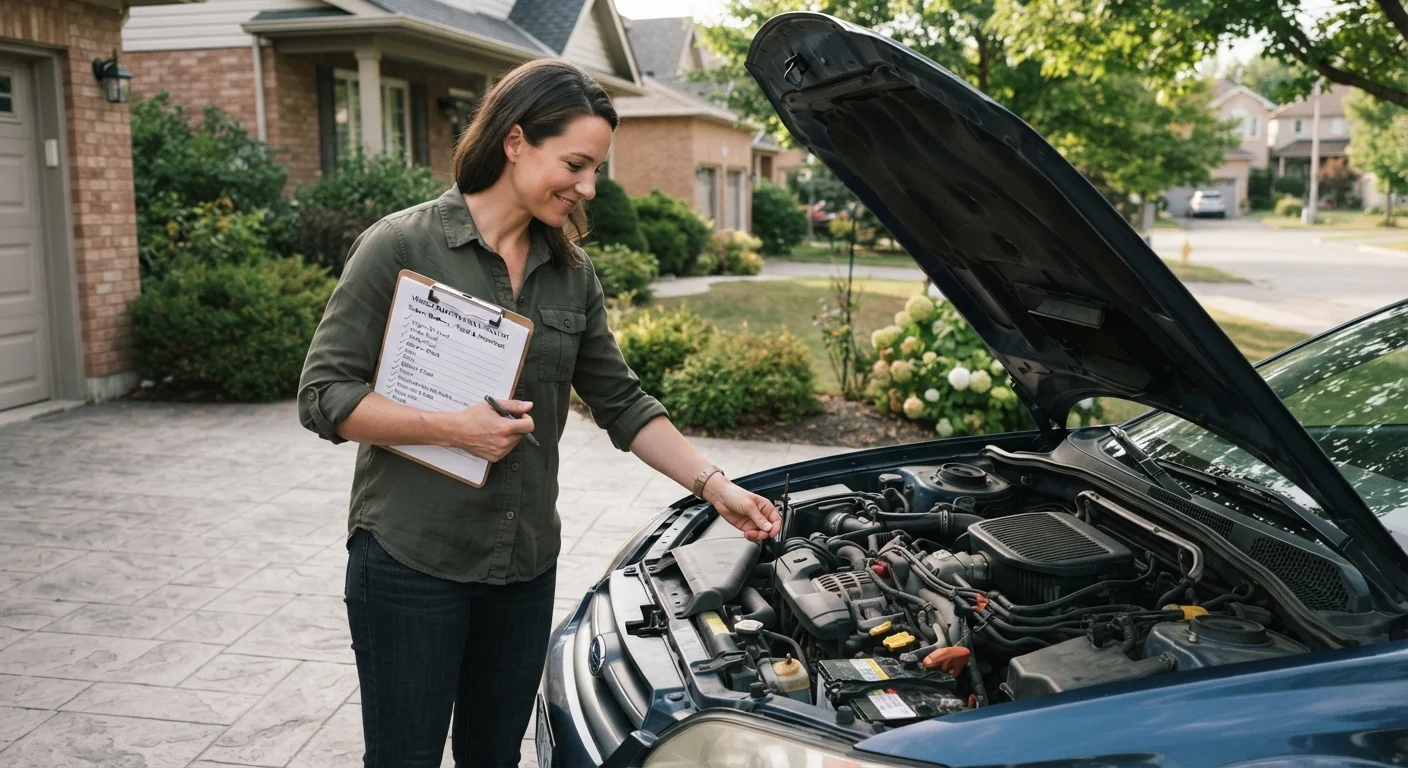
Conduct a monthly walkaround check of your vehicle.
A five-minute exterior inspection - tires, lights, and visible fluid leaks beneath the car - catches issues that sensors won't always flag. Slow leaks, cracked lenses, and visibly low tires are often spotted this way before they cause breakdowns or safety problems.
Check engine oil level and color between services.
Oil degrades and levels drop over time - especially in older vehicles. Catching low oil early prevents engine wear that accumulates silently. Checking the dipstick takes under two minutes and requires no tools beyond a clean rag. Dark, gritty oil between recent changes can also signal a problem worth investigating.
Act on mechanic recommendations rather than deferring indefinitely.
When a shop flags a non-urgent item - worn wiper blades, aging belts, marginal brake pad thickness - it's common to defer the work. Repeated deferral turns manageable costs into emergencies. Prioritising the items flagged as 'address soon' rather than 'address never' is a straightforward habit that prevents compounding repair bills.
Understanding which tasks you can handle yourself - and which ones genuinely require a professional - is explored in depth in our article on DIY checks vs. mechanic jobs.
Quick Wins You Can Act On Today
Before your next scheduled service, there are several low-effort actions that can meaningfully improve your vehicle's reliability and your own confidence as a driver.
Use Your Phone as a Maintenance Tool
Many drivers overlook free or low-cost apps designed specifically to track service intervals, log repairs, and send reminders for upcoming maintenance. Even a shared note or calendar entry is enough. The goal is consistency, not sophistication - what matters is that you have a record you can refer back to.
Using Your Owner's Manual and Service Schedule
Your vehicle's owner's manual is the most underused resource in most gloveboxes. Manufacturer-specified service intervals are based on engineering data specific to your make, model, and engine - they exist for practical reasons, not just as formalities.
35%
Vehicles with at least one underinflated tire
According to NHTSA data, approximately one in three vehicles on U.S. roads has at least one significantly underinflated tire at any given time.
$1,200+
Average cost of a preventable breakdown repair
AAA estimates that U.S. drivers collectively spend billions annually on repairs that proper maintenance could have prevented or significantly reduced in cost.
Following the manufacturer's schedule means you're not guessing about when to change oil, rotate tires, or inspect brake fluid. It also creates a documented service history, which matters for both safety and resale value. Our dedicated article on understanding your vehicle's service schedule walks through how to read and apply that information effectively.
It's also worth noting that certain maintenance items get skipped more often than they should - and the consequences can be significant. See our look at maintenance tasks drivers routinely put off for context on what's commonly overlooked.
Manufacturer Schedules vs. 'Severe' Driving Conditions
Most owner's manuals include two maintenance schedules: one for normal driving and one for 'severe' conditions, which typically includes frequent short trips, stop-and-go city driving, towing, or extreme temperatures. If your driving profile fits the severe category, shorter service intervals apply. When in doubt, a qualified mechanic can advise which schedule fits your usage pattern.
Adapting Your Habits as Conditions Change
Vehicle demands shift with the seasons. Cold weather affects battery performance, tire pressure, and fluid viscosity; summer heat places stress on cooling systems and tire integrity. Drivers who check the same fixed list year-round may miss condition-specific issues that arise between scheduled services.
Our guide on seasonal car maintenance provides a practical breakdown of what to watch for as conditions change throughout the year.
“The most important thing a driver can do is pay attention. Most cars communicate clearly when something is wrong - the problem is that drivers have been conditioned to tune it out.”
— John Nielsen, Former Director of Automotive Engineering and Repair, AAA
If you're driving a leased vehicle, consistent maintenance also has contractual implications. Our article on getting the most from a car lease covers how maintenance habits interact with lease terms and wear-and-tear standards.