
Why the DIY vs. Mechanic Line Matters
Modern vehicles are more reliable than ever, but they still require consistent attention to stay safe and roadworthy. The good news is that a significant number of routine checks require nothing more than clean hands, a few minutes, and your owner's manual. The challenge is knowing precisely where responsible self-maintenance ends and where professional expertise becomes essential.
Getting this wrong in either direction costs you. Over-relying on mechanics for tasks you could handle yourself adds unnecessary expense. Under-relying on them - attempting repairs beyond your skill level - can compromise safety systems that protect lives. For a broader look at building good habits around this, see our guide to staying on top of car maintenance without a mechanical background.
Checks Any Driver Can Safely Perform
These tasks require no specialist training, no advanced tools, and carry minimal risk when done carefully and with the engine off and cooled down where fluids are involved.
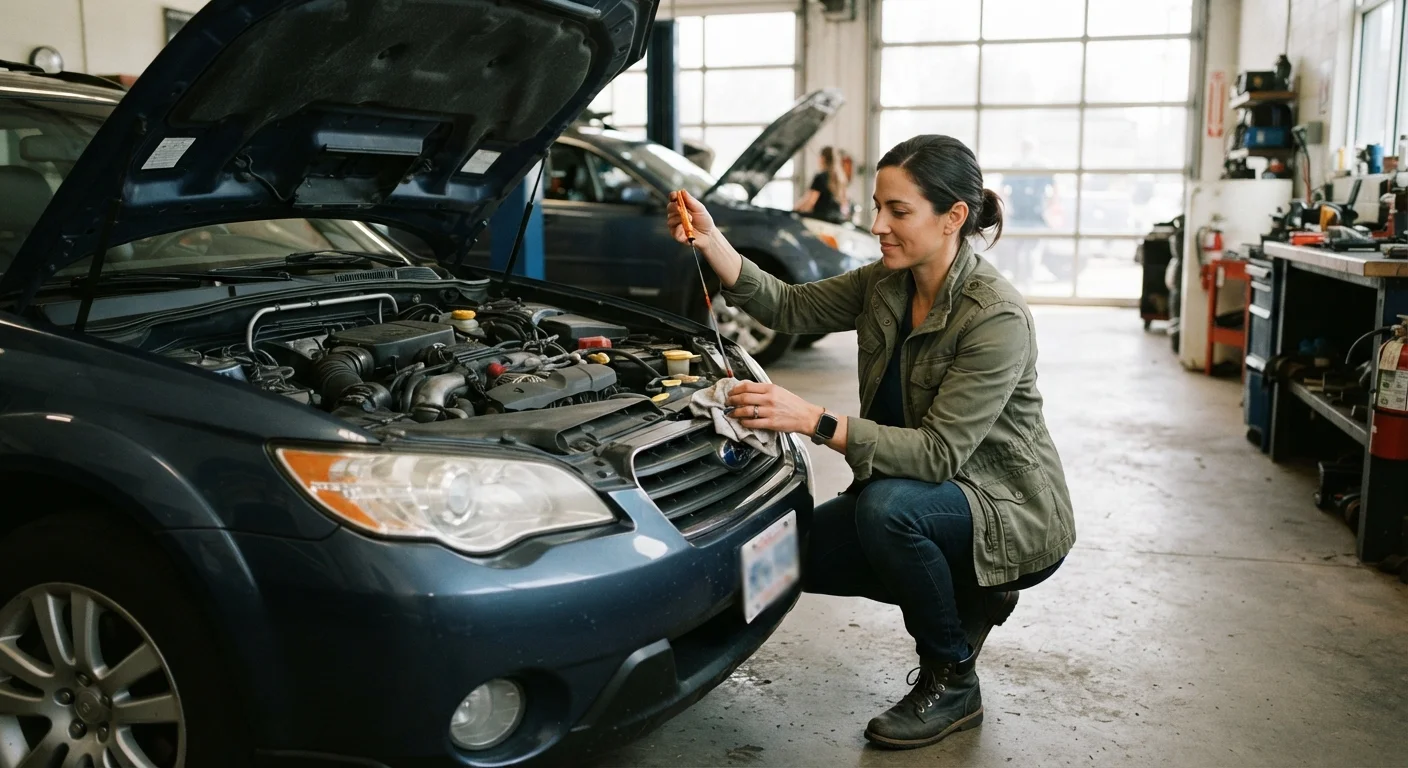
- Engine oil level: Pull the dipstick, wipe it clean, reinsert, and read the level. Top up with the grade specified in your owner's manual.
- Coolant level: Check the translucent reservoir when the engine is cold - never open the radiator cap on a warm engine.
- Windshield washer fluid: Straightforward to check and refill; use an appropriate formula for your climate.
- Tyre pressure: Use an inexpensive gauge or a forecourt pump. Check when tyres are cold, and refer to the door placard - not the tyre sidewall - for correct pressures.
- Tyre tread depth: The penny or quarter test gives a rough indication; a tread depth gauge is more precise. Many states require a minimum of 2/32 of an inch.
- Exterior lights: Walk around the vehicle with a helper or use a reflective surface to check headlights, brake lights, turn signals, and reverse lights.
- Wiper blade condition: Streaking or skipping during rain is a clear sign blades need replacement - a task most drivers can do themselves.
- Battery terminals: Visually inspect for corrosion (white or blue-green residue). Significant buildup warrants attention, though battery testing itself benefits from a shop tool.
Your Owner's Manual Is Your Best Tool
Every fluid specification, tyre pressure recommendation, and service interval in your owner's manual is tailored to your specific vehicle. Following it consistently is one of the highest-value maintenance habits any driver can build. If you've lost your copy, most manufacturers offer digital versions through their official websites.
Even if you perform all the checks above consistently, they do not replace periodic professional inspections. A trained technician sees things from underneath the vehicle and with diagnostic equipment that no visual check can replicate.
Jobs That Should Always Go to a Mechanic
The following tasks involve safety-critical systems, precise calibration, or specialist equipment. Attempting them without proper training introduces real risk - to you, your passengers, and other road users.
| Task | DIY-Safe | Mechanic Required | |
|---|---|---|---|
| Engine oil check | Yes - dipstick check | Only for full oil change if preferred | |
| Tyre pressure & tread | Yes - gauge and visual | Alignment/rotation needs shop equipment | |
| Exterior lights | Yes - visual walk-around | Wiring faults need diagnostic tools | |
| Brake system | Visual check only | All replacement/repair work | |
| Timing belt/chain | No | Always - engine-internal job | |
| Airbag (SRS) system | No | Always - explosive components involved | |
| Suspension components | Visual inspection only | All replacement/adjustment work | |
| Wiper blades | Yes - simple clip replacement | Not needed |
- Brake pad and rotor replacement: While brake pads are sometimes listed as a DIY job, brake systems require precise torque specifications, bleeding procedures, and knowledge of how components interact. An error here is potentially fatal.
- Suspension and steering components: Ball joints, tie rods, and wheel bearings affect vehicle handling at speed. Improper installation can lead to sudden loss of control.
- Airbag systems (SRS): Airbag modules contain explosive charges. Tampering without proper training and equipment can trigger accidental deployment or disable protection in a collision.
- Timing belt or timing chain replacement: This is an engine-internal job with no margin for error. Incorrect installation can cause catastrophic engine damage. Our article on maintenance items drivers routinely delay covers what's at stake when timing belt service is skipped.
- Transmission service: Fluid type, fill level, and procedure vary significantly by vehicle. Getting it wrong causes expensive damage.
- Electrical fault diagnosis: Modern vehicles have dozens of interconnected control modules. Without a professional scan tool and wiring diagrams, chasing electrical faults risks introducing new problems.
- Wheel alignment: Improper alignment causes rapid tyre wear and unpredictable handling, and cannot be corrected without a laser alignment rack.
Never Delay Safety-Critical Repairs
If a warning light related to brakes, steering, or airbags illuminates on your dashboard, do not wait for a scheduled service appointment. These systems are designed to alert you to conditions that can affect your ability to control the vehicle or survive a collision. Have the vehicle inspected by a qualified mechanic promptly.
Building a Practical Maintenance Approach
A sustainable approach pairs your own regular checks with scheduled professional service. Consult your owner's manual for the manufacturer's recommended intervals - these vary meaningfully between vehicles and driving conditions. Many mechanics recommend a full inspection annually or every 12,000 miles as a baseline, but your manual takes precedence.
Documenting what you check and when also matters. A simple notebook or phone note logging tyre pressures, fluid top-ups, and light inspections builds a useful picture of your vehicle's condition over time - and helps a mechanic diagnose emerging issues faster. This proactive mindset is far more cost-effective than reactive repair, which is a point explored in depth in our piece on the consequences of routine maintenance delays.
This article is for general informational purposes only. Always consult a qualified automotive technician for diagnosis, repair, or any work involving safety-critical vehicle systems. Refer to your vehicle's owner's manual for manufacturer-specific guidance.