
Why Maintenance Habits Matter More Than Mechanical Skill
You don't need to be a mechanic to keep your car running well. The drivers who get the most from their vehicles aren't necessarily those who can rebuild an engine - they're the ones who pay consistent, low-effort attention to what their car needs. Maintenance is far more about routine than expertise.
Neglecting basic upkeep is one of the most common and avoidable ways drivers end up facing large repair bills. As explored in our guide on maintenance tasks drivers often delay, small oversights compound into significant mechanical failures over time. Starting strong on day one means you're building an asset - not just operating one.
Owner's manual
The booklet provided with every vehicle that contains manufacturer specifications, service intervals, and operating instructions specific to your car's make and model.
Service interval
The recommended time or mileage between scheduled maintenance tasks, such as oil changes or tire rotations, as specified by the vehicle manufacturer.
Dipstick
A long, thin metal rod inserted into the engine that allows you to measure the oil level and check its condition without any tools.
Tire pressure (PSI)
A measurement - in pounds per square inch - of how much air is inside a tire. The correct level for your vehicle is found on the door jamb sticker, not the tire itself.
Coolant
A liquid that circulates through the engine to prevent overheating. It's stored in a reservoir under the hood and must be checked only when the engine is cold.
OBD-II diagnostic code
A standardized fault code generated by your car's onboard computer when it detects a problem. Mechanics and many auto parts stores can read these codes to identify the source of a warning light.
The Checks You Should Do Regularly
Several checks can be done at home with no tools, no mechanical knowledge, and very little time. Make these part of your monthly rhythm:
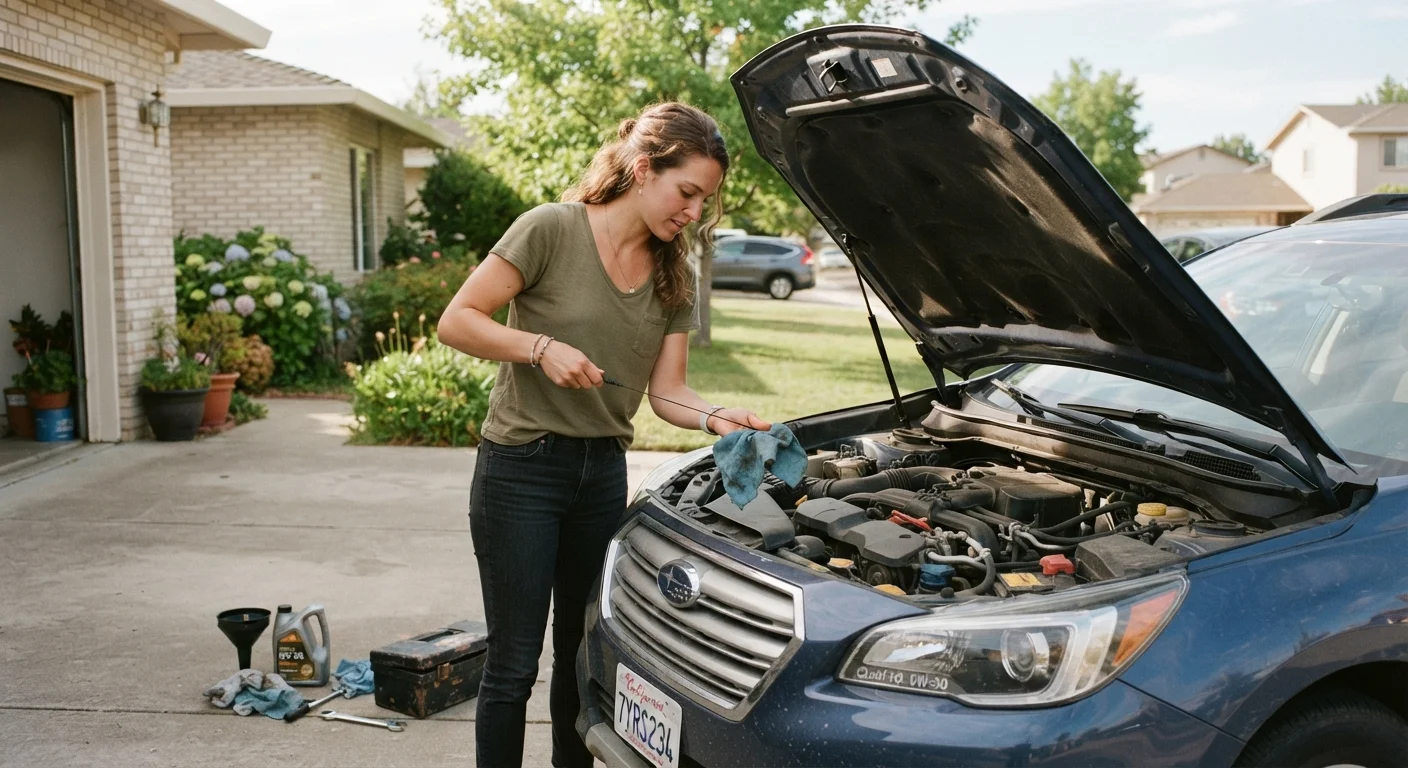
- Engine oil: Pull the dipstick, wipe it clean, reinsert, then pull again. The oil level should fall between the two marks. Also note the oil's color - very dark or gritty oil may signal it's time for a change.
- Tire pressure: Use an inexpensive gauge (or one at a gas station) to check each tire, including the spare. The correct pressure is printed on a sticker inside the driver's door jamb - not on the tire sidewall.
- Coolant level: Only check this when the engine is cold. The translucent reservoir near the radiator has min and max lines - the fluid should sit between them.
- Windshield washer fluid: Low risk but high nuisance. Keep it topped up, especially before winter driving.
- Lights: Walk around your car periodically to verify headlights, brake lights, and turn signals are all functioning.
Pair Checks with Fill-Ups
Getting into the habit of running through a quick visual check each time you fill up with gas is one of the easiest ways to catch problems early. It takes two minutes and doesn't require you to remember a separate schedule. Tire pressure, visible fluid leaks, and lights are all easy to assess in a parking lot.
Understanding Your Service Schedule
Every vehicle comes with a manufacturer-specified service schedule, typically found in the owner's manual. These intervals - often expressed in miles or months, whichever comes first - exist for sound engineering reasons. Sticking to them is one of the highest-value things you can do as a new owner.
Common scheduled items include oil and filter changes, tire rotations, air filter replacements, and brake inspections. Our dedicated guide on reading and following your vehicle's service schedule covers how to decode these intervals and what each item involves.
If you're leasing rather than owning, staying current on servicing also matters for lease compliance - see our overview on avoiding surprises at lease end for context on how maintenance ties into your agreement.
Warning Signs You Shouldn't Ignore
Your car communicates. Learning to recognize its signals is a skill that pays dividends throughout your ownership experience.
- Warning lights: The check engine, oil pressure, battery, and temperature lights are not suggestions. If one illuminates, have it diagnosed promptly rather than waiting for your next scheduled service.
- Unusual sounds: Squealing when braking often points to worn brake pads. Grinding suggests the pads may be completely depleted. Knocking from the engine at startup can indicate low oil pressure. None of these should be dismissed.
- Vibrations: Steering wheel vibration at highway speeds frequently signals wheel balancing or alignment issues. Vibration under braking can indicate warped rotors.
- Fluid spots: A puddle under your parked car is worth investigating. Clear water near the rear is usually normal condensation from the air conditioning. Oily, green, or reddish spots deserve a mechanic's attention.
Don't Delay Brake Warning Signs
Brake-related noises - particularly grinding or a spongy feel in the pedal - should be evaluated by a qualified mechanic as soon as possible. Brakes are a primary safety system, and continuing to drive on compromised brakes puts you and others at risk. This is not a repair to defer until a convenient time.
Building Your Maintenance Routine
The most effective approach is to tie maintenance checks to events you already do consistently - monthly, at fuel fill-ups, or at the change of each season. Our guide on seasonal car maintenance is a useful companion for timing checks around weather changes.
For new drivers who want to go deeper without needing technical expertise, keeping on top of car maintenance without a mechanical background offers a practical, ongoing framework. And if you're navigating first-time ownership decisions more broadly, common car ownership missteps is worth a read to avoid costly assumptions.
The goal isn't perfection - it's consistency. A driver who checks tire pressure monthly and honors oil change intervals will almost always fare better than one who performs an intensive inspection once and then forgets about it. Good habits, maintained over time, are what keep a vehicle dependable.
Your Vehicle's Owner's Manual
The most accurate and model-specific source for service intervals, fluid types, and maintenance requirements. Keep it in your glovebox and reference it before any check or repair.
National Institute for Automotive Service Excellence (ASE)
ASE is the widely recognized certification body for automotive technicians in the US. Their consumer resources can help you understand what to expect from professional servicing and how to find qualified mechanics.