

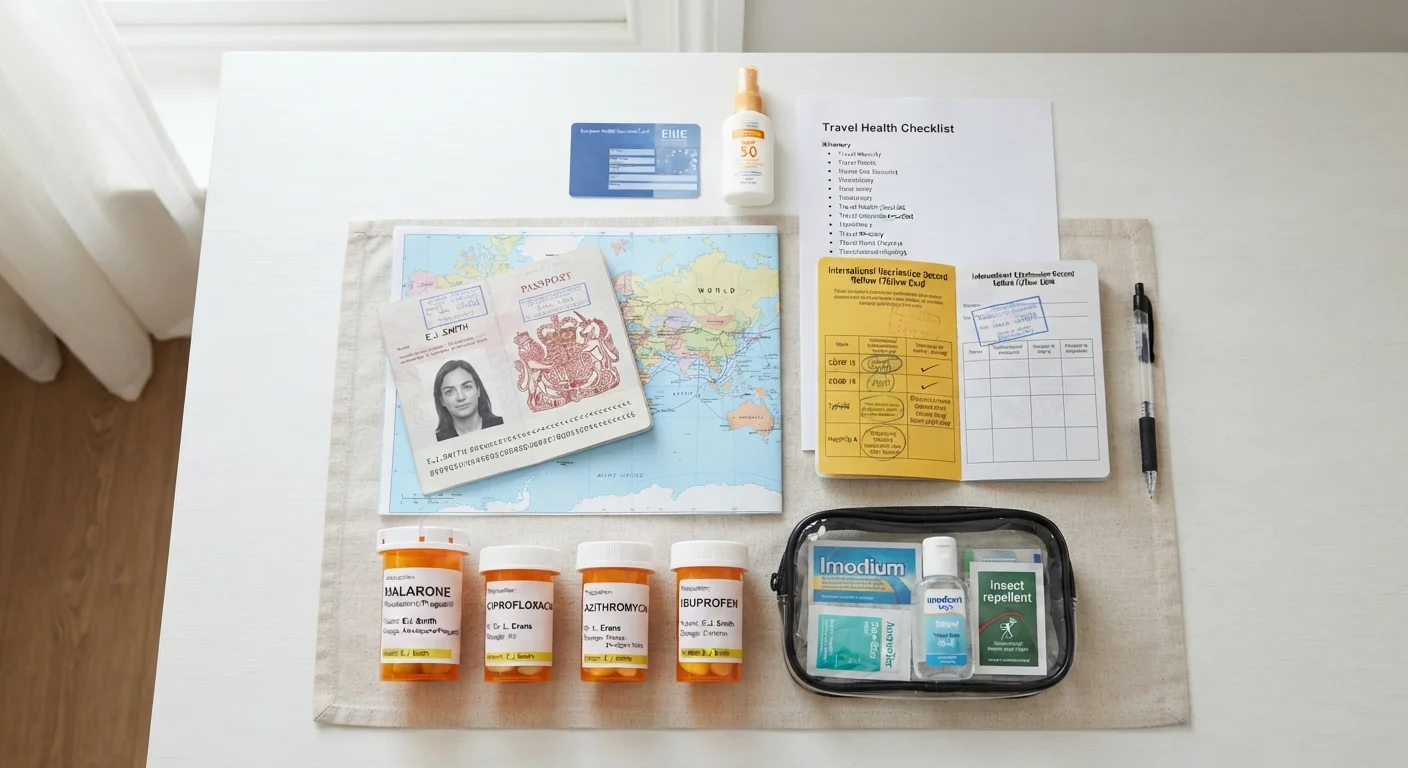
Why Travel Health Preparation Deserves Its Own Planning Track
Most international trip planning focuses on logistics: flights, accommodation, visas, and itineraries. Health preparation often gets treated as an afterthought — a quick stop at a pharmacy before departure. In reality, it's a structured process that can take six to eight weeks or longer, particularly when certain vaccines require a multi-dose schedule or when prescription medications need to be arranged in advance.
The foundation of good travel health prep is a visit to a travel medicine clinic or a primary care provider familiar with destination-specific health risks. This appointment should ideally happen six to eight weeks before departure, though even a last-minute consultation is better than none. It allows a clinician to assess your itinerary, your personal health history, and the specific health environment of your destination. See our pre-trip preparation checklist for a broader view of what to organize before departure.
| Recommended lead time for travel health visit | 6–8 weeks before departure (CDC Traveler's Health guidance) |
| Primary U.S. resource for destination health info | CDC Traveler's Health (wwwnc.cdc.gov/travel) (U.S. Centers for Disease Control and Prevention) |
| Required vaccination documentation format | International Certificate of Vaccination or Prophylaxis (ICVP) (World Health Organization) |
| Standard domestic health insurance abroad | Often limited or no coverage outside the U.S. (General industry guidance; verify with your provider) |
| Vaccine categories for travel | Required (entry condition) and recommended (destination risk-based) |
| Malaria prevention approach | Prescription chemoprophylaxis — destination and patient specific (CDC malaria travel guidance) |
Vaccinations: What Applies to Your Destination
Vaccine requirements and recommendations vary significantly by country and by the type of travel you're undertaking. There are two distinct categories travelers should understand:
- Required vaccines — mandated by a country as a condition of entry. Yellow fever vaccination, for example, is required by some countries in sub-Saharan Africa and South America, and proof must be documented in an International Certificate of Vaccination or Prophylaxis (ICVP), sometimes called the yellow card.
- Recommended vaccines — not legally required for entry, but advised based on the disease risks present at your destination. Hepatitis A, typhoid, and rabies pre-exposure prophylaxis are common examples depending on where you're going and how you plan to travel.
The U.S. Centers for Disease Control and Prevention (CDC) maintains destination-specific traveler health guidance, which your provider will typically reference during your appointment. Routine vaccinations — including those for measles, influenza, and COVID-19 — should also be reviewed and updated as needed regardless of destination.
Travel medicine clinic
A specialized medical practice focused on health risks associated with international travel. Clinicians assess destination-specific risks, administer travel vaccines, and prescribe preventive medications tailored to the traveler's itinerary and health history.
Chemoprophylaxis
The use of medication to prevent rather than treat a disease. In travel medicine, this most commonly refers to antimalarial drugs taken before, during, and after travel to malaria-endemic regions.
ICVP (Yellow Card)
The International Certificate of Vaccination or Prophylaxis, an official WHO-standardized document that records a traveler's vaccination history. Some countries require proof of yellow fever vaccination in this specific format as a condition of entry.
Endemic disease
A disease that is consistently present at baseline levels within a specific geographic area or population. Travel to endemic regions carries inherent exposure risk that may prompt vaccination or other preventive measures.
Altitude sickness (AMS)
Acute Mountain Sickness, a condition caused by reduced oxygen at high elevations. Symptoms can range from headache and fatigue to more serious complications; prevention strategies include gradual acclimatization and, in some cases, prescription medication.
Traveler's diarrhea
The most common travel-related illness, typically caused by consuming contaminated food or water. It can range from mild to debilitating and is sometimes addressed with standby antibiotics prescribed in advance by a clinician.
Prescription Planning and Managing Existing Conditions
Travelers with ongoing medical needs face a layer of preparation that goes well beyond vaccines. Key considerations include:
- Prescription supply: Ensure you have enough medication to cover the full trip plus a buffer for delays. Some medications are difficult to source abroad or may be regulated differently in other countries. Carry medications in original labeled containers.
- Malaria chemoprophylaxis: For travel to malaria-endemic regions, a clinician may prescribe preventive medication. Different drugs suit different destinations and individual health profiles — this is not a one-size-fits-all decision.
- Traveler's diarrhea standby treatment: Providers sometimes prescribe antibiotics to carry for self-treatment under defined circumstances. Whether this is appropriate depends on the destination and the traveler's health history.
- Altitude sickness prevention: For itineraries that include significant elevation gain, medication and acclimatization planning may be discussed.
For those with chronic conditions, it's worth reviewing whether the destination's climate, altitude, or food environment may affect symptom management. Our guide to overlooked travel health precautions covers several factors that travelers with existing health needs often miss.
~50%
Travelers to developing regions who experience illness
Estimates suggest roughly half of travelers to developing regions experience some form of health problem; traveler's diarrhea is among the most common, per CDC data.
6–8 weeks
Minimum lead time recommended for travel health consultation
Some vaccine series and preventive medication regimens require this window to be effective before departure, per CDC traveler health guidance.
~2,000
Malaria cases diagnosed in U.S. travelers annually
The CDC reports approximately 2,000 cases of malaria diagnosed in the United States each year, the majority in travelers returning from endemic regions.
Documentation, Insurance, and What to Carry
Health preparation also has a documentation dimension. Travel health records worth organizing before departure include:
- Your ICVP (yellow card) if required vaccines have been administered
- A signed letter from your provider summarizing any chronic conditions and medications, particularly for controlled substances
- Copies of prescriptions, both for customs purposes and in case medications are lost or stolen
Travel health insurance — specifically coverage for emergency medical evacuation and treatment abroad — is a separate but closely related consideration. Standard domestic health insurance plans frequently provide limited or no coverage outside the United States. Reviewing your coverage before departure is a practical necessity, not an optional step.
For a complete overview of documents worth organizing, see every document worth organizing before an international trip. For broader safety planning that overlaps with health readiness, travel safety fundamentals provides a grounded starting framework.
This article is for general informational purposes only and does not constitute medical advice. Consult a qualified healthcare provider for recommendations specific to your health history, destination, and travel plans. Always verify vaccine requirements and health advisories through official government and public health sources before traveling.
Last-Minute Appointments Still Have Value
If your departure is sooner than six weeks away, don't skip the travel health consultation. A provider can still administer accelerated vaccine schedules for some immunizations, advise on destination risks, and prescribe preventive medications. Some protection is better than none, and destination-specific safety awareness alone makes the appointment worthwhile. Check with a travel medicine clinic or your primary care provider about availability.