
Why Storage Orientation Matters in Small Spaces
In a small room, every square foot carries extra weight. The direction you orient your storage - upward along walls or outward across the floor - directly determines how much usable space remains for living. Choosing one approach without understanding the trade-offs often leads to rooms that feel cramped, disorganized, or difficult to navigate.
Vertical storage uses wall height to hold items above floor level. Horizontal storage spreads capacity across a room's footprint, relying on low furniture and flat surfaces. Neither is universally superior - the right choice depends on your room dimensions, ceiling height, household members, and how frequently you access what's stored.
It's also worth separating storage strategy from organization habits. As discussed in our article on home organization myths that waste time and space, the method matters less than how consistently it fits your actual routines.
| Criterion | Vertical Storage | Horizontal Storage |
|---|---|---|
| Space used | Wall height, minimal floor area | Floor footprint, low profile |
| Capacity potential | High - scales with ceiling height | Moderate - limited by room footprint |
| Accessibility | Limited above shoulder height | Easy - everything at reach level |
| Visual impact | Can feel imposing in narrow rooms | Keeps sight lines open, feels airy |
| Safety considerations | Tall units must be wall-anchored | Generally stable; step stool not needed |
| Best room types | Kitchens, offices, entryways | Bedrooms, living rooms, shared spaces |
| Flexibility over time | High - modular systems reconfigure easily | Moderate - furniture is harder to adapt |
The Case for Vertical Storage
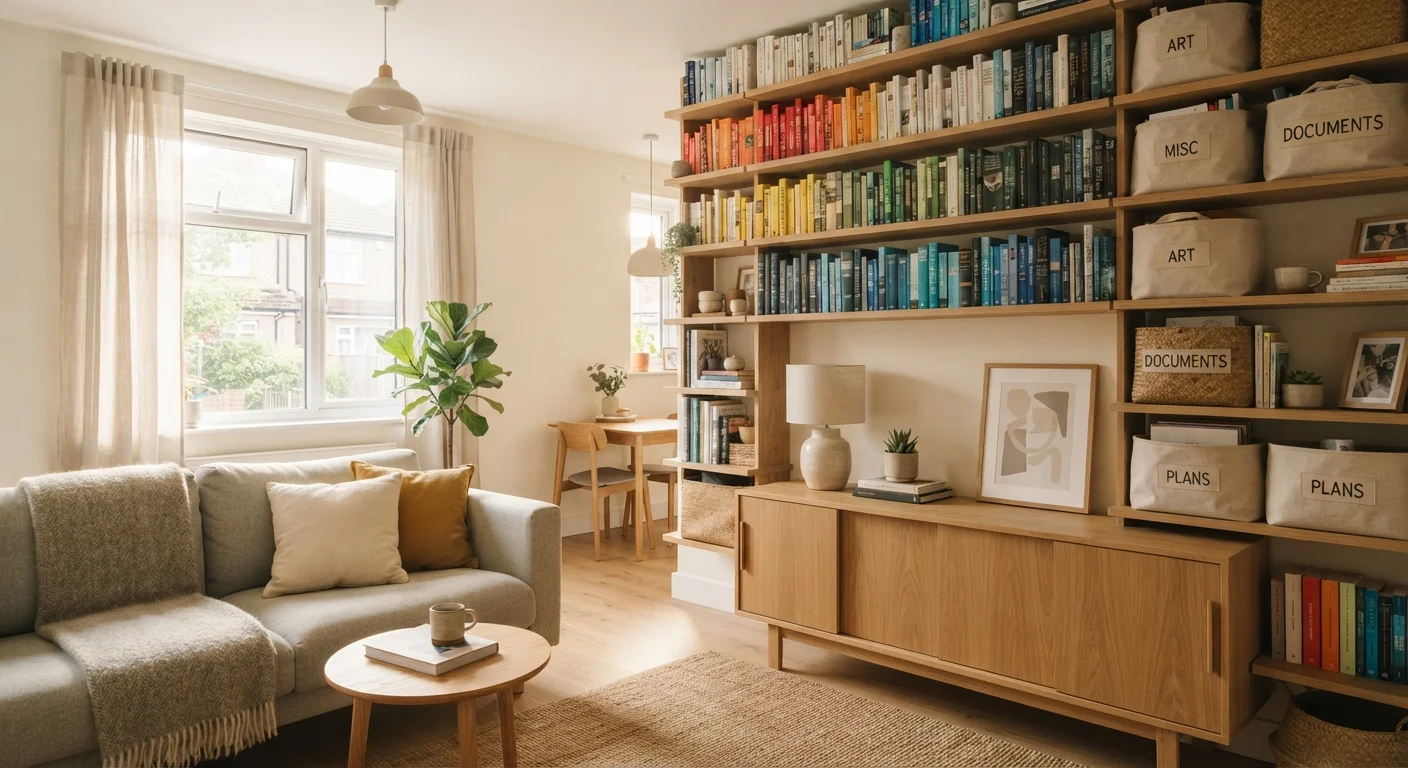
Vertical storage works on a simple principle: the floor is finite, but most rooms have several feet of unused wall height above furniture level. In a typical US home with eight- to nine-foot ceilings, the zone between five and eight feet is often completely empty. Shelving, pegboards, wall-mounted cabinets, and tall bookcases reclaim this space without reducing the floor area available for movement.
In kitchens and bathrooms especially, vertical solutions dramatically increase capacity. Wall-mounted spice racks, stacked cabinet organizers, and over-door shelving can double usable storage without expanding the room's footprint. For more room-specific ideas, see our guide to small bathroom storage solutions that actually work.
The practical limits of vertical storage are real. Items stored above shoulder height require a step stool, which adds inconvenience and a modest safety consideration - particularly for older adults or anyone with mobility limitations. Tall, freestanding units must be anchored securely to wall studs to prevent tip-over hazards. This is not optional; unsecured tall furniture poses a genuine risk, especially in homes with children.
8-9 ft
Typical ceiling height in US homes
Standard US residential construction provides roughly 96-108 inches of vertical clearance, leaving significant unused wall space above standard furniture height.
~50%
Wall space typically left unused above furniture
Interior design professionals commonly observe that in small rooms, the zone above 54 inches of height is rarely utilized despite being structurally available for shelving.
The Case for Horizontal Storage
Horizontal storage keeps everything at or below eye level, prioritizing accessibility over raw capacity. Credenzas, low bookshelves, ottomans with interior storage, and under-bed drawers all follow this model. The main advantage is that everything stored is easy to see and reach without tools or effort.
From a visual standpoint, low horizontal furniture keeps sight lines open across a room, which can make a small space feel less enclosed. A tall bookcase in a narrow hallway can feel oppressive; a low console along the same wall feels grounding without dominating the space.
The core limitation is floor area. Every horizontal piece claims square footage that could otherwise allow freer movement or accommodate additional furniture. In genuinely small rooms - studios under 400 square feet, for example - a room filled with low furniture can still feel cluttered if there are too many individual pieces competing for the same zone.
Horizontal storage also suits shared spaces well. When multiple people with different habits use the same room, low accessible storage reduces friction. Our article on organizing a home with multiple people covers how to build systems that accommodate different habits without constant negotiation.
How to Choose - and How to Combine Both
The most effective small-space storage systems almost always use both orientations intentionally. A common approach: anchor the room with one or two low horizontal pieces for daily-access items, then use vertical shelving or wall-mounted storage above for items used less frequently.
When deciding where to start, ask three questions. First, what is your ceiling height? Rooms under eight feet gain less from vertical storage than those with nine or ten feet of headroom. Second, who uses the space? Households with young children or adults with limited reach should weight accessibility heavily. Third, what items are you storing? Frequently accessed items belong at comfortable reach height regardless of orientation; seldom-used items can go higher or deeper.
Safety First With Tall Storage Units
Any freestanding shelving unit taller than roughly 30 inches should be secured to wall studs using anti-tip hardware or L-brackets. This applies to bookcases, pantry towers, and modular shelving systems alike. Local building codes do not typically regulate furniture anchoring in existing homes, but safety organizations consistently recommend it - especially where children are present. If you're unsure whether your walls can support a mounted unit, consult a licensed contractor before installing.
In practice, vertical storage tends to outperform horizontal storage in kitchens, home offices, laundry rooms, and entryways - high-use zones where item counts are large and floor space is tight. Horizontal storage tends to shine in bedrooms and living areas, where visual calm and easy access matter more than raw capacity.