

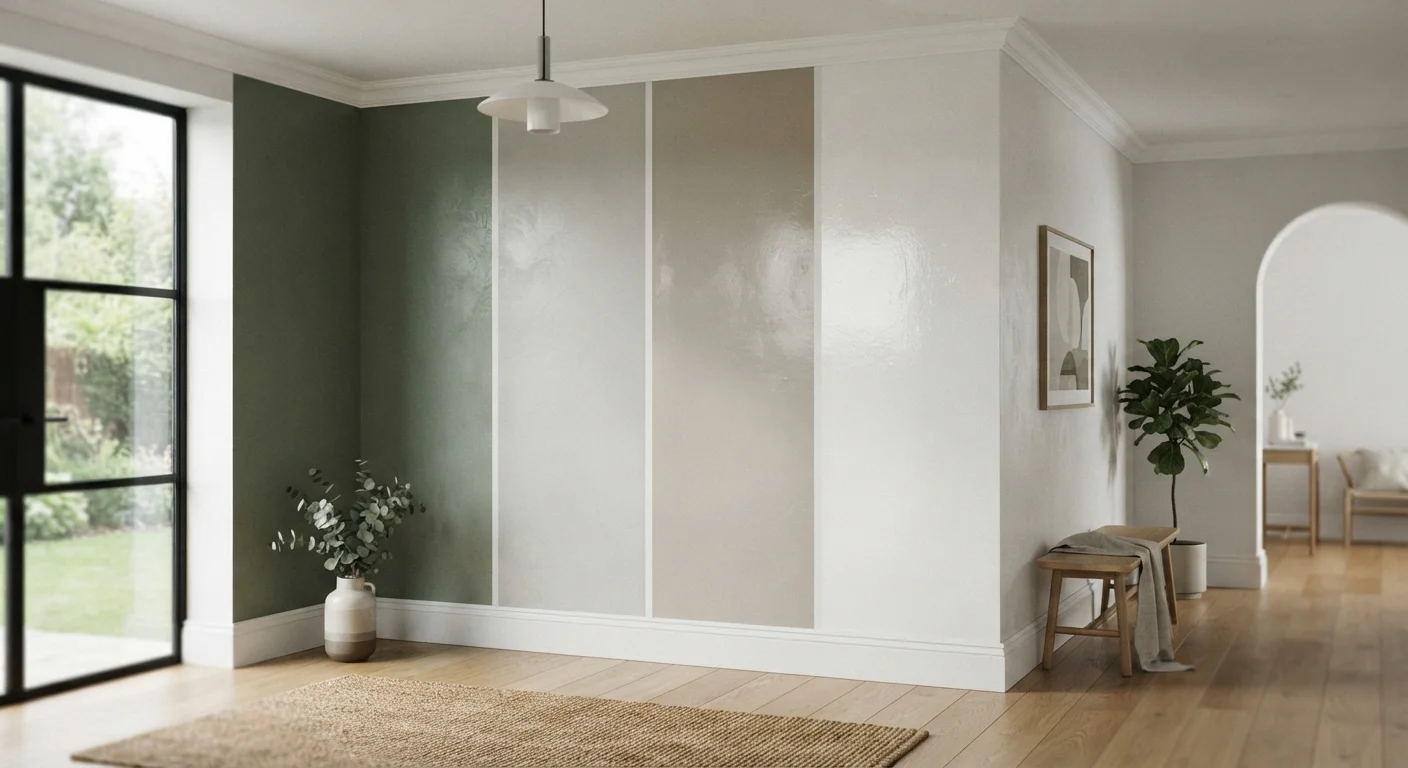
Why Finish Level Matters as Much as Color
Most paint decisions focus heavily on color, but the sheen - how much light a dried paint surface reflects - shapes a room's look and longevity just as significantly. Sheen affects durability, how easy a surface is to clean, how prominently surface flaws show, and even how a color appears in different lighting conditions.
Paint finishes are typically classified by their light-reflectance value (LRV) and sheen angle, ranging from flat/matte (virtually no reflection) up through eggshell, satin, semi-gloss, and high-gloss. Each step up the sheen ladder adds washability but also makes surface imperfections - dents, nail pops, uneven textures - more visible. Understanding these trade-offs is essential before picking up a brush.
Breaking Down Each Finish Type
Matte (Flat): Matte finishes absorb light rather than reflecting it, which effectively camouflages surface flaws like small dings, patching compound, or uneven drywall texture. This makes matte a strong choice for older homes with walls that aren't perfectly smooth. The trade-off is durability - matte paint scuffs and stains more easily, and scrubbing can remove the paint film itself. Reserve matte for ceilings and low-traffic bedrooms where walls see minimal contact.
Eggshell: Eggshell has a very low, soft sheen roughly resembling the surface of an actual eggshell. It's significantly more washable than matte while still being forgiving about minor imperfections. Eggshell has become the default finish for most interior walls - living rooms, dining rooms, and adult bedrooms - because it balances aesthetics with practical cleanability for everyday household life.
Satin: Satin reflects noticeably more light and holds up to frequent cleaning without degrading. It's the preferred finish for rooms that experience humidity, splatter, or heavy hand contact - kitchens, bathrooms, laundry rooms, kids' rooms, and hallways all benefit from satin's resilience. Note that satin's higher sheen makes surface prep and smooth application more important; brush marks or roller texture can show up clearly once the paint dries.
Semi-Gloss and High-Gloss: These finishes are highly reflective, extremely durable, and moisture-resistant, making them the standard choice for trim, baseboards, doors, window casings, and cabinetry. Full high-gloss is rarely used on large wall surfaces in residential settings because it creates a harsh, almost plastic appearance and exposes every surface imperfection. Semi-gloss strikes a practical balance for trim work and is easier to keep clean in heavy-use spots.
| Matte | Eggshell | Satin | Semi-Gloss / Gloss | |
|---|---|---|---|---|
| Sheen Level | None / flat | Very low, soft | Medium, velvety | High / very high |
| Washability | Poor | Moderate | Good | Excellent |
| Hides Imperfections | Best | Good | Fair | Poor |
| Moisture Resistance | Low | Low-moderate | Good | High |
| Best Room Use | Ceilings, adult bedrooms | Living rooms, dining rooms | Kitchens, baths, hallways | Trim, doors, cabinets |
| Application Difficulty | Forgiving | Forgiving | Moderate | Demanding |
Matching Finish to Room: A Practical Guide
A useful rule of thumb: as moisture and traffic increase, so should sheen level. Ceilings almost universally use flat or matte paint because they're rarely touched and the low reflectance avoids distracting light bounce. Main living areas do well with eggshell. Wet rooms and corridors warrant satin. Woodwork and built-ins almost always call for semi-gloss or gloss.
Test a Sample Before Committing
Paint a sample patch at least 12 inches square on the actual wall and observe it at different times of day before purchasing full quantities. Sheen interacts with room-specific lighting in ways that can make the same paint look quite different from the store's lighting conditions or a small chip. Let the sample dry fully - wet paint always looks different from the cured finish.
One common mistake is applying eggshell or matte in a bathroom to match the rest of the house. Without proper ventilation and a moisture-resistant formula, lower-sheen paints in wet environments can blister, peel, or develop mold behind the film - a costly problem to correct. Many paint lines now offer finish-specific bathroom formulations worth considering for these spaces.
Surface preparation matters enormously regardless of finish. Higher-sheen paints are unforgiving: skim-coat patched areas, sand seams smooth, and prime bare spots before applying satin or gloss. Taking shortcuts on prep with a reflective finish tends to make the final result look worse, not better.
Additional Considerations Before You Paint
Lighting interaction: Glossier finishes amplify both natural and artificial light, which can make a small room feel brighter but can also create glare. Matte finishes absorb light, which can make a dark room feel even darker. Consider the room's light sources and orientation before committing.
Paint quality within a finish category: Within any sheen level, formulation quality varies considerably. Higher-quality paints in a matte finish often outperform budget paints in an eggshell on washability and hide. Finish category is a useful guide, but it isn't the only variable.
Primers matter: A tinted primer matched to your topcoat color reduces the number of coats needed and helps the final finish perform as intended. This is especially true when making a dramatic color change or painting over a dark existing color.
Planning a broader home improvement project? Understanding material performance in one area often informs decisions elsewhere. Just as paint finish selection depends on environment and use, material decisions in other parts of the home work the same way - for instance, choosing the right insulation type for a given space requires similar environment-first thinking.