
What Insulation Actually Does - and What R-Value Means
Insulation slows the transfer of heat between your home's interior and the outside environment. In winter, it keeps heat in; in summer, it keeps heat out. The effectiveness of any insulation material is measured by its R-value - a rating of thermal resistance per inch of thickness. A higher R-value means better resistance to heat flow.
R-value requirements vary by climate zone and by where in the home the insulation is installed. The U.S. Department of Energy divides the country into climate zones and publishes recommended R-values for attics, walls, floors, and crawl spaces. A homeowner in Minnesota needs significantly higher attic R-values than one in Florida. Always verify the recommended levels for your specific zone before planning a project.
It's worth noting that R-value measures thermal resistance only - it doesn't account for air infiltration, moisture control, or structural performance. Some insulation types address multiple issues; others do not. That distinction matters when choosing the right product for a specific location.
The Main Insulation Types: What Each One Is
Most residential insulation falls into four broad categories. Each has distinct physical characteristics, installation methods, and appropriate applications. See our detailed comparison of insulation types by application for guidance on matching material to location.
Batt and Roll (Blanket) Insulation
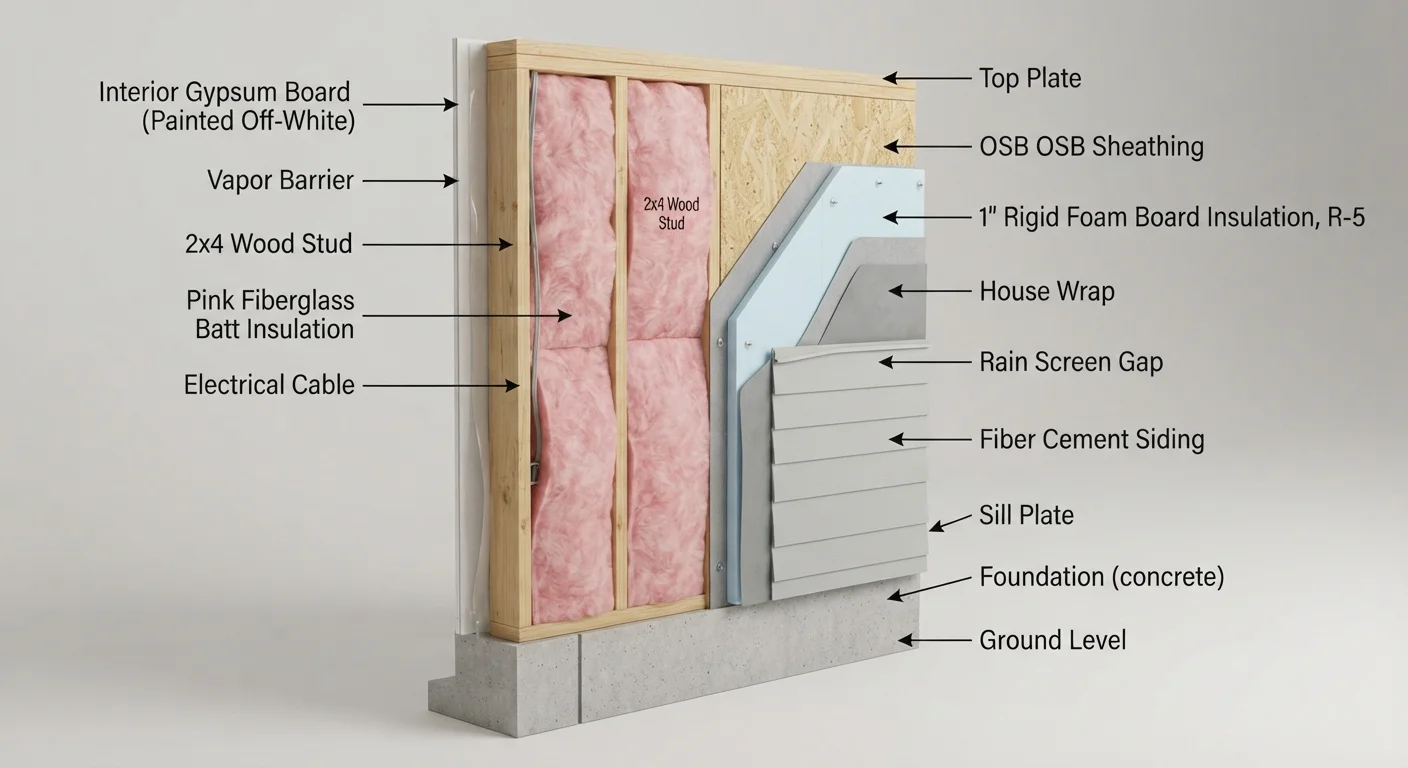
The most familiar type - pre-cut or continuous sections of fibrous material, typically fiberglass or mineral wool (also called rock wool or slag wool). Batts fit between standard-spaced wall studs and floor joists. They're relatively affordable and widely available. Mineral wool batts offer better fire resistance and moisture tolerance than fiberglass. Neither performs well if compressed, cut poorly, or installed with gaps - air pockets and voids significantly reduce effective R-value.
Blown-In (Loose-Fill) Insulation
Loose fibers or pellets - usually fiberglass, cellulose, or mineral wool - blown into spaces using specialized equipment. Blown-in insulation conforms well to irregular spaces and is commonly used in attics and existing wall cavities where cutting open surfaces is impractical. Cellulose, made largely from recycled paper, is treated for fire and pest resistance. Settling over time can reduce its effective R-value.
Spray Foam Insulation
A two-component liquid that expands and hardens on contact. Spray foam comes in two forms: open-cell (softer, lower R-value per inch, vapor-permeable) and closed-cell (denser, higher R-value per inch, acts as a vapor barrier). Closed-cell spray foam also adds structural rigidity and resists moisture intrusion. Both types air-seal as they cure - a significant advantage over fibrous insulations. Professional installation is strongly recommended; improper mixing or application creates performance and health risks.
Rigid Foam Board Insulation
Flat panels manufactured from polystyrene (EPS or XPS) or polyisocyanurate (polyiso). Rigid boards deliver high R-value in a thin profile and are used on exterior walls, basement walls, under slabs, and in roofing assemblies. They resist moisture and can reduce thermal bridging through studs. Most rigid foam requires a fire-rated cover (such as drywall) when installed in living spaces - check local building codes.
R-Value
A measure of an insulation material's resistance to heat flow. Higher R-values indicate greater insulating effectiveness. Requirements vary by climate zone and installation location.
Thermal Bridging
Heat transfer that occurs through structural elements like studs or joists, bypassing insulation. Rigid foam applied continuously over framing reduces thermal bridging that batt insulation alone cannot address.
Vapor Barrier / Vapor Retarder
A material that slows the movement of water vapor through walls, ceilings, or floors. Closed-cell spray foam acts as a vapor retarder; other insulation types may require a separate vapor barrier depending on climate and code.
Air Sealing
The process of closing gaps, cracks, and penetrations in the building envelope to prevent uncontrolled air movement. Spray foam both insulates and air-seals simultaneously; batt and blown-in insulation do not.
Open-Cell Spray Foam
A softer, lighter spray foam with a lower R-value per inch than closed-cell. It is vapor-permeable and typically used in interior applications where moisture control is less critical.
Closed-Cell Spray Foam
A dense, rigid spray foam with a higher R-value per inch. It resists moisture and acts as a vapor retarder, making it suitable for areas prone to moisture exposure.
Polyiso (Polyisocyanurate)
A type of rigid foam board insulation with one of the highest R-values per inch among board products. Commonly used in roofing and wall assemblies.
Cellulose Insulation
Loose-fill insulation made predominantly from recycled paper products, treated for fire and pest resistance. It is blown into attics and wall cavities and has a moderate R-value per inch.
Installation, Safety, and When to Call a Professional
Some insulation work is within reach of a careful DIYer - adding blown-in insulation to an accessible attic floor, for instance, or installing batt insulation in an unfinished basement. Other applications carry real risks and typically require permits, inspections, or licensed contractors.
- Spray foam: Requires professional equipment and careful handling of chemicals. Off-gassing during curing can be hazardous; occupants usually need to vacate during and briefly after application.
- Exterior rigid foam and roofing assemblies: Structural and weatherproofing implications mean these projects often require permits and inspections in most jurisdictions.
- Older homes: Before adding insulation, have the home inspected for existing hazardous materials - asbestos-containing insulation was common before the 1980s and requires professional abatement, not DIY removal.
For any insulation project, verify local permit requirements before starting. Requirements differ by municipality, scope of work, and where in the home the work occurs. Your local building department is the authoritative source. Explore the home maintenance guidance hub for related project planning resources.
Asbestos in Older Insulation: Know Before You Act
Homes built before approximately 1980 may contain insulation materials with asbestos - including some vermiculite attic insulation and older pipe wrap. Disturbing these materials without proper abatement can release hazardous fibers. If your home was built before 1980 and you're planning any insulation-related work, have the existing materials tested by a certified inspector before proceeding. Never attempt to remove suspected asbestos-containing materials yourself.