
The Calendar Disconnect Explained
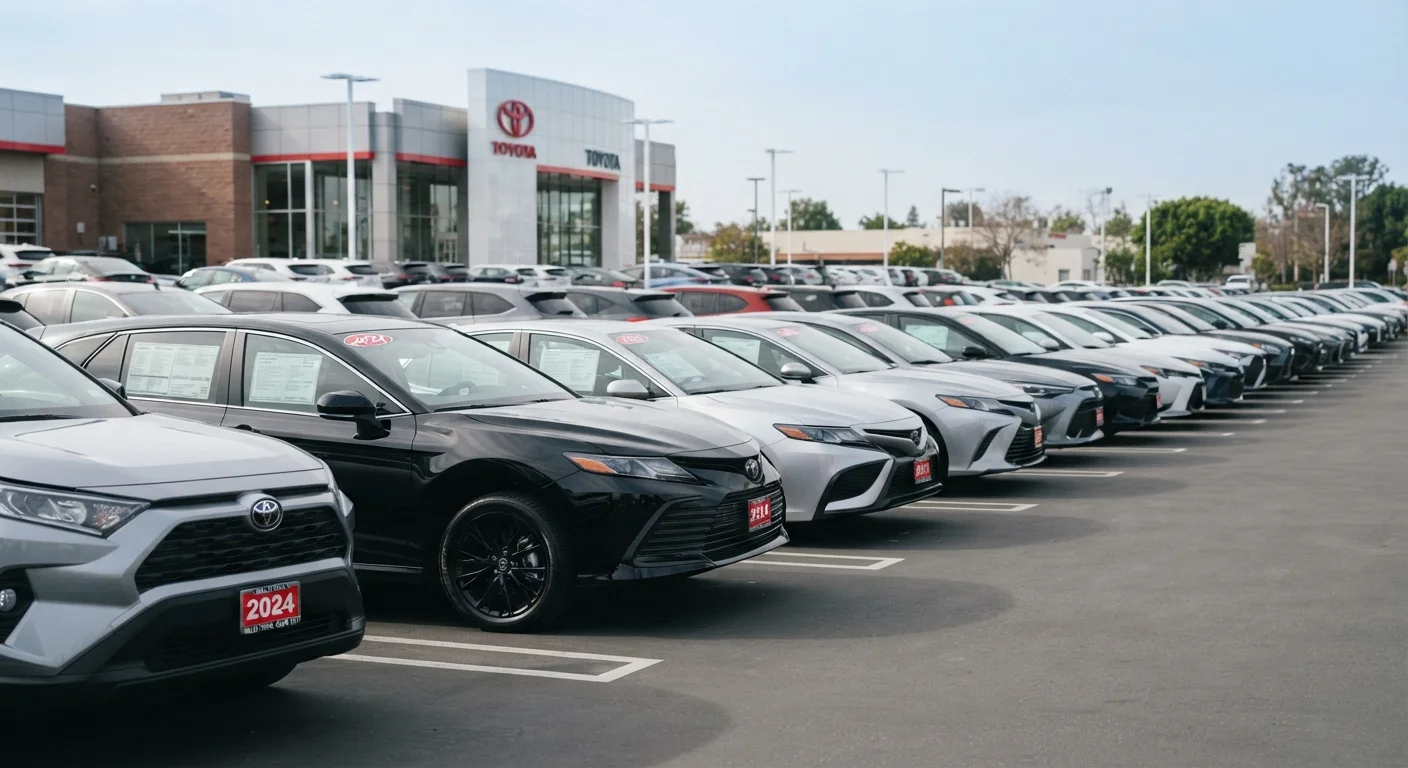
Walk into a dealership in August and you may find two model years sitting side by side on the lot - one labeled with the current calendar year, one with the next. This is not a clerical error. It reflects a production and regulatory framework that automakers have operated under for decades in the United States.
Federal rules administered by the NHTSA allow manufacturers to designate a new model year starting January 1 of the prior calendar year. In practice, most automakers begin rolling out next-year models in the summer or early fall. The system exists to give manufacturers scheduling flexibility, not to mislead consumers - but the mismatch between the label and the calendar genuinely confuses many shoppers.
Understanding this gap is foundational for anyone comparing vehicles, evaluating warranties, or assessing depreciation. For a broader look at how automakers structure their lineups beyond individual model years, see our explainer on vehicle segments and what they mean for US drivers.
12 months
Maximum early start allowed for a new model year
Per NHTSA regulations, automakers may begin production of a new model year vehicle up to 12 months before January 1 of that designated year.
5-8 years
Typical full redesign cycle for a US vehicle model
Industry analysts broadly estimate that most mainstream models undergo a complete platform redesign every five to eight years, with mid-cycle refreshes in between.
10th
VIN character position encoding model year
Under the federal VIN standard, the 10th character of every vehicle sold in the US is legally required to identify the vehicle's model year.
What Actually Changes Between Model Years
A new model year number does not automatically signal meaningful change. Automakers apply the new designation across a spectrum of scenarios:
- Full redesign: A completely new platform, body, and powertrain. These are significant engineering investments and happen infrequently - typically every five to eight years for a given model.
- Mid-cycle refresh: Updated styling, revised infotainment, or new driver-assistance features added partway through a model's lifespan. These are common at the three- to four-year mark.
- Carryover model: The vehicle is functionally identical to the prior year. The model year increments to maintain regulatory compliance and production tracking, but the buyer experiences no substantive difference.
This is why informed shoppers compare specific feature lists and option packages rather than relying on the year number alone. Our guide to understanding trim levels explains how features vary even within a single model year.
Check the Window Sticker and the VIN
When evaluating any vehicle - new or used - cross-reference the model year shown on the Monroney (window) sticker or listing with the 10th character of the VIN. Free VIN decoding tools are widely available and take only seconds to use. This simple step ensures you know exactly what model year you are buying, which matters for recalls, insurance, and resale.
How to Identify a Vehicle's True Model Year
Every vehicle sold in the US carries a VIN - a standardized 17-character code that encodes specific production data. The 10th character identifies the model year using a letter or number system established by federal regulation. This is the most authoritative source for model year information, and it cannot be altered by a dealer or seller.
When evaluating a used vehicle in particular, confirming the VIN-encoded model year against what is advertised is a straightforward verification step. Discrepancies between the marketed year and the VIN-encoded year are uncommon but worth catching.
For a practical look at how one major manufacturer structures its model lineup year over year, see our breakdown of Ford's model lineup from the Maverick to the F-Series.
Why Model Year Matters Beyond the Showroom
The model year designation has downstream effects that extend well past the initial purchase decision.
Safety recalls: NHTSA organizes vehicle safety campaigns by make, model, and model year. Knowing your vehicle's accurate model year is essential for determining whether a recall applies to your car.
Insurance and registration: Insurers and state motor vehicle departments use model year as an input when calculating premiums and fees. A vehicle with a higher model year number is typically treated as a newer asset, which affects how it is rated - even if the physical vehicle is nearly identical to the prior year.
Warranty coverage: Manufacturer warranties are typically tied to model year in addition to mileage and calendar time. Misidentifying a vehicle's model year can create confusion when trying to determine whether a repair is covered.
As automakers accelerate their transition to electrification, model year cycles are also becoming relevant to software update cycles and over-the-air feature changes - a dimension that did not exist in the traditional model. See our overview of how legacy brands are making the shift to electric vehicles for context on how this is evolving.
“The model year is fundamentally a production-management and regulatory tool that the industry has repurposed as a consumer-facing label. Understanding what it actually encodes - versus what buyers assume it means - closes one of the most persistent knowledge gaps in automotive retail.”
— Consumer automotive education researchers, Industry analysts specializing in US automotive consumer behavior