
What 'Going Electric' Actually Means for a Legacy Brand
When an automaker with a century of internal-combustion history announces an electric vehicle strategy, the implications extend well beyond rolling out a new model. True electrification requires restructuring at nearly every level of the business - from how raw materials are sourced to how vehicles are sold and serviced after delivery.
Legacy brands - a term used to describe established manufacturers such as Ford, General Motors, Stellantis, Toyota, Honda, and Volkswagen Group, among others - bring enormous advantages to this transition. They have existing manufacturing capacity, proven supply chain relationships, and consumer trust built over generations. What they must overcome, however, is institutional inertia: factories tooled for gasoline engines, supplier networks built around ICE components, and workforces trained in combustion technology.
For consumers, understanding this distinction matters. An EV badge on a familiar nameplate represents a fundamentally different product category, even when it shares design cues or a model name with its ICE predecessor. See how automakers structure their overall vehicle offerings in our guide to vehicle segments.
~8%
US new vehicle sales that were EVs in 2023
According to data from the US Energy Information Administration and industry tracking, battery electric vehicles represented roughly 7-8% of new light-duty vehicle sales in the United States in 2023.
$100B+
Estimated legacy automaker EV investment commitments
Multiple major legacy automakers have individually announced multi-billion dollar electrification investment plans spanning manufacturing, battery supply chains, and R&D over the coming decade.
~40%
Of US states with stricter EV emissions standards
A significant share of US states have adopted California's Advanced Clean Cars framework or equivalent zero-emission vehicle programs, creating varied regulatory pressure on automakers across markets.
Manufacturing Retooling: The Invisible Side of the Shift
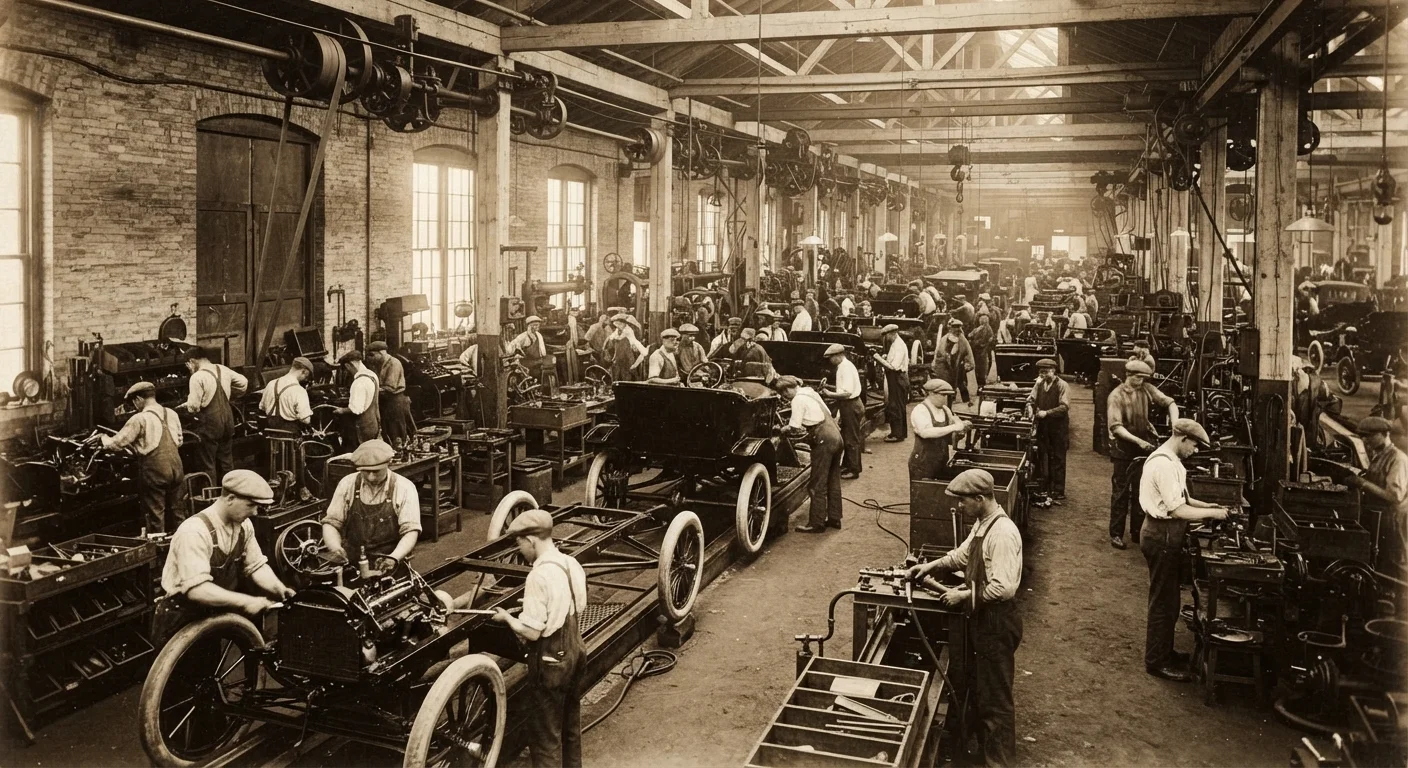
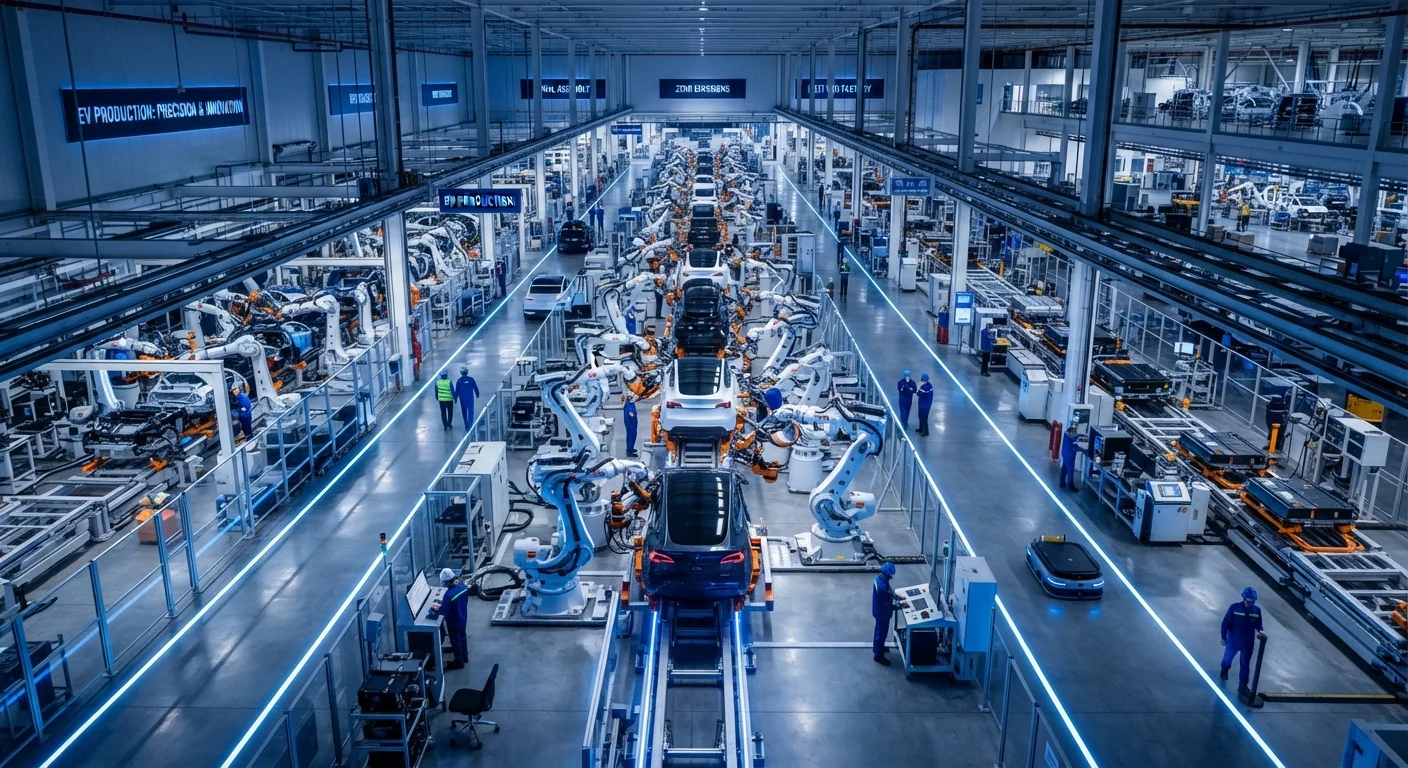
One of the least visible but most consequential parts of legacy automaker electrification is what happens inside the factory. Assembly lines designed to build engines with hundreds of moving parts must be reconfigured - or replaced entirely - to accommodate battery pack assembly, electric motor integration, and high-voltage wiring systems.
Several major manufacturers have announced dedicated EV assembly facilities separate from their existing ICE plants, while others are converting existing lines. The battery itself presents its own supply chain challenge: lithium, cobalt, nickel, and manganese must be sourced, processed, and delivered at a scale that did not previously exist for these companies. Many automakers are pursuing joint ventures with battery cell manufacturers or investing directly in domestic battery production to reduce dependence on overseas supply chains.
Workforce transition is equally significant. Technicians who have spent careers diagnosing combustion engine problems need retraining for high-voltage systems - a skillset with distinct safety requirements. Union agreements in the US auto industry add another layer of complexity to how and how quickly these workforce shifts can happen.
“The transition to electric vehicles is not simply a product change - it is a fundamental restructuring of how automobiles are designed, built, and sold. The manufacturers who succeed will be those who treat it as an organizational transformation, not just an engineering one.”
— Industry Analyst, Center for Automotive Research, Senior Analyst, US automotive policy and industry structure
How Regulatory Pressure Shapes Electrification Timelines
Federal and state regulations play a substantial role in setting the pace of legacy automaker electrification. The US Environmental Protection Agency's fuel economy and greenhouse gas emissions standards require automakers to achieve fleet-wide efficiency targets, and EVs contribute meaningfully to meeting those benchmarks. California's vehicle emissions framework - which several other states have adopted - has historically pushed manufacturers to accelerate zero-emission vehicle offerings in the US market.
Automakers must navigate these regulatory environments while balancing consumer demand, which does not always move in lockstep with policy timelines. An automaker may announce an aggressive electrification goal to satisfy regulatory expectations or investor confidence while still selling predominantly ICE vehicles in the near term.
Electrification Timelines Vary Significantly by Brand
Different automakers have set substantially different public targets for the share of electric vehicles in their US lineups. These targets reflect a mix of regulatory compliance strategy, investor communication, and competitive positioning - and they have been revised, in both directions, as market conditions evolve. Announced timelines should be understood as directional commitments rather than firm guarantees of product availability.
For consumers, it helps to recognize that announced electrification targets are forward-looking commitments, not current realities. The practical availability of specific models, trims, and price points continues to evolve. Understanding how automakers manage their annual product calendars can add useful context - our explainer on model year conventions breaks down how these naming cycles work.
What Legacy EV Lineups Look Like in Practice
Most legacy automakers have introduced electric versions across multiple vehicle segments rather than concentrating on a single body style. Pickup trucks, SUVs, and crossovers - the segments that dominate US sales - have become a primary focus for domestic brands in particular, reflecting where American consumer demand is strongest.
For example, Ford's F-Series pickup line has long been the best-selling vehicle in the US, making an electric version of that nameplate a logical and high-profile priority. Our Ford model lineup explainer details how the brand's full range is structured. Similarly, General Motors has pursued electrification across its Chevrolet, GMC, Cadillac, and Buick brands, spreading the platform investment across different price points and consumer profiles.
International legacy brands operating in the US market have often prioritized passenger sedans and compact crossovers first, reflecting different global demand patterns and platform development strategies. The diversity of approaches reflects both the scale of the transition and the difficulty of predicting exactly where consumer demand will concentrate as EV adoption matures.
What Consumers Should Realistically Expect
Consumers evaluating a legacy brand EV purchase face a different set of questions than those considering a familiar ICE model. Range anxiety - concern about running out of charge before reaching a charging station - remains a consideration, though battery ranges have improved considerably across the industry. Charging infrastructure, particularly for longer road trips, is expanding but still uneven across US regions.
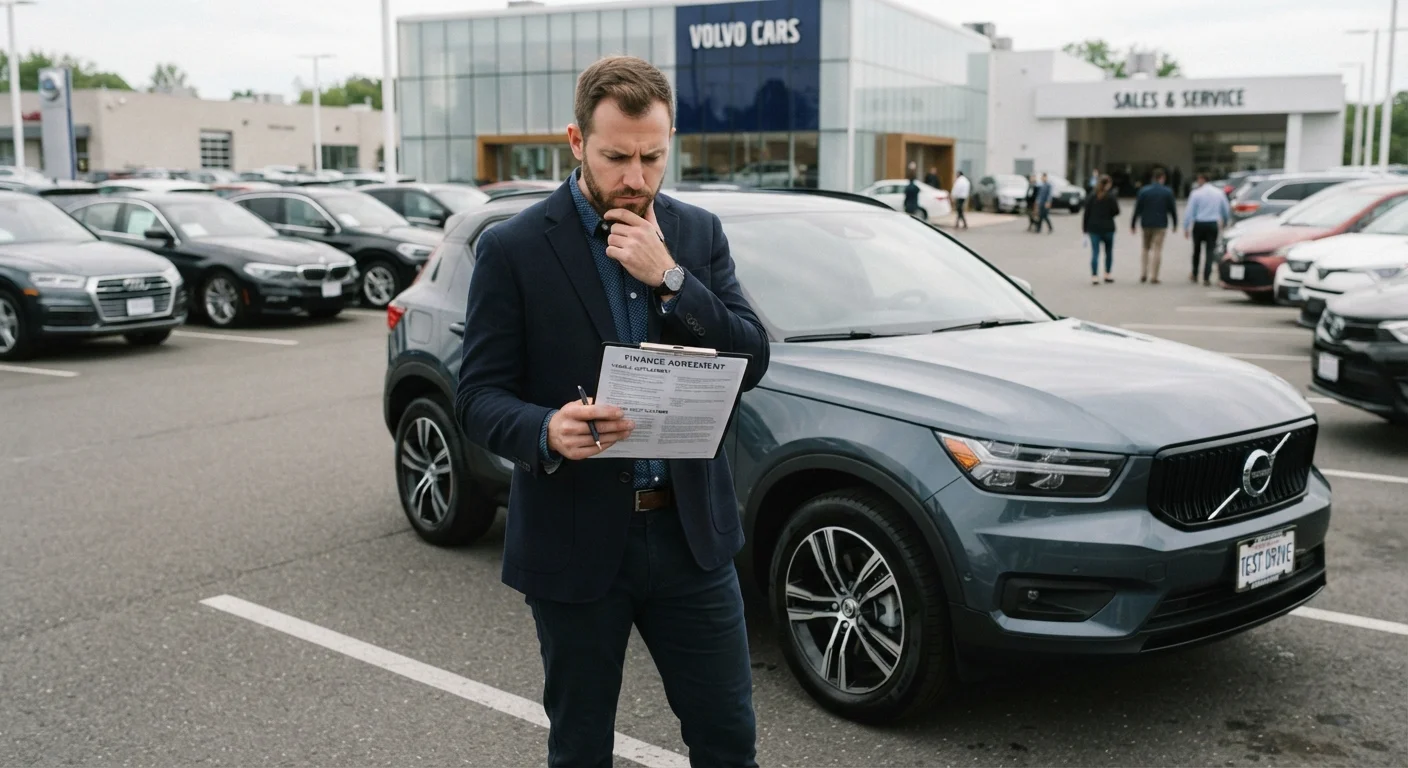
Pricing is another area where consumer expectations often meet market reality with friction. EVs from legacy brands generally carry higher sticker prices than comparable ICE models, a gap partially explained by battery production costs. Federal and state incentives can offset some of that difference, though eligibility requirements are specific and subject to change - consulting official government sources or a qualified financial adviser is advisable before factoring incentives into a purchase decision.
Legacy brands also offer something newer EV companies cannot: established service networks. For many consumers, knowing that a certified technician and parts supply exist nearby remains a meaningful factor in their confidence about long-term ownership. For broader context on how the domestic and international sides of this landscape compare, see our domestic vs. import explainer.
This article is for general informational and educational purposes only. Vehicle specifications, regulatory requirements, and incentive eligibility are subject to change. Consumers should verify current details with automakers, official government sources, and qualified advisers before making purchasing decisions.