

A Rivalry Rooted in American Industrial History
Few brand competitions have endured as long or run as deep as the one between Chevrolet and Ford. Ford Motor Company was founded in 1903, with Chevrolet following in 1911 as a General Motors brand explicitly designed to compete on price and volume. For more than a century, these two nameplates have traded positions in sales charts, cultural relevance, and technological firsts.
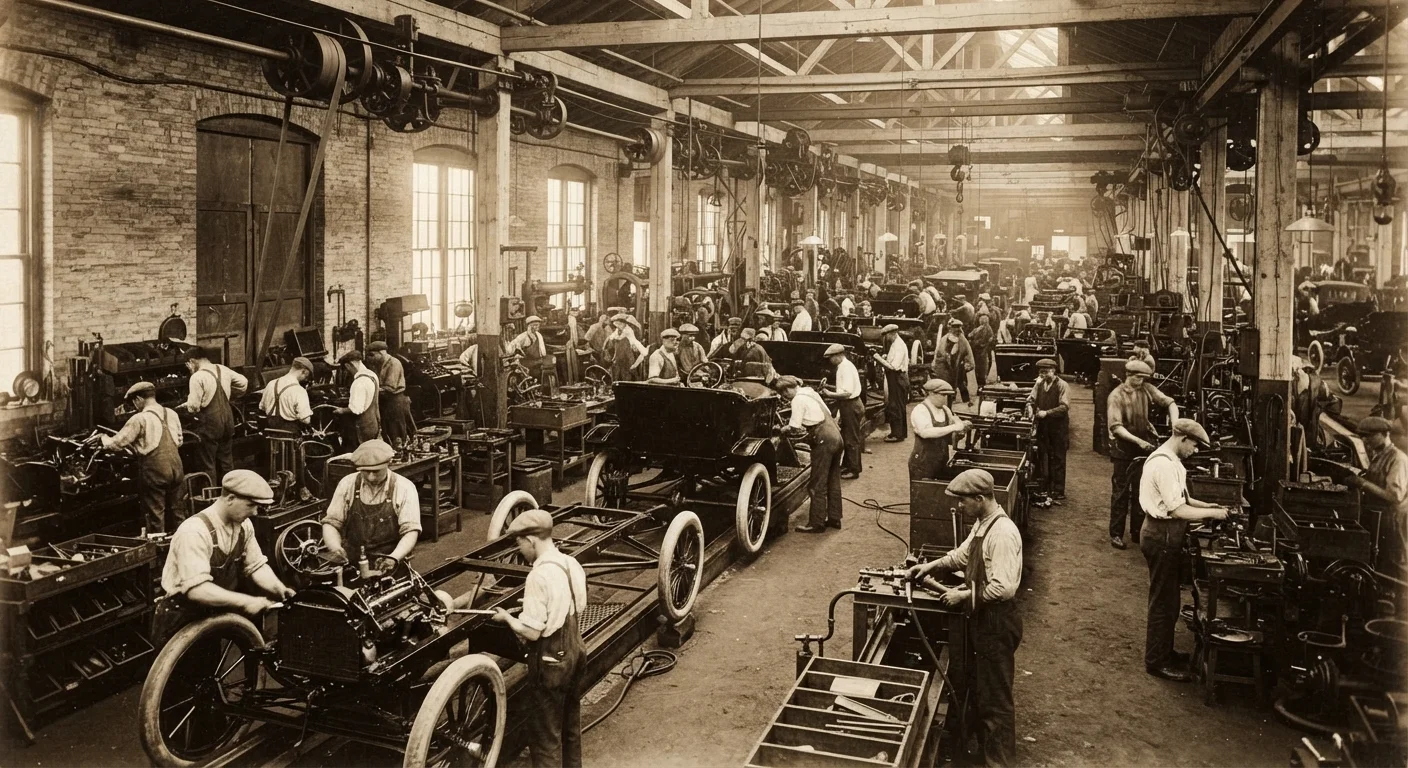
Ford's early dominance - built on the moving assembly line and the Model T - established a template for mass-market manufacturing that Chevrolet systematically challenged through the 1920s and 1930s by offering more model variety at competitive price points. That strategic tension between Ford's focus and Chevrolet's breadth has, in many ways, persisted to the present day. For a deeper look at the founding stories behind both brands, see our guide to American automaker origins.
| Criterion | Chevrolet | Ford |
|---|---|---|
| Founded | 1911 | 1903 |
| Parent company | General Motors | Ford Motor Company |
| Flagship truck | Silverado | F-Series (F-150) |
| Iconic performance model | Corvette | Mustang |
| Passenger car presence | Broader - includes sedans | Narrowed - mostly trucks/SUVs |
| Long-running nameplate | Suburban (since 1935) | F-Series (since 1948) |
| EV entries | Silverado EV, Equinox EV | F-150 Lightning, Mach-E |
| US sales rank (trucks) | No. 2 (Silverado) | No. 1 (F-Series, 40+ years) |
How Each Brand Has Shaped Vehicle Segments
Ford and Chevrolet have each staked out defining territory across the major vehicle segments that structure the US market. Ford's F-Series trucks have been the best-selling vehicles in the United States for more than four consecutive decades - a commercial achievement with few parallels in any consumer industry. The Mustang, introduced in 1964, effectively created the pony car segment and remains in production today.
Chevrolet, meanwhile, built its reputation across a wider canvas. The Corvette has anchored American sports car culture since 1953. The Suburban, introduced in 1935, is often cited as one of the longest-running nameplate in automotive history and helped define the full-size SUV category long before that segment had a name. To understand how these vehicles fit into broader market categories, our segment explainer provides useful context.
40+
Consecutive years F-Series led US vehicle sales
The Ford F-Series has held the top-selling vehicle position in the United States for more than four decades, according to industry sales data.
1935
Year Chevy Suburban was introduced
The Chevrolet Suburban is widely cited as one of the longest-running model nameplates in automotive history, predating the modern SUV category.
1953
Corvette production start year
The Chevrolet Corvette has been in continuous or near-continuous production since 1953, cementing its role as America's sports car.
Current Lineups and Strategic Priorities
Today, both brands reflect deliberate strategic choices about where to compete and where to retreat. Ford has significantly narrowed its North American passenger car offerings, discontinuing most sedans to concentrate resources on trucks, SUVs, and performance variants. Its current lineup is anchored by the F-Series, the Explorer, Bronco, and the Mustang. For a detailed breakdown, Ford's model lineup explained covers each model's purpose and positioning.
Chevrolet has maintained a broader spread, continuing to offer vehicles like the Malibu alongside crossovers, trucks, and performance models. The Silverado competes directly with the F-150 in America's most commercially significant vehicle segment - a rivalry that plays out in dealer lots, fleet contracts, and towing-capacity comparisons across the country. For real-world perspective on what full-size truck ownership actually involves, see our guide to American truck trade-offs.
Brand Loyalty Is a Measurable Factor
Survey data from automotive research firms consistently shows that Chevrolet and Ford owners display higher-than-average brand loyalty at repurchase. This loyalty often reflects regional culture, family tradition, and community identity as much as purely product-driven preferences. Neither brand holds a universal advantage - the right choice depends heavily on individual use case, priorities, and where a buyer sits within the broad spectrum of American driving needs.
The Electric Era: A New Front in an Old Rivalry
Both brands have entered the electric vehicle segment, adding a new dimension to their long-standing competition. Ford launched the F-150 Lightning and Mustang Mach-E as its primary EV entries, leaning on iconic nameplates to ease consumer adoption. Chevrolet has countered with the Silverado EV and the Equinox EV, targeting both the truck-loyal buyer and the mainstream crossover market.
Neither brand has yet established the kind of dominance in EVs that each holds in its traditional segments, and the competitive landscape here is broader - including manufacturers that didn't exist when this rivalry began. How these legacies translate to battery-electric platforms remains one of the more consequential questions in the US auto industry. Readers interested in how other global rivals approach long-term reliability can find a useful comparison in our Toyota vs. Honda analysis.