
What Each Document Actually Is
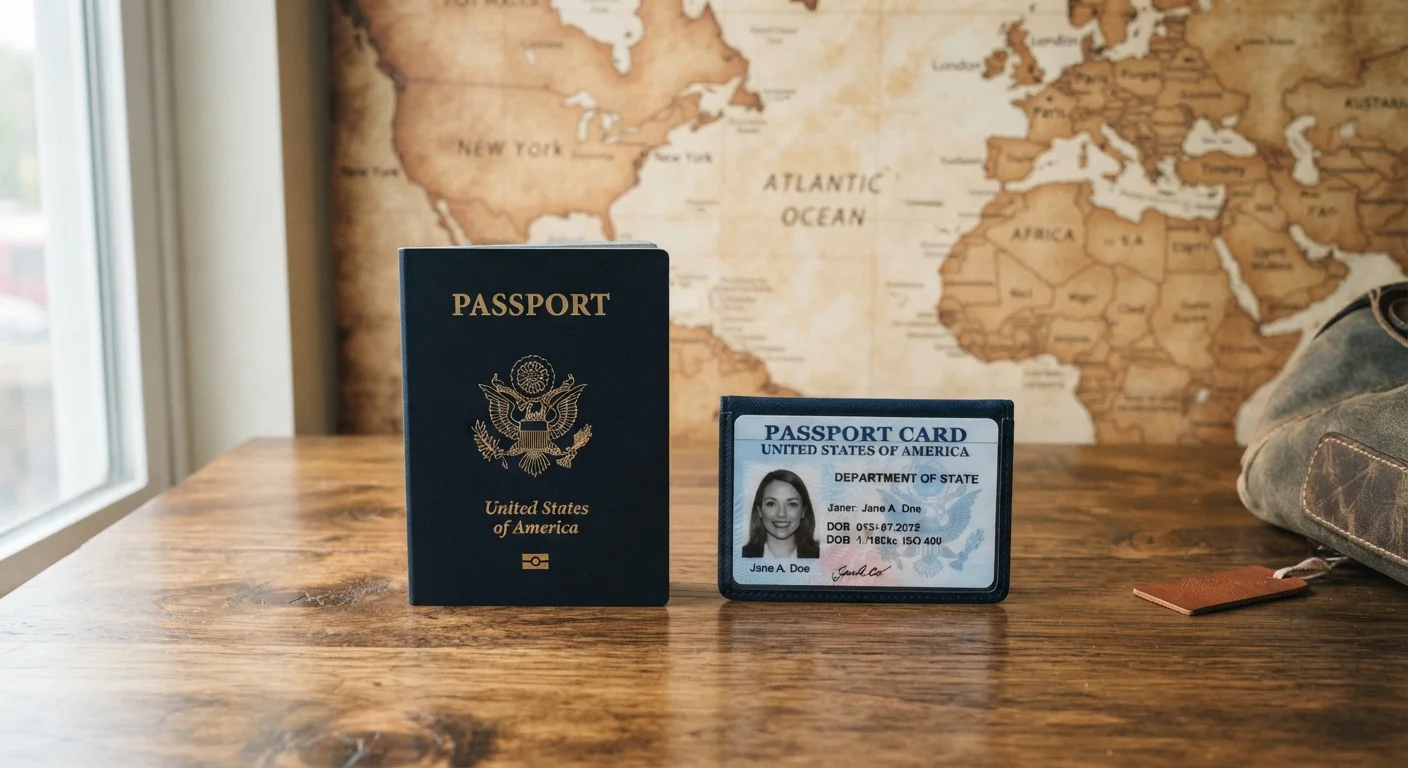
Both the US passport book and the passport card are issued by the US Department of State, confirm American citizenship, and serve as federally recognized identity documents. That is where much of the similarity ends.
The passport book is the traditional multi-page travel document most people picture — roughly 5 × 3.5 inches and containing pages for visa stamps and entry records. It is accepted for all international travel by air, sea, and land, to virtually every country in the world.
The passport card is credit-card sized, designed to fit in a standard wallet. It was introduced specifically to facilitate land and sea border crossings with neighboring countries. Critically, it cannot be used for international air travel — this is a hard restriction, not a technicality. US Customs and Border Protection (CBP) specifies that the card is valid only at land border crossings and sea ports of entry from Canada, Mexico, the Caribbean, and Bermuda.
Before applying for either — or deciding whether you need both — review the full picture of entry requirements for your intended destinations. Our guide to what US travelers need to verify before booking covers passport validity rules, visa types, and where to check official requirements.
| Criterion | Passport Book | Passport Card |
|---|---|---|
| International air travel | Accepted worldwide | Not accepted |
| Land border crossings (Canada & Mexico) | Accepted | Accepted |
| Sea ports of entry (Caribbean, Bermuda) | Accepted | Accepted |
| Domestic air travel (REAL ID) | Accepted | Accepted |
| Physical size | Booklet (~5 × 3.5 in) | Wallet-sized (credit card) |
| Application cost (adult, first-time) | Higher combined fee | Lower combined fee |
| Visa stamp pages | Yes (multiple pages) | No |
| Issued by | US Dept. of State | US Dept. of State |
Cost, Size, and Practical Differences
Cost is one of the clearest differentiators. As of current Department of State fee schedules, a first-time adult passport book application involves a higher combined fee than a passport card application. Renewal fees follow a similar pattern — the card costs meaningfully less. For travelers who need the card only as a supplemental document, the lower cost can make it an easy addition to an existing passport book.
Size matters in daily use. The passport card fits in a wallet slot, making it suitable for routine border runs or day trips without carrying your full booklet. Many border-region residents keep the card for weekly or monthly crossings into Canada or Mexico and reserve the book for longer international trips.
~$65
Passport card application fee (adult, first-time)
The US Department of State charges a lower combined fee for a passport card than for a passport book, which carries a higher combined first-time application cost — figures subject to change; verify current fees at travel.state.gov.
4 countries/territories
Destinations where the passport card is valid for entry
CBP specifies the card is accepted only for land and sea entry from Canada, Mexico, the Caribbean, and Bermuda — not for any other international destination.
10 years
Validity period for adult passport documents
Both the passport book and passport card are valid for 10 years for adults (5 years for minors under 16), per US Department of State policy.
One practical consideration: the passport card is REAL ID-compliant, meaning it can also serve as acceptable identification for domestic flights under the Transportation Security Administration's REAL ID enforcement requirements — an added utility beyond border crossing.
It is worth noting that cruise itineraries vary. While closed-loop cruises (departing and returning to the same US port) may accept the passport card, itineraries that include an air segment or port of call with different entry rules may require the full booklet. Always verify specific cruise line and destination requirements directly with the carrier and official government sources before departure.
When Carrying Both Makes Sense
There is no rule limiting you to one document. Many experienced travelers — particularly those who live near the Canadian or Mexican border and also travel internationally by air — carry both. The card handles the routine; the book handles everything else.
Holding both also provides a layer of redundancy. If your passport book is lost or stolen abroad, having a second government-issued identity document (even one with limited travel authority) can assist consular services in verifying your identity more quickly.
Keep Copies Separate From Your Originals
Travel security professionals and the US Department of State both recommend keeping photocopies — or secure digital scans — of your passport documents stored separately from the originals. If a passport book is lost or stolen abroad, a copy can speed up emergency consular services. Storing a copy in a secure cloud service and leaving one with a trusted contact at home are two commonly recommended approaches.
When organizing your travel documents before any international trip, keeping clear copies of both documents — stored separately from the originals — is a widely recommended practice. See every document worth organizing before an international trip for a practical reference on what to copy, store digitally, and carry physically.
If you are uncertain about travel myths or assumptions — such as whether a passport card "counts" for certain destinations or cruise types — consult common myths about international travel that US tourists still believe for fact-checked clarifications before you commit to a travel plan.
This article provides general travel document information for US citizens based on publicly available guidance from the US Department of State and CBP. Entry requirements, fees, and acceptance policies can change. Always verify current rules with official government sources — including travel.state.gov and cbp.gov — before applying for documents or booking travel.