

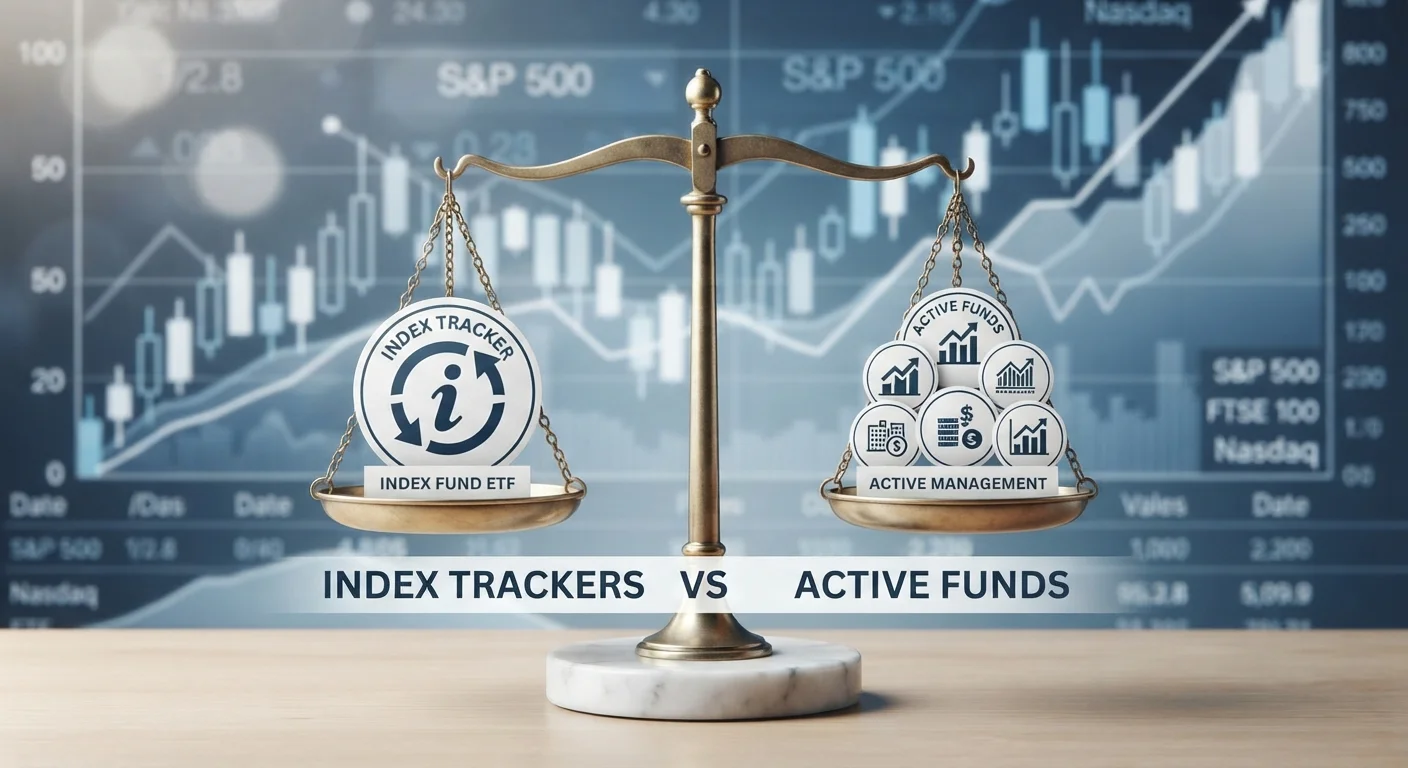
How Each Approach Works
An index fund is a pooled investment vehicle - typically a mutual fund or exchange-traded fund (ETF) - designed to replicate the composition and performance of a specific market index, such as the S&P 500 or the total US bond market. The fund holds the same securities in the same proportions as the index, so returns closely mirror the market itself. There is no team of analysts deciding what to buy or sell; the portfolio changes only when the index changes.
An actively managed fund does the opposite. A professional fund manager or team uses research, analysis, and judgment to select securities they believe will outperform the broader market. The portfolio shifts frequently in response to changing economic conditions, company results, or the manager's evolving thesis. This active decision-making is the core of the value proposition - and the primary source of additional cost.
Understanding these structural differences is essential before comparing outcomes. As you develop your investment knowledge, separating common investing myths from evidence is a useful next step.
| Criterion | Index Funds | Actively Managed Funds |
|---|---|---|
| Investment objective | Match benchmark index returns | Outperform benchmark index |
| Typical annual expense ratio | 0.03%-0.20% (often lower) | 0.50%-1.50% or higher |
| Portfolio turnover | Low - changes only when index changes | High - frequent buying and selling |
| Dependence on manager skill | None - rules-based replication | High - outcome depends on manager decisions |
| Long-term benchmark outperformance | Matches the market by design | Majority underperform after fees, long-term |
| Tax efficiency (taxable accounts) | Generally higher - lower turnover | Generally lower - more capital gains events |
| Transparency | High - holdings mirror published index | Variable - holdings disclosed periodically |
What the Performance Evidence Shows
The central question most investors ask is straightforward: do actively managed funds actually beat the market? The answer, according to decades of research, is that most do not - particularly after fees and over longer time horizons.
The S&P Indices Versus Active (SPIVA) scorecard, published by S&P Dow Jones Indices, has tracked this question systematically across fund categories and geographies for over two decades. Consistently, it finds that the majority of actively managed US equity funds underperform their benchmark index over 10- and 15-year periods. Similar patterns appear in studies covering international and bond markets.
~85%
Active US large-cap funds underperforming over 15 years
S&P Dow Jones Indices' SPIVA US Scorecard has repeatedly found that roughly 80-90% of actively managed US large-cap funds trail the S&P 500 over 15-year periods, net of fees.
1%+
Typical annual cost gap between active and passive funds
Industry data consistently shows average expense ratios for actively managed US equity funds exceed those of comparable index funds by approximately 1 percentage point or more annually.
~20%
Active funds maintaining top-quartile rank across consecutive periods
S&P Dow Jones Indices' persistence scorecards find that very few top-performing active funds maintain top-quartile rankings across two consecutive five-year measurement periods.
This does not mean active management never delivers outperformance. Some managers have produced strong results, particularly over shorter windows or in specific asset classes. The persistent challenge is that identifying which managers will outperform in advance - and whether past outperformance indicates future results - remains difficult to do reliably. Research into performance persistence generally finds that top-performing funds in one period do not consistently maintain that standing in the next.
Cost is a critical factor. Actively managed funds typically carry annual expense ratios that are significantly higher than comparable index funds. This fee difference compounds over time: a 1% annual difference in costs translates to a meaningfully smaller portfolio after 20 or 30 years, even if returns before fees were identical. Knowing how to read a fund fact sheet helps you identify and compare these costs before committing.
Risk, Diversification, and When Active May Add Value
Index funds carry market risk by design - when the index falls, so does the fund. There is no manager intervention to reduce exposure in a downturn. Active funds, in theory, can shift positioning defensively, though in practice many remain largely invested and do not consistently time markets successfully.
Diversification within index funds is typically broad, spanning hundreds or thousands of securities. Active funds vary - some are highly concentrated, which amplifies both potential gains and potential losses.
There are contexts where active management has a credible case. In less efficient markets - smaller companies, emerging markets, or certain fixed-income sectors - publicly available information is less uniformly priced in. This creates more opportunity for skilled managers to find genuine pricing gaps. In highly liquid large-cap equity markets, where every major stock is scrutinised by thousands of analysts, those gaps are narrow and harder to exploit sustainably.
Some investors use both approaches - holding a passive core for broad market exposure while allocating a portion to active strategies in specific areas. Whether this suits you depends on your goals, risk tolerance, and cost sensitivity. The principles that underpin sound long-term investing apply regardless of which approach you favour.
Market Efficiency Varies by Asset Class
The case for active management is stronger in asset classes where markets are less informationally efficient. Emerging market equities, small-cap stocks, and certain fixed-income sectors are examples where research suggests active managers have historically had more opportunity to add value. This contrasts with highly liquid, heavily analysed markets like US large-cap equities, where the bar for consistent outperformance is especially high. Investors considering active strategies should evaluate not just the manager's track record but the specific market in which they operate.
If you're still deciding whether to invest at all, or how to allocate money between savings and investment accounts, comparing savings and investment accounts is a logical earlier step. And once you're investing, choosing between lump-sum and regular contributions is another decision worth considering carefully.
This article is for general informational and educational purposes only. It does not constitute personalised financial, investment, or tax advice. Investment involves risk, including the possible loss of capital. Past performance does not guarantee future results. Please consult a qualified, licensed financial adviser before making investment decisions based on your individual circumstances.