

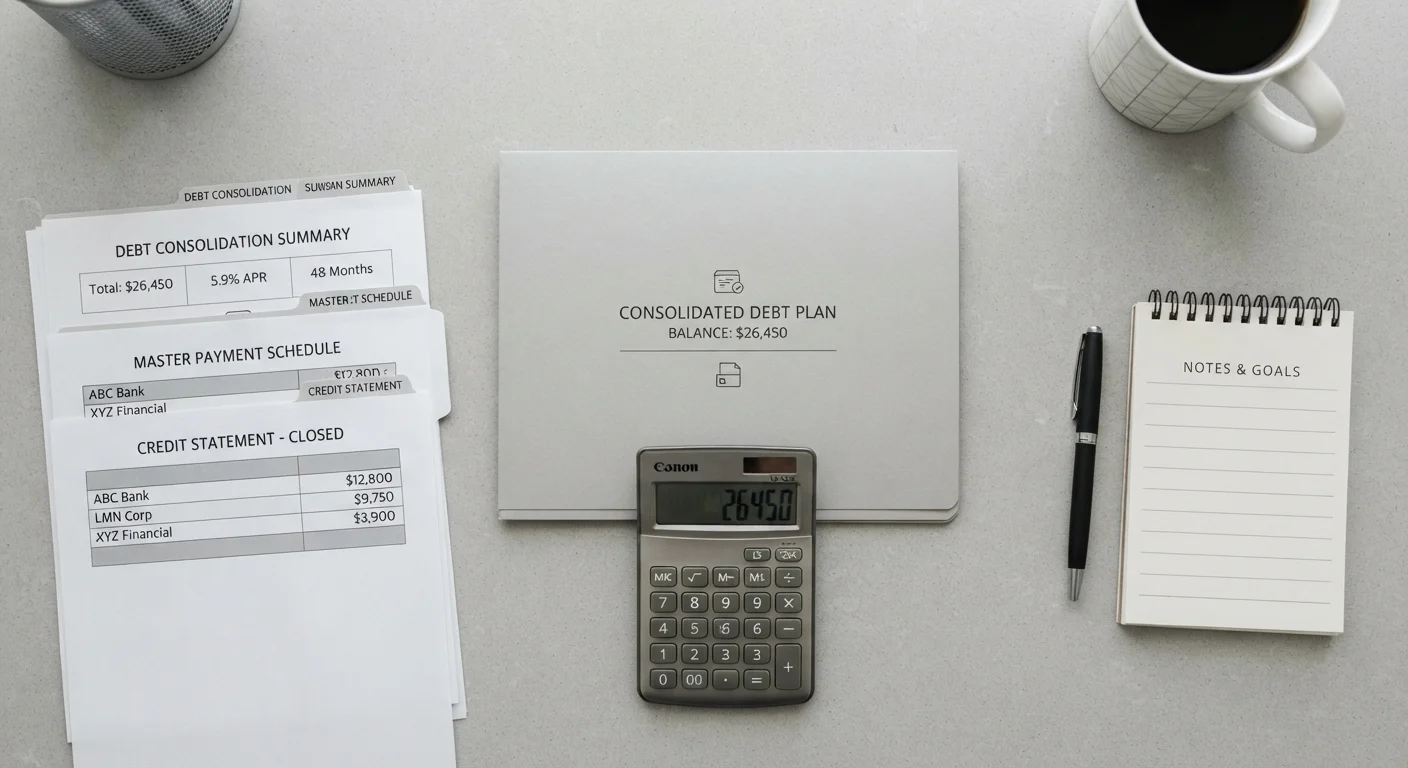
What Debt Consolidation Actually Means
Debt consolidation is the process of combining multiple debt obligations - often from credit cards, medical bills, or other unsecured borrowing - into a single new loan or repayment arrangement. The goal is typically to reduce the number of payments you manage each month, secure a lower interest rate, or both.
The concept is straightforward, but it is worth being precise: consolidation restructures existing debt, it does not cancel or reduce the principal you owe. If you carry $15,000 across four credit cards and consolidate into one personal loan, you still owe $15,000 - just to a single lender, ideally on better terms. For a grounded introduction to how debt works before exploring consolidation, see this plain-language overview of credit and debt.
$1.14T
U.S. credit card debt outstanding
According to Federal Reserve data, American consumers carried over one trillion dollars in revolving credit card debt as of early 2024.
20%+
Average credit card APR
The Federal Reserve reports that average credit card interest rates exceeded 20% APR in 2023-2024, a multi-decade high.
1%-8%
Typical personal loan origination fee range
Most lenders disclose origination fees in this range, which are deducted from or added to the loan amount at funding.
How the Common Consolidation Methods Work
Several financial products can function as consolidation tools. Understanding how each is structured helps you evaluate which, if any, might suit your situation.
Personal Loans
A fixed-rate personal loan from a bank, credit union, or online lender is one of the most widely used consolidation instruments. You borrow a lump sum, pay off the existing debts, and repay the loan in equal monthly installments over a set term. Rates depend heavily on your credit score, income, and debt-to-income ratio. See how personal loans compare to credit cards as borrowing tools.
Balance Transfer Credit Cards
Some credit cards offer a promotional 0% APR period - often 12 to 21 months - on balances transferred from other cards. If you can pay off the balance within that window, interest costs can drop significantly. Once the promotional period ends, the standard rate applies to any remaining balance, which can be high.
Home Equity Products
Home equity loans and home equity lines of credit (HELOCs) allow homeowners to borrow against the equity in their property. These typically carry lower interest rates than unsecured options, but they convert unsecured debt into secured debt - meaning your home becomes collateral. Understanding the distinction between secured and unsecured debt is essential before taking this route.
Before applying for any consolidation product, request your free credit reports and check for errors - a reporting mistake could cost you a better interest rate you actually qualify for.
Inaccurate negative items on credit reports are more common than most consumers realize, and correcting them before a loan application can meaningfully affect the rate offered.
Calculate your breakeven point on a balance transfer fee: if a 3% transfer fee saves you 15% APR interest, determine exactly how many months it takes for savings to exceed the fee - that is your minimum payoff window.
Many borrowers underestimate fees relative to interest savings, particularly when they do not pay off the full balance within the promotional period.
When Consolidation Makes Financial Sense
Consolidation is most likely to benefit you when specific conditions align:
- You qualify for a materially lower interest rate than your current weighted average across existing debts.
- You have stable income sufficient to cover the new monthly payment reliably.
- The total cost of repayment - principal plus interest plus any fees - is lower under the consolidated loan than continuing on current terms.
- You have addressed the underlying habits that caused the debt accumulation; otherwise, consolidation risks becoming a prelude to deeper borrowing.
If repayment strategy is your primary challenge rather than interest rate reduction, you may benefit from reviewing debt snowball vs. debt avalanche methods, which can be applied without taking on new financing.
Use a Loan Amortization Calculator First
Before contacting any lender, model the full repayment cost of a potential consolidation loan using a free online amortization calculator. Input the loan amount, proposed interest rate, and term to see total interest paid - not just the monthly payment. This single step frequently reveals whether consolidation genuinely saves money in your specific case.
Trade-Offs and Risks to Weigh
Consolidation involves genuine trade-offs that deserve honest evaluation.
Consolidation Does Not Fix Overspending
One of the most documented pitfalls in consumer finance is using a consolidation loan to clear credit card balances - and then accumulating new balances on those same cards. Consolidation restructures debt; it does not address the cash flow gaps or habits that created it. Any consolidation plan should be paired with a realistic budget that prevents the original debt from rebuilding.
Extended Repayment Can Increase Total Interest
A lower monthly payment often comes from stretching the repayment term. If a 5-year consolidation loan replaces debts you would have paid off in 2 years, you may pay more total interest even at a lower rate. Run the full-cost comparison, not just the monthly payment.
Fees and Origination Costs
Personal loans frequently carry origination fees (typically 1%-8% of the loan amount). Balance transfer cards charge transfer fees, commonly 3%-5% of the transferred balance. These costs reduce or eliminate savings in some scenarios.
Credit Score Impact
Applying for a consolidation loan triggers a hard inquiry, which may temporarily lower your credit score. Opening a new account also affects your average account age. Conversely, reducing credit card utilization by paying off balances with a loan can improve your score over time.
Secured Debt Conversion Risk
Using home equity to consolidate unsecured debt is a significant shift in risk exposure. Defaulting on a credit card is damaging; defaulting on a home equity loan can result in foreclosure. That trade-off warrants careful consideration. Alternatively, a formal debt management plan may be worth exploring if lender negotiation is the primary need.
Key Questions Before You Move Forward
Before pursuing consolidation, work through these questions deliberately:
- What is my current weighted average interest rate? Add up the interest you're paying across all debts relative to the balances, and compare it to what you qualify for on a consolidation loan.
- What will I pay in total - including fees - under each option? A spreadsheet or loan amortization calculator makes this comparison concrete.
- Can I realistically make the new payment every month? Budget stress-testing against income disruptions is prudent.
- Have I stopped adding to the debt that led here? Consolidating and then running up balances again is a common and costly pattern.
- Have I consulted a licensed professional? A nonprofit credit counselor or certified financial planner can assess your full picture without a conflict of interest.
Watch for Debt Settlement vs. Consolidation Confusion
Debt settlement companies - which negotiate to pay creditors less than you owe - are sometimes marketed using language similar to consolidation. These are fundamentally different and carry serious risks: significant credit score damage, potential tax liability on forgiven amounts, and fees that can rival the debt itself. If you encounter aggressive marketing promising to 'resolve' or 'reduce' your debt, verify exactly what service is being offered before proceeding.
This article is for general informational and educational purposes only and does not constitute personalized financial, legal, or tax advice. Individual outcomes depend on your specific financial situation. Consult a licensed financial adviser or credit counselor before making decisions about restructuring debt.