

Why Intensity Fades and Consistency Compounds
Most wellness routines begin with enthusiasm and collapse within weeks - not because the practices are wrong, but because they were designed for motivation rather than habit. Understanding why routines fall apart early is the foundation of building ones that don't. When self-care is framed as an event - a long bath ritual, an intensive skincare weekend, a full meditation session - it carries a cognitive threshold that busy, tired people routinely skip.
Behavioral science consistently points in the same direction: repetition builds automaticity. A two-minute moisturizing ritual done every morning gradually requires less willpower to initiate than a forty-minute skincare session done once a week. The brain encodes repeated, low-friction behaviors more durably than high-effort, infrequent ones. Consistency, not intensity, is what makes wellness genuinely restorative over time.
66 days
Average time for a new habit to become automatic
Research published in the European Journal of Social Psychology found that habit formation took an average of 66 days, ranging from 18 to 254 days depending on complexity and the individual.
~40%
Daily behaviors that are habitual, not deliberate
Studies from Duke University suggest roughly 40% of everyday actions are habits rather than conscious decisions, underscoring the power of behavioral design over willpower.
Core Principles for Lasting Self-Care Rituals
The following practices are grounded in habit-formation research and real-world dermatology and wellness guidance. Applied together, they shift self-care from something you do occasionally to something that simply becomes part of how you move through your day.
Design your ritual around your lowest-energy day, not your best day.
Routines built for peak motivation collapse when energy or time is reduced. Calibrating to your baseline ensures the routine remains accessible under real-world conditions, not just ideal ones.
Attach new behaviors to existing, reliable daily anchors.
Habit stacking leverages the neural pathways of existing behaviors to reduce the initiation effort for new ones. The cue for the old behavior automatically prompts the new one, reducing reliance on memory or willpower.
Prioritize repetition over perfection at every stage.
The neurological consolidation of a habit depends on repetition frequency. A simplified ritual completed daily will encode more reliably than an elaborate one completed occasionally, even if the elaborate version is technically superior.
Prepare a written minimum-viable version for disrupted days.
Without a defined fallback, disruption becomes abandonment. A pre-planned stripped-down version removes the need to make decisions under pressure, which is when routines are most likely to be skipped entirely.
Track completion simply and without judgment.
Low-friction tracking reinforces the identity shift - from someone who 'tries' self-care to someone who 'practices' it. Seeing a visible record of consistency strengthens motivation without adding performance pressure.
Reframe missed days as data, not failure.
Treating a lapse as evidence of personal failure activates shame, which suppresses re-engagement. Treating it as information - about triggers, timing, or overambition in the design - allows for adjustment without abandonment.
Start Smaller Than You Think You Need To
The most common mistake in building wellness rituals is overdesigning the starting point. A new routine is far more likely to survive if it requires almost no effort to begin. Building a daily wellness ritual from scratch - even on a packed schedule - starts with finding the smallest viable action: a single facial massage step, one mindful breath before bed, a 30-second scalp treatment in the shower.
This principle applies equally across beauty and broader wellness practice. Dermatologists frequently note that a consistent two-step skincare routine outperforms an inconsistent ten-step one - not because fewer steps are inherently better, but because fewer steps are actually completed. Visit the skincare basics hub for guidance on which foundational steps deliver the most consistent value.
Anchor Rituals to What Already Exists
One of the most evidence-supported strategies for habit formation is habit stacking - pairing a new behavior with one that already occurs reliably. Rather than carving out a new time slot, you attach the self-care ritual to an existing anchor: applying SPF immediately after brushing teeth, doing a brief body scan while coffee brews, or using a facial oil as the last step before switching off a bedside lamp.
This approach also helps resolve the morning-versus-evening question that many people wrestle with. Matching rituals to your body's natural rhythms can sharpen which anchor moments are physiologically optimal for different types of care. The key is that the anchor must be reliable - avoid attaching new habits to variable or optional events.
Use Environment Design to Support Consistency
Physical environment is one of the strongest predictors of whether a habit is actually performed. Keep your self-care items at the precise location where they will be used, and remove any steps between intention and action. If your facial oil is in a drawer under the sink, it will be skipped far more often than if it is on the counter at eye level.
Build Recovery Into the Design
Any routine that doesn't account for disruption will eventually be abandoned because of it. Travel, illness, demanding work periods, and emotional fatigue are not exceptions - they are predictable features of real life. A durable self-care ritual includes a pre-planned minimum version: the single step you can complete even on the hardest day.
Self-compassion after a missed day is not optional softness - it is functionally necessary for continuity. Research on habit recovery consistently shows that returning to a behavior the day after a lapse is far more predictive of long-term adherence than the streak itself. The weekend-only wellness routine illustrates what happens when recovery structure isn't built in: concentrated effort without daily anchoring tends to fade. For the psychological dimension of this, approaching mental wellness as an ongoing practice offers a complementary framework for treating wellbeing as continuous rather than corrective.
Consistency Looks Different for Everyone
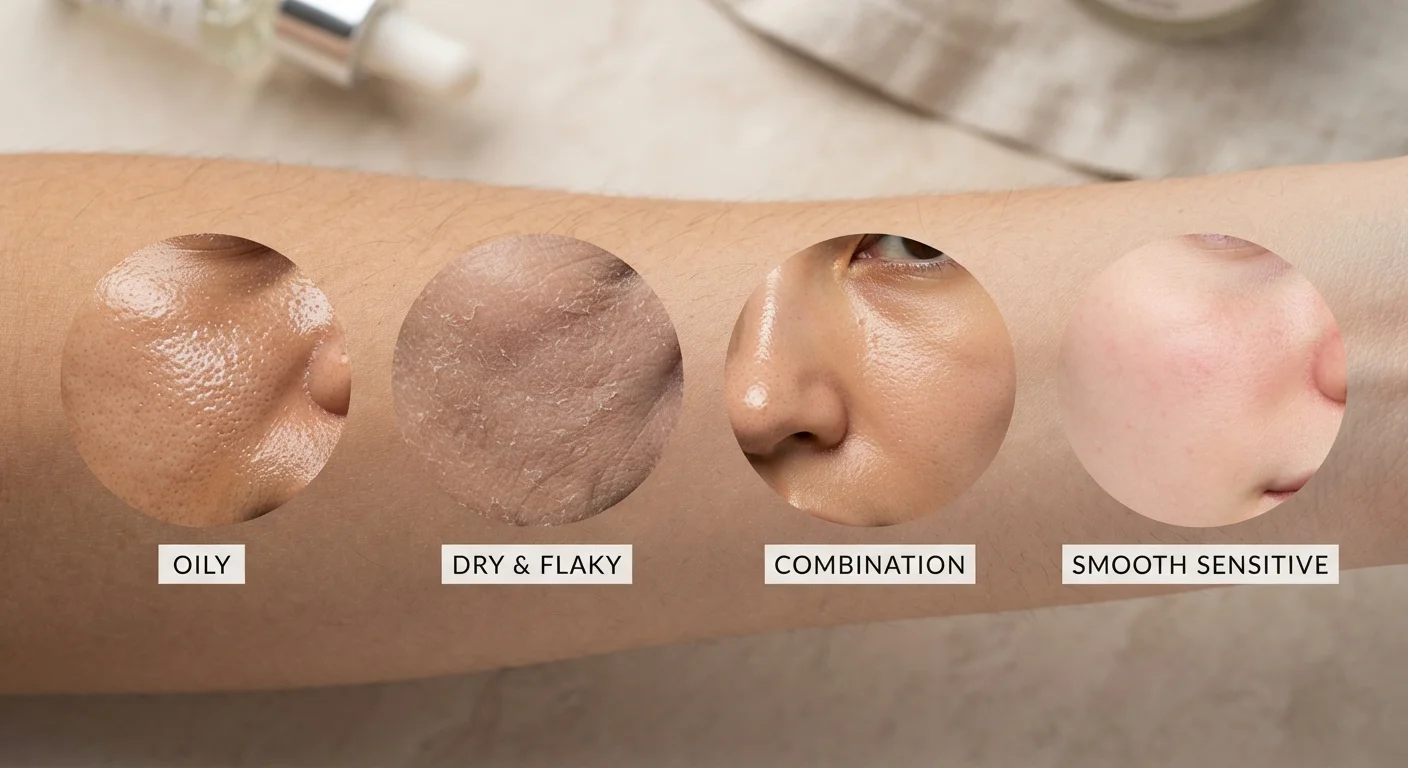
There is no universally correct frequency or structure for self-care rituals. Factors including skin type, mental health needs, schedule constraints, and physical ability all influence what 'consistent' realistically means for an individual. The goal is a sustainable rhythm that fits your actual life - not an idealized routine borrowed from someone else's.
This article is for general informational and educational purposes only and does not constitute medical, dermatological, or mental health advice. Consult a qualified healthcare professional before making changes to any health-related routine, particularly if you have underlying conditions or sensitivities.