
The Physiology Behind Each Practice
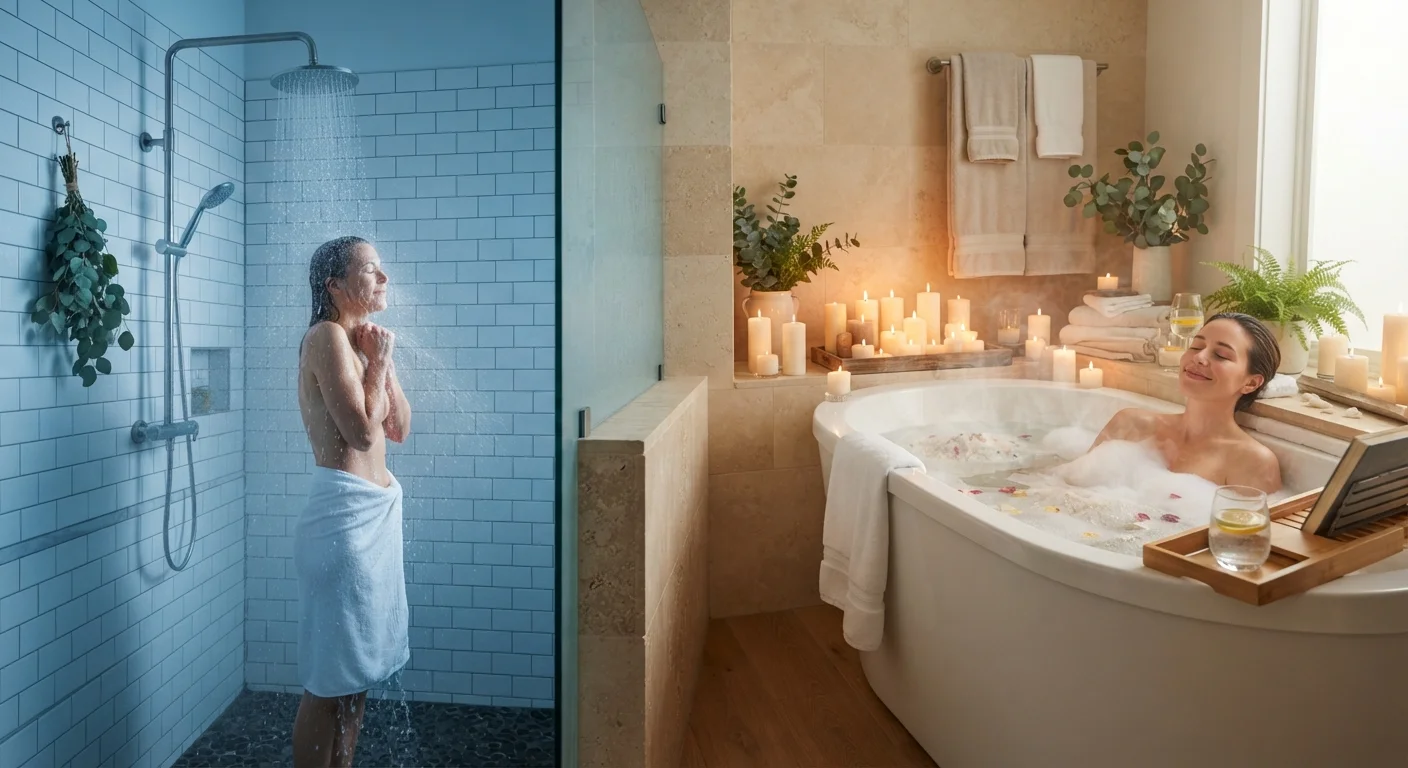
Cold showers and warm baths work through fundamentally different physiological mechanisms - and understanding those mechanisms is what separates informed habit-building from wellness trend-chasing.
When cold water contacts the skin, blood vessels constrict (vasoconstriction), reducing blood flow to the skin and extremities. This response is followed by a rebound dilation that may help clear metabolic waste from fatigued muscles. Cold exposure also triggers the release of norepinephrine - a hormone and neurotransmitter associated with alertness, focus, and mood regulation. Some research suggests that brief, repeated cold exposure may also modestly increase metabolic activity, though the effect size in everyday contexts is not dramatic enough to be treated as a significant weight-management strategy.
Warm baths operate through the opposing process. Immersion in warm water raises skin and superficial tissue temperature, prompting vasodilation - the widening of blood vessels. This increases peripheral circulation, reduces muscular tension, and activates the parasympathetic nervous system, which governs the body's rest-and-digest state. The calming effect is not simply psychological; it reflects measurable changes in heart rate variability and cortisol levels documented in several small-scale studies.
These are complementary, not competing, tools - each suited to a specific physiological need. Practices like these are explored across many cultures, as detailed in our overview of global self-care traditions.
| Criterion | Cold Showers | Warm Baths |
|---|---|---|
| Primary mechanism | Vasoconstriction, norepinephrine release | Vasodilation, parasympathetic activation |
| Best timing | Morning or immediately post-exercise | Evening, 1-2 hours before sleep |
| Muscle soreness relief | Strong short-term evidence | Moderate, via improved circulation |
| Sleep quality support | Limited evidence | Well-supported by research |
| Mental alertness boost | Yes - norepinephrine-driven | Calming, not stimulating |
| Accessibility | Requires only a shower | Requires a bathtub |
| Cardiovascular caution needed | Yes - cold shock response risk | Yes - overheating or pressure risk |
Recovery, Relaxation, and When Each Excels
For physical recovery, cold-water immersion has the stronger short-term evidence base. Meta-analyses - including work published in peer-reviewed sports medicine literature - suggest that cold-water exposure following high-intensity exercise reduces perceived muscle soreness and limits the acute inflammatory response, at least in the short window after training. However, some exercise scientists caution that chronically suppressing inflammation may blunt long-term adaptation, meaning daily post-workout cold plunges might not be ideal for those in a strength-building phase.
Warm baths shine in a different recovery dimension: sleep and systemic relaxation. A 2019 meta-analysis published in Sleep Medicine Reviews found that bathing in warm water (around 104°F / 40°C) between 1 and 2 hours before bedtime was associated with improved sleep onset latency and subjective sleep quality. The mechanism relates to thermoregulation - after exiting a warm bath, core body temperature drops, mimicking the natural pre-sleep temperature decline the brain uses as a sleep cue. This makes warm bathing a particularly practical tool for those with difficulty winding down. For a broader look at how recovery happens at night, see our piece on sleep and physical recovery.
~1-2 hrs
Optimal warm bath timing before sleep
A 2019 meta-analysis in Sleep Medicine Reviews found bathing in warm water 1-2 hours before bed was associated with improved sleep onset and quality.
~300%
Norepinephrine increase with cold exposure
Research cited in cold-water immersion studies suggests brief cold exposure can produce substantial increases in circulating norepinephrine, supporting mood and alertness.
~104°F
Effective warm bath temperature
Studies examining pre-sleep bathing generally use water temperatures around 40°C (104°F) to trigger the thermoregulatory response linked to faster sleep onset.
The timing of each ritual also matters. Cold exposure tends to fit better in the morning or immediately post-exercise, when an alerting effect is beneficial. Warm baths are better suited to evenings - aligning neatly with the self-care timing principles outlined in our guide to morning and evening self-care rituals.
A Note on Contrast Bathing
Some sports recovery protocols involve alternating between cold and warm water - known as contrast bathing. The idea is to combine the circulatory benefits of both. While some athletes report reduced soreness and fatigue, the research evidence for contrast bathing over cold-only or warm-only approaches is still mixed and not conclusive. It is worth discussing with a sports medicine professional if you are considering it as a structured recovery tool.
This article is for general informational purposes only and does not constitute medical advice. If you have a cardiovascular condition, hypertension, Raynaud's disease, or any other health concern, consult a qualified healthcare professional before beginning cold-exposure or heat-immersion practices.