

Two Tools, Two Jobs
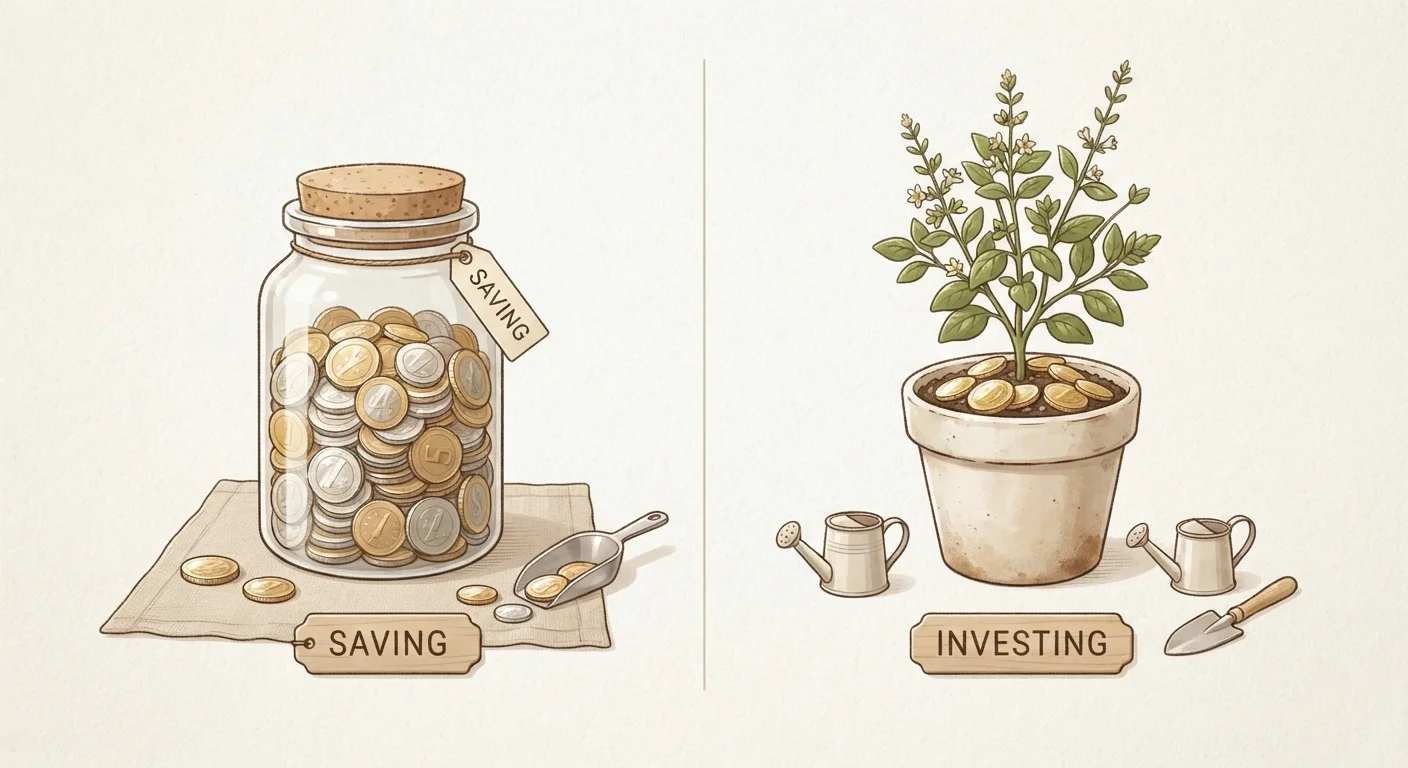
Saving and investing are often used interchangeably in everyday conversation, but treating them as the same thing can quietly undermine your financial progress. They perform distinct functions - and understanding those functions is the foundation of sound money management.
Saving is the act of setting aside money where it remains stable and accessible. The priority is preservation and liquidity - meaning you can reach the money quickly when you need it. High-yield savings accounts, money market accounts, and certificates of deposit (CDs) are common savings vehicles.
Investing is deploying money into assets - stocks, bonds, mutual funds, exchange-traded funds (ETFs), real estate, and others - with the expectation that the value will grow over time. The trade-off is risk: unlike a federally insured bank account, investments can lose value.
3-6 months
Recommended emergency fund coverage
This widely cited guideline - covering three to six months of essential living expenses - represents the savings baseline most financial educators recommend before directing additional funds toward investing.
~3%
Historical average U.S. inflation rate
The U.S. long-run average inflation rate has hovered around 3%, meaning savings earning less than this rate lose purchasing power in real terms over time - a core reason long-term goals typically involve investing.
56%
Americans who own investments
According to Gallup's annual Economy and Personal Finance survey, roughly 56% of American adults report owning stocks, either directly or through funds or retirement accounts - leaving a substantial share without long-term investment exposure.
The key distinction is not which is better, but which is appropriate for a given goal and timeframe. Both belong in a well-structured financial plan.
When Saving Is the Right Move
Saving is designed for money you may need soon or cannot afford to lose. The clearest application is an emergency fund - a reserve covering three to six months of essential living expenses, kept somewhere liquid and insured.
Short-term goals also belong in savings. Planning to replace a car in two years, cover a home repair, or fund a vacation? Putting that money into investments exposes it to market fluctuations that could leave you short exactly when you need the funds. A savings account removes that uncertainty.
Automate Your Savings First
Setting up an automatic transfer to a dedicated savings account on each payday removes the temptation to spend before saving. Even a modest fixed amount - transferred before it mingles with everyday spending money - builds the habit and the balance over time. Automation is one of the most effective behavioural tools in personal finance.
The trade-off is modest growth. Interest rates on savings accounts - even competitive high-yield options - rarely outpace inflation over the long term. That is acceptable for money serving a short-term or safety-net role, but it becomes a problem if all your money sits in savings indefinitely. Our article on signs your savings strategy needs a rethink explores patterns that quietly limit long-term financial progress.
When Investing Makes Sense
Investing is built for long-term goals - particularly those a decade or more away, like retirement. Over extended periods, the potential returns from a diversified investment portfolio have historically tended to outpace inflation, helping money grow in real terms. Past performance does not guarantee future results, and all investments carry risk of loss.
The mechanism that makes long-term investing particularly powerful is compounding: earning returns on both your principal and the returns you've already accumulated. The longer money stays invested, the more pronounced this effect can become.
If you're newer to investing or have held back due to common concerns, our piece on beliefs about investing that hold people back addresses widespread misconceptions with evidence-based context. And when you're ready to think about contribution strategies, lump sum vs. regular contributions compares two common approaches.
Why You Typically Need Both
Framing saving and investing as an either/or choice misses the point. Most financial plans use them in sequence and in parallel. You build savings first to create a financial floor - money that won't fluctuate and won't strand you during a rough patch. Then, surplus funds beyond that floor can be directed toward investments aligned with longer-term goals.
“The goal of saving is to ensure financial security; the goal of investing is to build wealth. Confusing the two - or skipping one entirely - leaves most households financially exposed in one direction or another.”
— Money & Finance Editorial Team, Personal finance editorial collective
For those working with tighter budgets, the question of where to start can feel paralyzing. But even small, consistent contributions to savings build a habit that compounds over time - behaviorally as much as financially. Our guide to building a savings habit on a small income offers practical strategies that don't require drastic lifestyle cuts.
Once you're ready to think about the right account types for each purpose, savings account vs. investment account provides a structured comparison of where different money belongs.
This article is for general informational and educational purposes only and does not constitute personalised financial, investment, tax, or legal advice. Consult a licensed financial adviser before making decisions about your own financial situation.