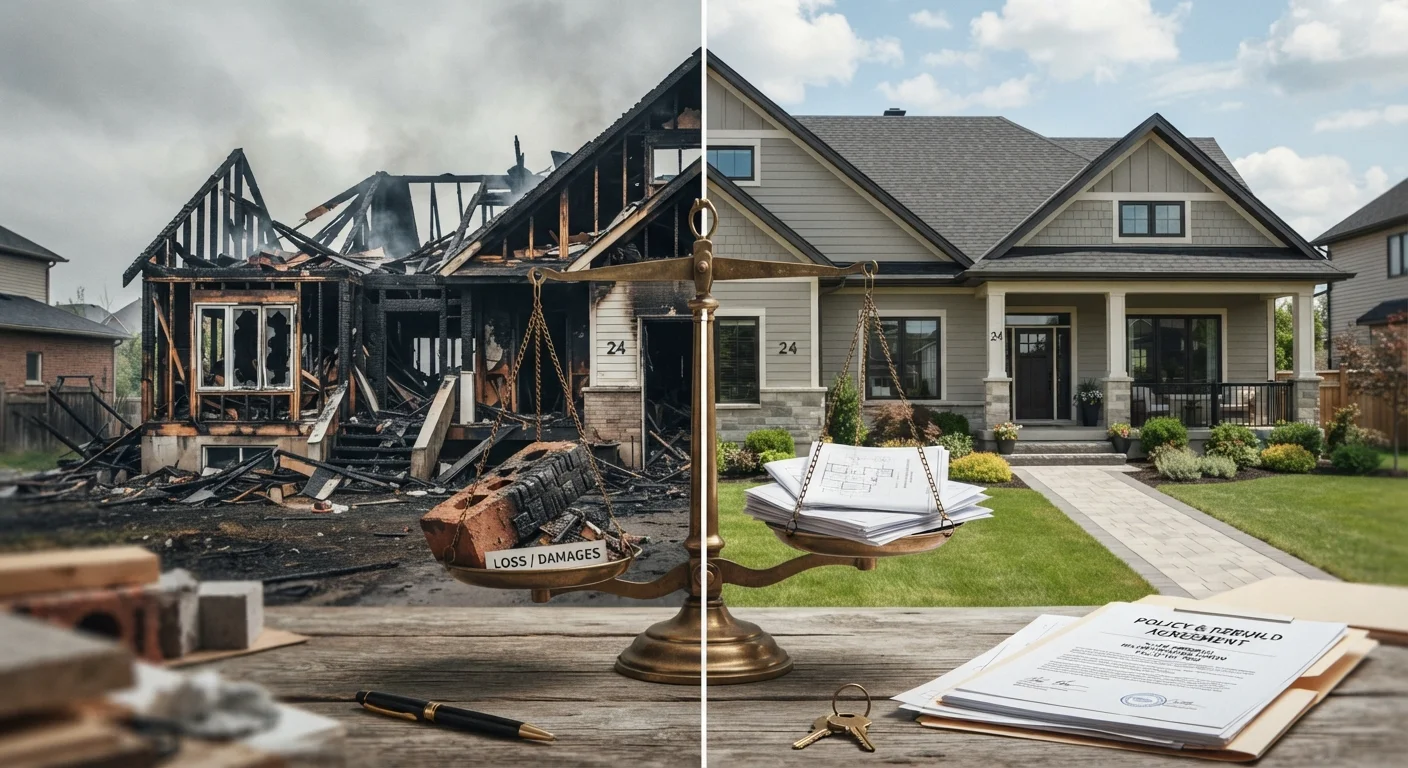


What Self-Insurance Actually Means
Self-insurance is the deliberate decision to retain financial risk rather than transfer it to an insurance company. Instead of paying premiums, a self-insurer sets aside funds - sometimes in a dedicated account - to cover potential losses directly. This practice ranges from the informal (skipping an extended warranty on an appliance) to the highly structured (a large employer operating a captive insurance entity to cover employee benefits).
For individual consumers, self-insurance typically applies to optional or supplemental coverages: skipping collision coverage on an older vehicle, declining a hospital indemnity add-on, or choosing not to purchase travel protection. It rarely applies - legally or practically - to mandatory coverage categories. To understand what each major coverage type protects, see our overview of major insurance types and what they cover.
The core logic is straightforward: if expected premiums paid over time exceed expected losses, the insurer profits and the policyholder would have been better off self-funding. The challenge is that insurance also buys protection against low-probability, high-severity events - the kind that can permanently derail household finances.
Self-Insurance Is Not the Same as Being Uninsured
A deliberate self-insurance strategy involves setting aside dedicated funds specifically to cover anticipated losses - it is a structured financial decision, not simply the absence of a policy. Being uninsured without adequate reserves is an entirely different and generally much riskier position. If you're evaluating whether to reduce coverage, understanding the right questions to ask before choosing a policy can help frame the comparison honestly.
The Financial Case for Self-Insuring
For financially stable households, retaining certain risks can make economic sense. Premiums include not just expected loss costs but also insurer overhead, profit margin, and regulatory capital charges - meaning the actuarially fair price of coverage is always higher than the raw expected loss. Over decades, disciplined self-insurers who avoid small claims can accumulate meaningful savings.
Eliminates premium payments for covered risk categories
By not paying premiums, disciplined savers can redirect those dollars to interest-bearing accounts or investments - potentially accumulating more than they would have collected in claims over time.
Removes insurer overhead and profit margin from the equation
Every insurance premium includes a loading factor above pure expected losses. Self-insurers avoid paying for insurer operating costs, which can represent 20-40% of premiums depending on the line of coverage.
Greater control over claims and reserve usage
Self-insurers decide when and how to deploy reserves without navigating claims processes, coverage disputes, or the risk of premium increases following a filed claim.
Efficient for low-severity, high-frequency risks
For risks that produce small, predictable losses - minor appliance repairs, routine dental work above a threshold - self-funding avoids the administrative cost built into insurance pricing.
Potential to build long-term financial resilience
Maintaining a robust self-insurance fund alongside selective traditional coverage can strengthen a household's overall financial position by reducing reliance on external providers for manageable setbacks.
A common hybrid strategy involves purchasing high-deductible policies - capturing protection against catastrophic loss while self-funding routine claims. This approach is especially prevalent with health insurance, where a High-Deductible Health Plan (HDHP) paired with a Health Savings Account (HSA) allows pre-tax dollars to accumulate for qualified medical expenses. The saving and investing fundamentals that underpin this strategy reward consistency and patience.
The Risks and Limits of Going Without Coverage
Self-insurance carries serious risks that are easy to underestimate, particularly around tail-risk events - the rare but devastating outcomes that traditional insurance is specifically designed to absorb.
Catastrophic losses can far exceed any reasonable reserve
A serious medical event, a major liability judgment, or a total home loss can generate costs in the hundreds of thousands of dollars - well beyond what most households can self-fund without permanent financial harm.
Legally prohibited for many mandatory coverage categories
Auto liability, health insurance under certain structures, and lender-required homeowners coverage cannot legally be replaced by self-insurance for most US consumers, making the option narrower than it appears.
Requires sustained financial discipline to maintain adequate reserves
Self-insurance only works if reserves are actually accumulated and preserved. In practice, funds earmarked for self-insurance are vulnerable to being redirected to competing financial priorities.
No pooling of risk across a large population
Insurers spread risk across thousands of policyholders, making outcomes predictable in aggregate. An individual self-insurer faces the full statistical variance of their own experience, which may be far worse than average.
Cognitive bias leads to systematic underestimation of risk
People routinely underestimate the likelihood that a serious loss will affect them specifically, making self-insurance decisions susceptible to optimism bias rather than clear-eyed probability assessment.
Loss of access to insurer negotiated rates and networks
In categories like health care, insurers negotiate substantially reduced rates with providers. Self-pay patients often face full billed charges, which can significantly exceed what an insurer would actually pay for the same service.
Legal constraints are also a hard boundary. Auto liability insurance is required in nearly every US state, and the Affordable Care Act's structure creates financial incentives for maintaining health coverage. Mortgage lenders universally require homeowners insurance as a loan condition. These mandates mean true self-insurance is not a legal option across several major coverage categories.
Cognitive bias is another hazard. Research consistently shows that people underestimate the probability of low-frequency, high-impact events affecting them personally - the same phenomenon that makes self-insurance feel safer than it often is. Before forgoing any significant coverage, it's worth reviewing common insurance myths that leave Americans underprotected.
~$30,000
Average cost of a single inpatient hospital stay (US)
According to the Agency for Healthcare Research and Quality, the average cost per inpatient stay in the US has exceeded $13,000, with complex cases reaching multiples of that figure - illustrating why major medical is a poor self-insurance candidate.
40%
Share of Americans unable to cover a $400 emergency
The Federal Reserve's Survey of Household Economics has consistently found that a significant share of US households lack sufficient liquid reserves to cover even modest unexpected expenses, underscoring the limits of informal self-insurance.
20-40%
Typical insurer loading factor above pure expected losses
Actuarial analyses of personal lines insurance suggest that operating expenses, profit, and capital charges commonly add 20 to 40 percentage points above the actuarially expected loss cost embedded in a premium.
Where the Trade-Off Makes the Most Sense
Not all coverage decisions are equal. Some categories are strong candidates for partial or full self-insurance; others carry risks that make traditional coverage essential regardless of financial strength.
Generally suitable for self-insurance consideration:
- Extended warranties and service contracts on low-cost electronics or appliances
- Collision coverage on older vehicles with low market value
- Supplemental insurance products (hospital cash plans, identity theft coverage) where premiums are high relative to benefits
- Optional travel add-ons for low-cost domestic trips, though for international travel the calculus changes significantly - see our detailed look at what travel insurance covers and what it doesn't
Generally poor candidates for self-insurance:
- Major medical coverage - a single hospitalization can generate six-figure bills
- Liability exposure - auto, homeowners, or umbrella liability, where a judgment against you can exceed any reasonable reserve. The case for umbrella insurance is particularly compelling here
- Life insurance for households with dependents and limited liquid assets
- Long-term disability, where the income replacement need typically exceeds any savings cushion
Life circumstances shift these calculations considerably. Major life events - marriage, a new child, a home purchase - can transform a previously reasonable self-insurance decision into an inadequate one almost overnight.
This article is for general informational and educational purposes only and does not constitute personalised financial, insurance, legal, or tax advice. Coverage needs vary by individual circumstance, state regulation, and provider terms. Consult a licensed insurance agent or qualified financial adviser before making decisions about your own coverage.