

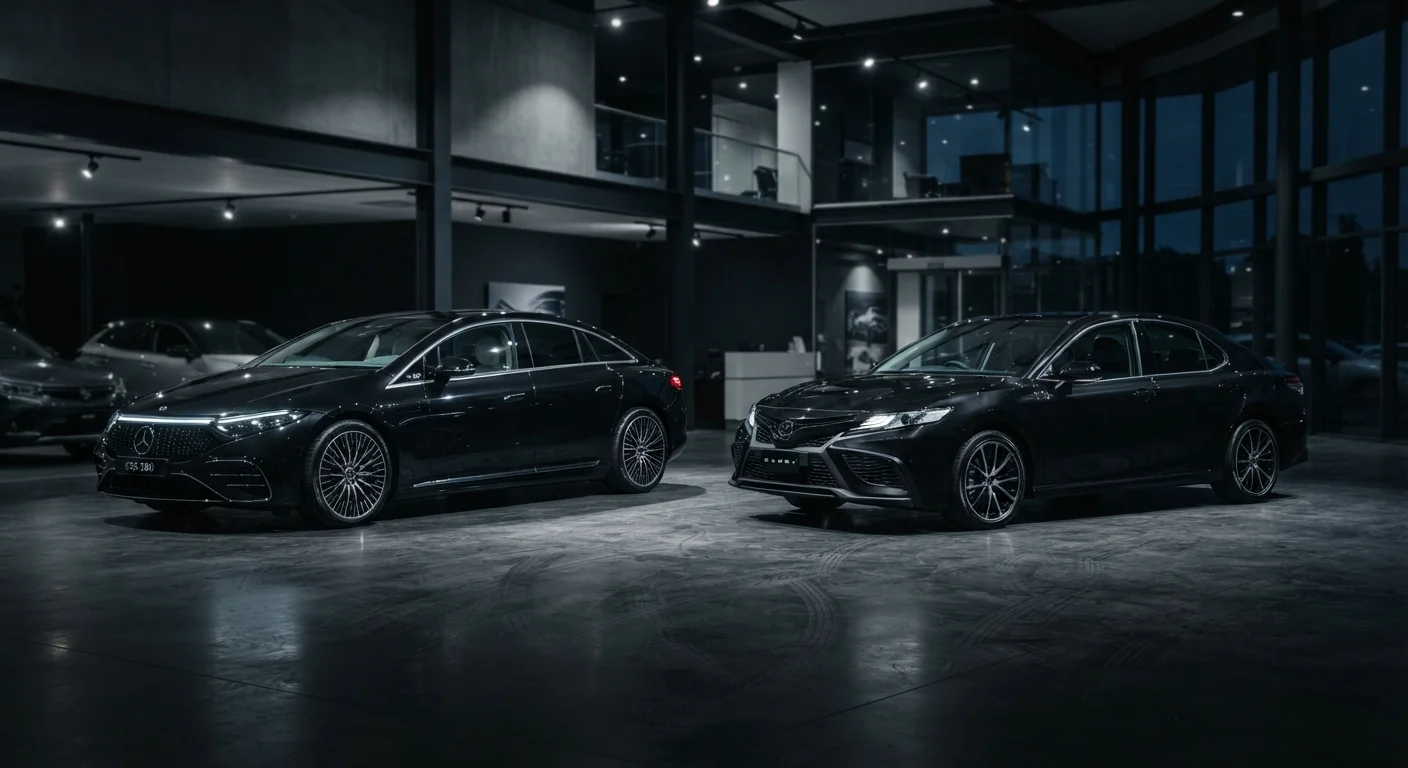
Where the Price Gap Comes From
When a luxury vehicle commands $20,000 or more above a comparable mainstream model, buyers reasonably ask what they're actually paying for. The answer is multifaceted - and not simply about a nameplate.
Manufacturing cost is one factor. Luxury vehicles typically use lower-volume production runs, meaning fixed costs are spread across fewer units. Materials sourced for interiors - genuine leather grades, real wood or metal trim, acoustic-grade insulation - carry significantly higher per-unit costs than the synthetic equivalents found in standard vehicles. Engineers on luxury platforms also spend more time on tolerances: the tightness of panel gaps, the thud of a closing door, and the suppression of road noise are all engineered outcomes that require iteration and investment.
Research and development is another key driver. Automakers often debut proprietary safety systems, suspension architectures, and powertrain technologies in luxury models before eventually trickling them down. That R&D cost has to be recovered somewhere.
| Luxury Vehicles | Mainstream Vehicles | |
|---|---|---|
| Average new vehicle price range | $45,000-$100,000+ | $20,000-$45,000 |
| Interior materials | Premium leather, real wood/metal trim | Synthetic leather, plastic trim |
| Suspension technology | Often adaptive/active damping | Typically passive suspension |
| Advanced driver-assist systems | Broader, more sophisticated suite | Core features increasingly standard |
| Annual maintenance cost (general range) | Higher - specialized parts and labor | Lower - wider service network |
| Depreciation (first 3 years) | Often steeper in percentage terms | Generally more stable retention |
| NVH (noise, vibration, harshness) control | Heavily engineered, near-silent cabins | Adequate; varies by model |
Engineering and Technology Differences
The engineering distinction between tiers is real, though it varies by category. Suspension tuning is a clear example: many luxury vehicles use adaptive dampers that adjust in milliseconds based on road inputs and driver behavior, while mainstream models more commonly rely on passive suspension setups. The result is a measurably smoother, more planted ride - particularly noticeable over varied road surfaces.
Powertrain refinement also differs. Luxury segment engines are often tuned and insulated more aggressively, not necessarily for more horsepower, but for smoother power delivery and reduced NVH (noise, vibration, and harshness). Some luxury brands engineer their own transmissions or develop proprietary hybrid systems, adding to the complexity - and cost.
Safety technology is where the distinction has blurred most. Features like automatic emergency braking, lane-keeping assist, and adaptive cruise control - once luxury exclusives - are now standard or available on many mainstream models. However, more sophisticated systems such as automated parking, highway hands-free driving, and night-vision cameras remain more concentrated in the luxury segment. For more on how features vary within a model line, see how trim levels affect a vehicle's character.
Consider a Top-Trim Mainstream Model First
Before committing to a luxury vehicle, compare its features directly against the highest trim level of a well-regarded mainstream model in the same segment. In many cases, you'll find that advanced safety systems, premium audio, and heated seating are available at a significantly lower price point. The gap tends to be most pronounced in ride refinement and interior materials rather than technology.
The Real Cost of Luxury Ownership
Purchase price is only the entry point. Luxury vehicle ownership typically carries higher ongoing costs across several categories.
Insurance: Premiums for luxury vehicles are generally higher, reflecting greater repair costs for specialized components and higher vehicle replacement values. Maintenance: Scheduled service intervals at authorized dealers can cost substantially more than equivalent work on mainstream vehicles, partly because parts are more expensive and partly because specialized labor is required. Depreciation: Many luxury models depreciate faster in percentage terms during the first few years, which matters greatly to buyers who plan to sell within five years. Mainstream vehicles, particularly those with strong reliability reputations, often hold a higher proportion of their value over time.
Fuel economy is another variable - luxury performance vehicles, in particular, can carry meaningful fuel cost premiums over comparable mainstream models.
If you're considering financing or leasing a luxury vehicle, the cost structure becomes even more complex. A side-by-side comparison of leasing versus buying can help clarify which approach aligns with your financial priorities.
~49%
Average 3-year depreciation for luxury vehicles
Industry data from vehicle valuation analysts consistently shows many luxury models lose close to half their value within three years, compared to lower averages for mainstream segments.
~$1,200+
Average annual luxury vehicle maintenance cost
Automotive research organizations estimate annual maintenance costs for luxury vehicles routinely exceed those of mainstream counterparts by several hundred dollars or more.
How Much Has the Mainstream Tier Caught Up?
The feature gap between luxury and mainstream vehicles has narrowed considerably over the past decade. Touchscreen infotainment, wireless smartphone integration, multi-zone climate control, heated and ventilated seating, and advanced driver-assist systems are no longer exclusive to premium brands. Many well-equipped mainstream vehicles now offer feature sets that rival entry-level luxury models from ten years ago.
What mainstream vehicles still tend to lack is the depth of refinement - the cumulative effect of quieter cabins, more precise steering feel, higher-grade stitching, and more intuitive ergonomics that luxury brands invest in at every touchpoint. These qualities are harder to itemize on a spec sheet but consistently show up in owner satisfaction data.
It's also worth distinguishing between individual luxury brands, which vary considerably in reliability, cost of ownership, and actual engineering differentiation. Common misconceptions about German car brands illustrates how reputation doesn't always align with real-world ownership experience.
For a broader view of which mainstream brands have built the strongest reputations in the US market, America's most popular car brands and what sets them apart offers useful context.