

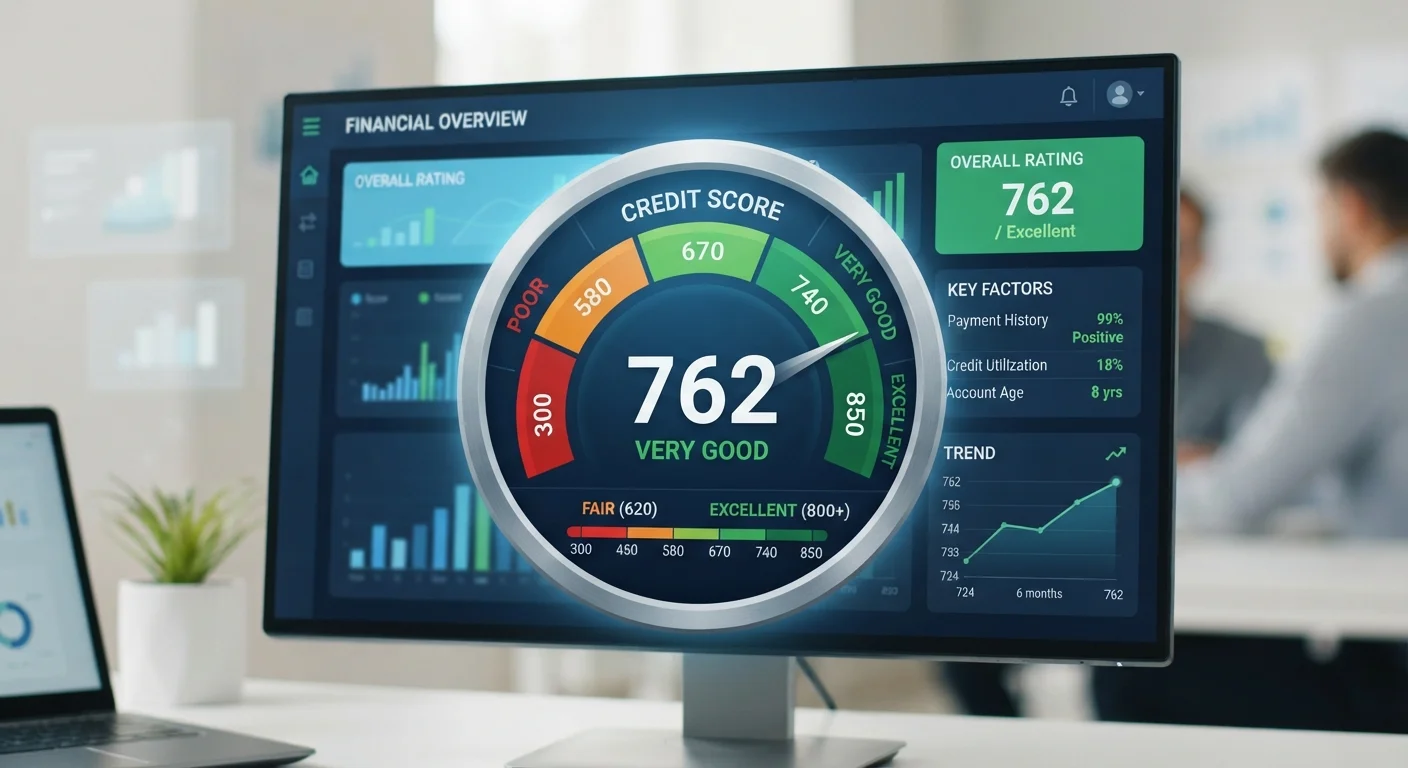
The Score Range and What Each Band Signals
If you're new to how credit works, it helps to start with the basics. Our plain-language introduction to credit and debt covers the foundational concepts before you dive into score mechanics.
Both FICO and VantageScore use a 300-850 scale. Here's how FICO segments that range:
| Score Range | Category | What It Generally Means |
|---|---|---|
| 800-850 | Exceptional | Qualifies for the most favorable rates and terms |
| 740-799 | Very Good | Above-average creditworthiness; competitive offers likely |
| 670-739 | Good | Near or above the median; most lenders approve |
| 580-669 | Fair | Subprime territory; approval possible with higher rates |
| 300-579 | Poor | High-risk classification; approval rare without collateral or co-signer |
These bands are guidelines, not guarantees. Each lender sets its own cutoffs and weighs your full financial profile - not the score alone.
716
Average US FICO Score
According to FICO's publicly reported data, the average American credit score has generally hovered in the 'good' range in recent years.
35%
Payment history weight in FICO model
FICO's published scoring breakdown identifies payment history as the single largest component of a FICO Score calculation.
~200M
Americans with scoreable credit files
The Consumer Financial Protection Bureau has estimated that the large majority of US adults have enough credit history to generate a score.
The Five Factors That Build Your Score
Understanding what feeds into your score is the most actionable knowledge you can have. FICO's published methodology breaks the calculation into five weighted categories:
- Payment history (35%): Whether you've paid accounts on time. Even one missed payment can cause a notable drop.
- Amounts owed (30%): Also called credit utilization - the ratio of your current balances to your total credit limits. Keeping this below 30% is widely recommended, though lower is generally better.
- Length of credit history (15%): How long your accounts have been open. Older accounts help; closing them can shorten your average history.
- Credit mix (10%): A variety of account types - revolving credit (cards), installment loans (auto, mortgage) - can reflect favorably.
- New credit (10%): Recent applications for credit create hard inquiries and signal potential risk if numerous in a short period.
VantageScore uses similar factors but labels and weights them differently. Understanding these levers prepares you to interpret why your score moves - a topic explored in depth in our article on why your credit score changed and what triggered it.
Check Your Score Without Hurting It
You're entitled to free credit reports from each of the three major bureaus - Equifax, Experian, and TransUnion - at AnnualCreditReport.com, the federally mandated source. Many banks and credit card issuers also provide free score access through online dashboards. Reviewing your report regularly helps you catch errors that could be dragging your score down before they affect a real lending decision.
How Lenders Actually Use Your Score
A credit score is rarely the sole basis for a lending decision - it's a starting filter. Once you pass the score threshold, underwriters typically examine your full credit report, your income, your existing debt load, and the purpose and size of the loan.
Your credit report is the underlying data from which your score is calculated. It contains account histories, balances, payment records, public records, and inquiries. Our field guide to every section of a credit report walks through each entry in detail.
Scores also surface in contexts beyond traditional lending. Landlords frequently run credit checks before approving rental applications. Some auto and home insurers in certain states factor credit-based insurance scores into premium calculations - a reminder that your credit profile can intersect with areas like understanding insurance coverage in ways many consumers don't anticipate.
Building and Protecting Your Score Over Time
Credit scores are not fixed judgments - they respond to your behavior over time. The single most impactful habit is consistent, on-time payment across all accounts. Even partial payments are better than missed ones, though paying in full avoids interest charges.
Keeping revolving balances low relative to your limits, avoiding opening multiple new accounts in quick succession, and maintaining older accounts in good standing are all behaviors aligned with stronger scores. These aren't tricks; they reflect the underlying risk signals lenders actually care about.
If you're evaluating how much financial risk you're comfortable taking on as you build credit - whether that's carrying a balance to optimize utilization or taking on an installment loan - consider reading our explainer on what risk tolerance really means to frame that decision carefully.
This article is for general informational and educational purposes only and does not constitute personalized financial, credit, or legal advice. Credit scoring models and lender requirements vary. Consult a qualified financial professional for guidance specific to your situation.