

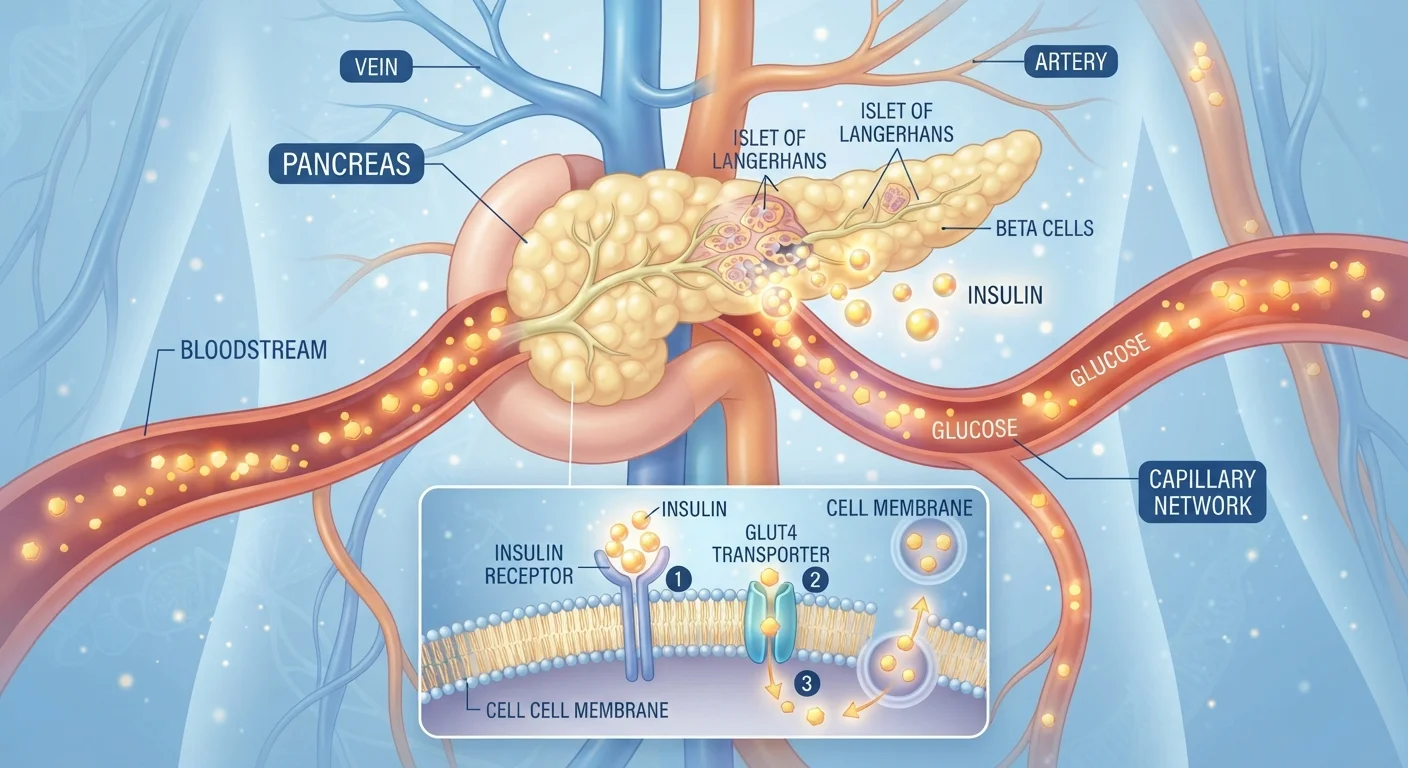
How the Body Normally Regulates Blood Sugar
Every time you eat carbohydrates, your digestive system breaks them down into glucose - a simple sugar that enters your bloodstream. Rising blood glucose signals your pancreas to release insulin, a hormone produced by specialized cells called beta cells. Insulin acts like a key, unlocking cells throughout the body so glucose can enter and be used for energy or stored for later use.
This feedback loop - glucose rises, insulin is released, glucose is absorbed, levels normalize - is a tightly regulated process. In a healthy metabolic state, it happens seamlessly dozens of times a day, keeping blood sugar within a narrow, safe range.
38 million
Americans living with diabetes
According to the Centers for Disease Control and Prevention (CDC), approximately 38 million Americans have diabetes, with type 2 accounting for 90-95% of cases.
98 million
U.S. adults with prediabetes
The CDC estimates that roughly 98 million American adults have prediabetes - and the majority are unaware of it.
~50%
Increased cardiovascular risk
Adults with type 2 diabetes face a significantly elevated risk of cardiovascular events compared to those without the condition, according to the American Heart Association.
What Goes Wrong: Insulin Resistance and Beta-Cell Strain
In type 2 diabetes, this system breaks down in two interconnected ways. First, cells - particularly in muscle, liver, and fat tissue - become less sensitive to insulin's signal. This is called insulin resistance. Think of it as a lock that no longer turns easily: the key (insulin) is present, but the door won't open properly, so glucose stays in the bloodstream rather than entering cells.
In response, the pancreas works harder, producing more insulin to compensate. For a time, this keeps blood sugar in check. But sustained overproduction stresses the beta cells. Over months or years, beta-cell function can decline - meaning the pancreas eventually can't manufacture enough insulin to overcome the resistance. Blood glucose levels begin to rise persistently, and type 2 diabetes is the result.
“Type 2 diabetes is not simply a disease of high blood sugar - it is a disease of disrupted communication between cells, and understanding that distinction changes how we think about prevention and management.”
— American Diabetes Association, Leading U.S. professional organization for diabetes research and clinical standards
Why Blood Sugar Elevation Causes Harm
Glucose itself isn't dangerous in normal amounts, but chronically elevated blood sugar is corrosive to the body's tissues. High glucose levels promote a process called glycation, where sugar molecules bind to proteins and fats, damaging them. Blood vessel walls are particularly vulnerable.
Over time, this vascular damage affects large vessels (raising the risk of heart attack and stroke) and small vessels (impairing blood flow to the eyes, kidneys, and nerves). That's why type 2 diabetes is strongly associated with cardiovascular disease, kidney disease, vision problems, and peripheral neuropathy - a form of nerve damage that often begins in the feet and hands. Managing blood sugar is fundamentally about protecting these systems. Interestingly, people with type 2 diabetes are also at elevated risk for hypertension; understanding blood pressure readings can be a valuable part of overall metabolic health monitoring.
Routine Screening Can Catch Diabetes Early
The American Diabetes Association recommends screening for type 2 diabetes beginning at age 35 for adults with overweight or obesity, or earlier for those with additional risk factors. A simple fasting blood glucose test or A1C test can detect elevated levels before complications develop. Talk with your healthcare provider about when and how often you should be screened.
Risk Factors and Who Is Most Affected
Type 2 diabetes results from a combination of genetic predisposition and environmental factors. Key contributors include:
- Excess visceral fat - fat stored around the abdominal organs is particularly linked to insulin resistance.
- Physical inactivity - muscle tissue that isn't regularly exercised becomes less efficient at absorbing glucose.
- Family history - having a parent or sibling with type 2 diabetes meaningfully increases risk.
- Age - risk rises after 45, though rates are increasing in younger adults and adolescents.
- Prediabetes - blood sugar levels that are elevated but not yet in the diabetic range are a strong predictor of progression without intervention.
In the United States, certain populations - including Black, Hispanic/Latino, American Indian, and Asian American adults - face disproportionately higher rates of type 2 diabetes, reflecting a complex interplay of genetic, social, and structural health factors.