

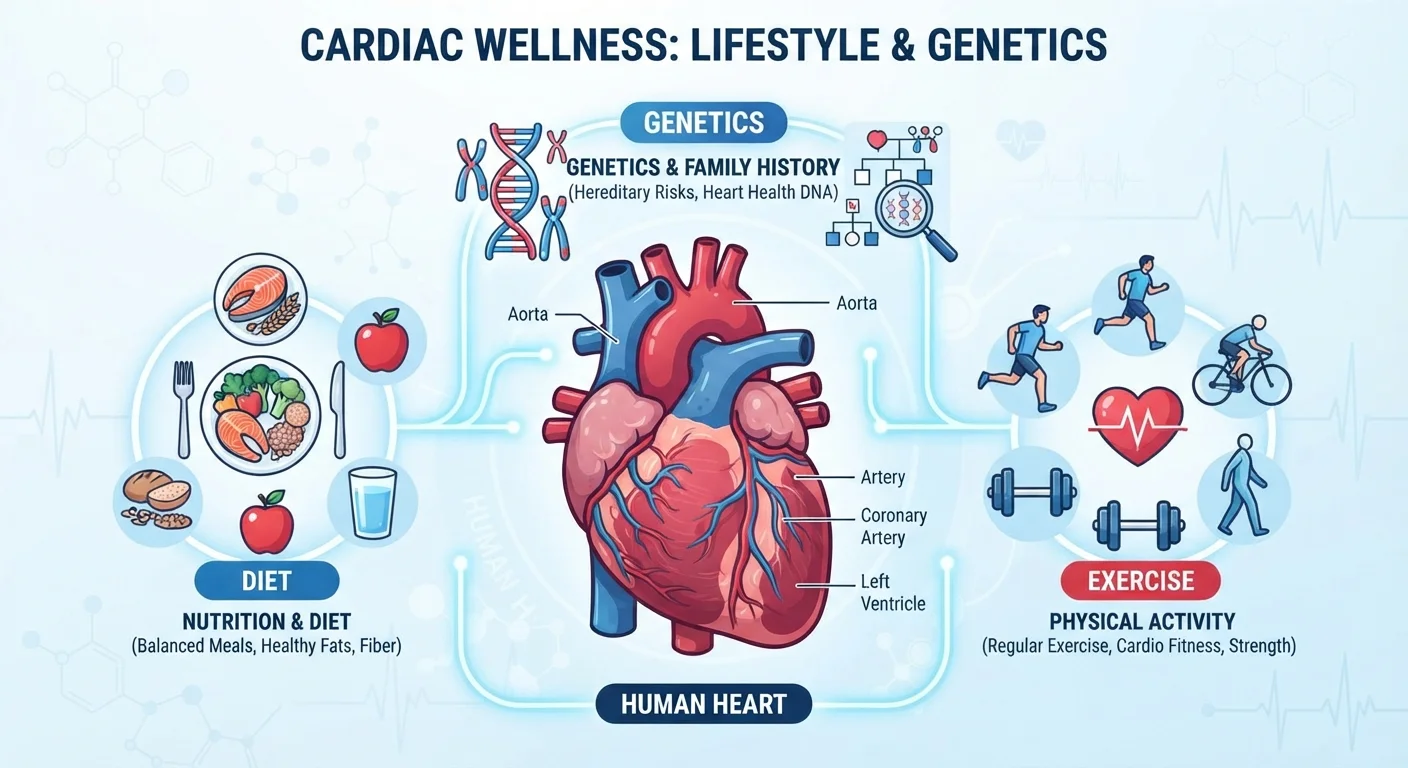
Why Risk Factor Classification Matters
Heart disease remains the leading cause of death in the United States, according to the Centers for Disease Control and Prevention (CDC). Yet a significant proportion of cardiovascular events are preventable - not because every risk factor can be eliminated, but because understanding which ones respond to intervention helps clinicians and patients prioritize meaningful action.
Risk factors are broadly divided into two categories: non-modifiable (those you cannot change) and modifiable (those influenced by lifestyle, medical management, or both). Recognizing this distinction is the starting point for any honest conversation about cardiovascular health.
| Leading cause of death, US | Heart disease (CDC, National Center for Health Statistics) |
| Proportion of CV events considered preventable | Up to 80% (American Heart Association estimates) |
| Key non-modifiable factors | Age, sex, family history, genetics |
| Key modifiable factors | Blood pressure, cholesterol, smoking, physical activity, blood glucose (AHA Life's Essential 8 framework) |
| Blood pressure classification (hypertension stage 1) | 130-139 / 80-89 mmHg (2017 ACC/AHA Hypertension Guidelines) |
| Age threshold elevating male CV risk | 45 years (American Heart Association) |
This article is for general informational and educational purposes only. It is not a substitute for professional medical advice, diagnosis, or treatment. Consult a qualified healthcare provider for guidance specific to your health situation.
Non-Modifiable Risk Factors
Some cardiovascular risk factors are fixed by biology or personal history. Knowing them informs screening decisions and underscores why individuals with multiple inherited risks benefit most from proactive monitoring.
- Age: Risk increases substantially for men after age 45 and for women after age 55, in part because estrogen's cardioprotective effects decline following menopause.
- Biological sex: Men generally develop coronary artery disease earlier than women, though women's lifetime risk converges after menopause.
- Family history: A first-degree relative (parent or sibling) who experienced a heart attack before age 55 (male) or 65 (female) elevates personal risk independently of lifestyle.
- Race and ethnicity: Certain groups - including Black Americans - face disproportionately higher rates of hypertension, contributing to cardiovascular disparity that has structural and social determinants alongside biological ones.
- Genetic conditions: Familial hypercholesterolemia, for example, causes very high LDL cholesterol from birth regardless of diet.
Atherosclerosis
A condition in which fatty plaques accumulate inside artery walls, narrowing the vessel and restricting blood flow. It is a primary underlying mechanism of heart attack and stroke.
LDL Cholesterol
Low-density lipoprotein cholesterol, often called 'bad' cholesterol. Elevated levels are associated with plaque buildup in arteries and increased cardiovascular risk.
Familial Hypercholesterolemia
An inherited genetic disorder causing very high LDL cholesterol levels from birth, independent of diet or lifestyle. It significantly raises the risk of early-onset heart disease.
Dyslipidemia
Abnormal levels of lipids - including cholesterol or triglycerides - in the blood. It is a major modifiable risk factor for cardiovascular disease.
Hypertension
Persistently elevated blood pressure that forces the heart to work harder and damages arterial walls over time. It is one of the most common and treatable cardiovascular risk factors.
Insulin Resistance
A condition in which cells do not respond effectively to insulin, causing blood glucose levels to rise. It is closely linked to type 2 diabetes and increased cardiovascular risk.
Modifiable Risk Factors
The majority of cardiovascular risk factors are modifiable - meaning clinical intervention, behavioral change, or both can measurably reduce their impact. The American Heart Association identifies several key areas:
47%
US adults with at least one key CV risk factor
The CDC estimates nearly half of American adults have hypertension, high cholesterol, or smoke - primary drivers of heart disease.
3x
Elevated risk for smokers vs. non-smokers
According to the American Heart Association, smokers face approximately three times the risk of dying from coronary heart disease compared to non-smokers.
2-4x
Increased CV risk with poorly managed diabetes
Adults with diabetes are two to four times more likely to die from heart disease than those without diabetes, per the American Diabetes Association.
- High blood pressure (hypertension): Often called a "silent killer" because it produces few symptoms, uncontrolled hypertension damages arterial walls over time. Dietary sodium reduction, regular physical activity, weight management, and prescribed medications all contribute to control.
- Abnormal cholesterol levels: Elevated LDL cholesterol and low HDL cholesterol accelerate plaque buildup in arteries. Dietary pattern, physical activity, and - when clinically indicated - medication can shift lipid profiles.
- Type 2 diabetes and insulin resistance: Chronically elevated blood glucose damages blood vessels. Glycemic management through nutrition, exercise, and medical therapy reduces associated cardiovascular risk.
- Tobacco use: Smoking damages the lining of arteries and accelerates atherosclerosis. Risk begins declining within months of cessation, though quitting at any age provides benefit.
- Physical inactivity: Sedentary behavior independently raises cardiovascular risk. Current guidelines from major cardiology bodies generally support regular moderate-intensity aerobic activity, though individuals should discuss appropriate activity levels with their provider.
- Excess body weight: Obesity - particularly abdominal adiposity - is associated with hypertension, dyslipidemia, and insulin resistance, compounding risk.
- Chronic psychological stress: Sustained stress is linked to elevated cortisol levels, poor sleep, and behavioral patterns (poor diet, inactivity) that collectively raise cardiovascular risk.
The Role of Screening and Ongoing Monitoring
Because many cardiovascular risk factors are asymptomatic - high blood pressure and elevated cholesterol often produce no noticeable warning signs - regular clinical screening is essential. Standard assessments typically include blood pressure measurement, fasting lipid panels, blood glucose testing, and body mass index evaluation. Frequency and scope are individualized based on age, existing conditions, and family history.
For individuals planning international travel, it is also worth noting that cardiovascular health intersects with travel medicine. Those with known heart conditions or uncontrolled risk factors should discuss itinerary-specific considerations with their provider well before departure. See health precautions before international travel for a broader overview of pre-travel health planning.
Screening results should prompt a dialogue - not alarm. A single elevated reading rarely tells the full story, and risk calculators (such as the ACC/AHA Pooled Cohort Equations) aggregate multiple factors to estimate 10-year cardiovascular event risk, guiding shared decision-making between patient and provider.
Always consult a licensed healthcare professional before making changes to your diet, physical activity routine, or medication regimen based on cardiovascular risk information.